I think the French have quite a reputation of being "difficult", and not just with us. I think they tend to be difficult with everyone, even each other. And trying to pin them down on an issue can be seemingly impossible at times.
I've been reading about events in France with great interest, because they have so many problems and difficulties, with many more looming ahead. It's tempting to predict disaster, yet I get the impression that it's rather impossible to predict just WHAT they might do next. The following is a selection of things I've been reading about France:
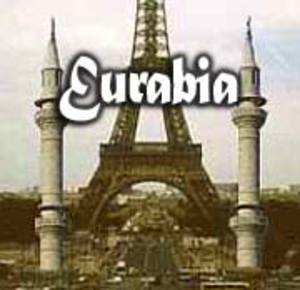
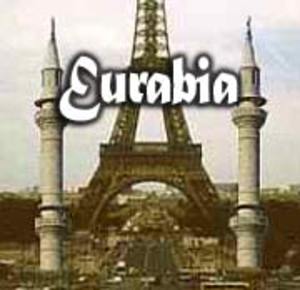
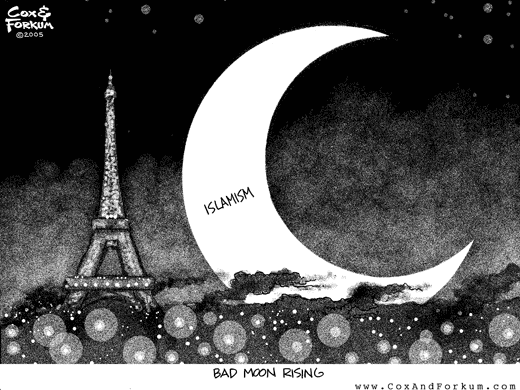
A great deal has been said about Europe turning into Eurabia, and France has often been said to be the center point of this transformation. It's often spoken of as some sort of terrible, accidental mistake that the French have simply somehow allowed to happen. But what if the concept of Eurabia is not accidental, but actually a very deliberate, intentional policy plan of the French? Fjordman at the Brussels Journal explores this idea in depth, and below is an excerpt from his article:
The Eurabia Code, Part I[...] What follows is a brief outline of the thesis put forward by writer Bat Ye’or in her book “Eurabia: The Euro-Arab Axis.” My information is based on her book (which should be read in full). In addition I have drawn from some of her articles and interviews. I republish the information with her blessing, but this summary is completely my own.
In an interview with Israeli newspaper Haaretz, Bat Ye’or explained how French President Charles de Gaulle, disappointed by the loss of the French colonies in Africa and the Middle East as well as with France’s waning influence in the international arena, decided in the 1960’s to create a strategic alliance with the Arab and Muslim world to compete with the dominance of the United States and the Soviet Union.
“This is a matter of a total transformation of Europe, which is the result of an intentional policy,” said Bat Ye’or. “We are now heading towards a total change in Europe, which will be more and more Islamicized and will become a political satellite of the Arab and Muslim world. The European leaders have decided on an alliance with the Arab world, through which they have committed to accept the Arab and Muslim approach toward the United States and Israel. This is not only with respect to foreign policy, but also on issues engaging European society from within, such as immigration, the integration of the immigrants and the idea that Islam is part of Europe.”
“Europe is under a constant threat of terror. Terror is a way of applying pressure on the European countries to surrender constantly to the Arab representatives’ demands. They demand, for example, that Europe always speak out for the Palestinians and against Israel.”
Thus, the Eurabian project became an enlarged vision of the anti-American Gaullist policy dependent upon the formation of a Euro-Arab entity hostile to American influence. It facilitated European ambitions to maintain important spheres of influence in the former European colonies, while opening huge markets for European products in the Arab world, especially in oil-producing countries, in order to secure supplies of petroleum and natural gas to Europe. In addition, it would make the Mediterranean a Euro-Arab inland sea by favoring Muslim immigration and promoting Multiculturalism with a strong Islamic presence in Europe.
The use of the term “Eurabia” was first introduced in the mid-1970s, as the title of a journal edited by the President of the Association for Franco-Arab Solidarity, Lucien Bitterlein, and published collaboratively by the Groupe d'Etudes sur le Moyen-Orient (Geneva), France-Pays Arabes (Paris), and the Middle East International (London). Their articles called for common Euro-Arab positions at every level. These concrete proposals were not the musings of isolated theorists; instead they put forth concrete policy decisions conceived in conjunction with, and actualized by, European state leaders and European Parliamentarians. [...]
(bold emphasis mine) Fjordman maintains that while the European press talks endlessly about 9-11 conspiracies that claim WE blew up the WTC ourselves, they have nothing to say about the conspiracy of Eurabia, which is easily documemnted and factual. France as the leader of this movement, has a facinating history with the Arab world, going back to Napoleon, some of which is examined here also.
This article is long and detailed, and the first installment of a series of articles. It goes a long way in explaining how Europe has gotten to where it is today, their complex relationship with the Middle East, and it's ensuing anti-Americanism, and the pivotal role of France in all of this.
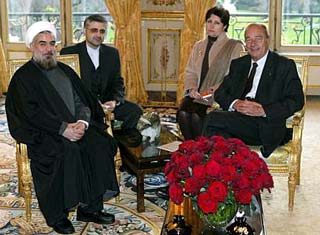
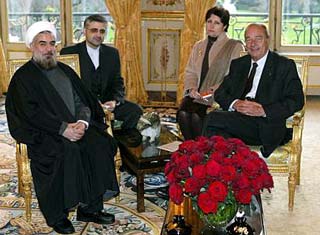 Why Is France Soft on Iran?
The recent divergence in US and French policies with regard to Iran should come as little surprise, given French President Jacques Chirac’s policy that France’s “relations with the United States will never be submissive.” Yet The Independent has posited that France ’s change of mind may in fact be connected with the presence of French peacekeepers in Lebanon – that is to say within range of Iran’s military proxy, Hezbollah. There may be some truth to that assertion, but it is perhaps more instructive to look at France’s Iran policy over the last few decades, the better to round out the context.
In the 1980s, France sided with Iraq during its conflict with Iran, with severe consequences. Between February and September of 1986, seven separate bomb attacks were carried out within France, killing 10 and wounding 152, with each attack accompanied by demands to release five Iranian prisoners. Four years later, these prisoners were indeed pardoned by François Mitterand, despite domestic opposition to the move. [...]
(bold emphasis mine) This is a short article, but it does explain a lot about France's uneasy relationship with Iran.
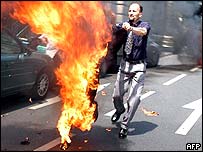
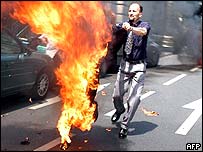
This photo is from a June 2003 article about an Iranian Cult/Terrorist group in France, whose members began setting themselves on fire in protest:
France investigates Iran exiles[...] An examining magistrate ordered the members of the Iranian People's Mujahedeen (MKO) movement to be investigated for "conspiring with a terrorist organisation", judicial officials said.
They were among 17 detained Iranian opposition supporters - including MKO leader Maryam Rajavi - who appeared before anti-terrorist judges in Paris.
About 200 people from the MKO were arrested in a crackdown by French police over recent days. The 17 held in detention were being questioned over alleged plans to attack Iranian embassies across Europe.
Security around the court was heavy in case supporters of the group tried to set themselves alight - as happened several times last week. [...]
This photo of an Iranian woman who set herself on fire is just so horrible. When you think of "the streets of Paris", this is hardly the image that first comes to mind. I guess this is a reminder that France ain't what it used to be?
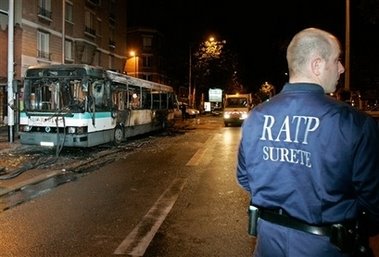
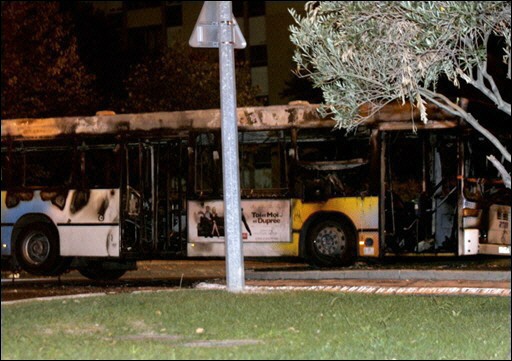
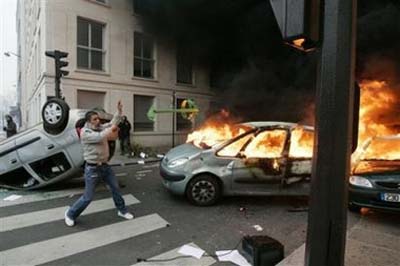
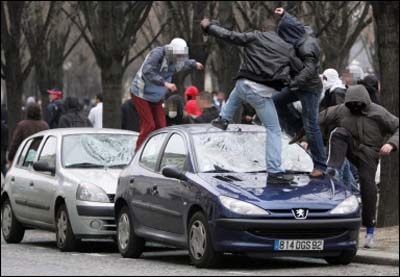
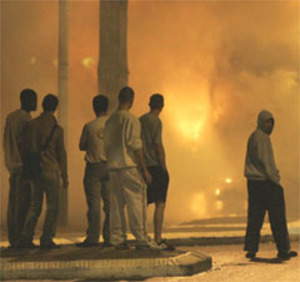
More common in France are the nightly "car-b-ques":
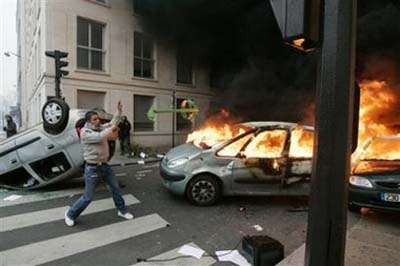
This photo is from last year's Ramadan Riots. The rioting stopped because the French and Belgium governments
ordered the police to stop providing information on the rioting. I believe that policy may still be in effect; there have been attempts to start large scale rioting again this year, but without the media coverage, they fizzled out. Yet
vandalism and attacks on Jews and the police continue. This year, the average so far for car burnings in France is
112 cars per day, and other violence continues:
[...] The figures are stark. An average of 112 cars a day have been torched across France so far this year and there have been 15 attacks a day on police and emergency services. Nearly 3,000 police officers have been injured in clashes this year. Officers have been badly injured in four ambushes in the Paris outskirts since September. Some police talk of open war with youths who are bent on more than vandalism. [...]
With all the car-b-ques, the French auto industry must be experiencing brisk sales. I'll bet auto insurance has gone way up.
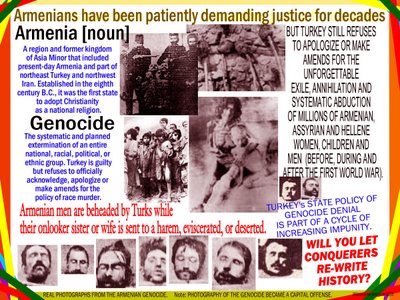
And in true French fashion, just when you start to think they are completely hopeless and spineless, they go and do something upity, politically incorrect and in-your-face. The lastest scandle, is that the French are rudely jabbing their finger in Turkey's eye, by insisting that they recognise the Armenian Holocaust:
French against Turks: Talking about Armenian Genocide... more recently, it became visible that the Turkish genocide issue was not only angering the French government but it was an identifiable issue upon which the French were pushing for Turkish EU-access membership to be granted – i.e. ‘the Turkish should be pushed to admit the Armenian genocide, and if they refuse, then they shall forfeit a place as an EU-member state’. The opposing French Socialist Party – which pushed through the legislation – held that the bill protects and rewards the Armenians in exile from a country that still refuses to accept the atrocity. Then, on 30 September, in a visit to Yerevan, the French President confirmed his position: “Should Turkey recognize the genocide of Armenia to join the EU? … I believe so. Each country grows by acknowledging the dramas and errors of its past. … Can one say that Germany which has deeply acknowledged the holocaust, has as a result lost credit? It has grown.”
I subsequently reported on how France had been left alone on this position since other EU-member states seemed ready to treat Turkey softly on this issue – I also speculated, quite rightly, that this would have detrimental diplomatic relations with the Turkish government, by arguing: “It might also be thought that Chirac could not afford to push the condition too far, since it may bring substantial damage to Franco-Turk relations before Turkey has even begun to attempt its progress towards European harmonization.” Now, that problematic tension has evolved, it is clear enough for us all to see the aggravation caused, illustrating both bilateral and multilateral tensions. [...]
Turkey has legal restrictions forbidding anyone to claim there was an Armenian Holocaust. France has just passed a bill that does the opposite, forbidding people to claim that the Armenian Holocaust didn't happen. Now France is pushing to force Turkey to own up to the Armenian Genoicde, if they want to join the EU.
I don't think anyone should be passing laws to forbid anyone from discussing anything. Nor am I a supporter of the EU. Yet France is being rather bold, challenging Turkey on this issue while the rest of Europe seemed content to let it slide. Once again, the French are being difficult... and I must say, it's much more fun when they do it to someone else, instead of us, for a change. ;-)
 The Two Faces of Newsweek