Showing posts sorted by relevance for query Turkey. Sort by date Show all posts

Friday, February 29, 2008

Will Turkey bring Islam into the 21st century?

For a long time, I had ambivalent feelings about Turkey. I felt the Bush administration was too soft on them, too cooperative, too accommodating. But as I have read more and more about Turkey, and come to understand more about the situation there, I've come to better understand our policies in dealing with them. Among Islamic countries, Turkey is a very special place. While there might be much to criticize, there is also a great deal to praise and admire. I've criticized them a lot in the past, but in this post, I can only praise them.

I have found the following article astounding in it's implications:

Turkey in radical revision of Islamic texts
Turkey is preparing to publish a document that represents a revolutionary reinterpretation of Islam - and a controversial and radical modernisation of the religion.

The country's powerful Department of Religious Affairs has commissioned a team of theologians at Ankara University to carry out a fundamental revision of the Hadith, the second most sacred text in Islam after the Koran.

The Hadith is a collection of thousands of sayings reputed to come from the Prophet Muhammad.

As such, it is the principal guide for Muslims in interpreting the Koran and the source of the vast majority of Islamic law, or Sharia.

"This is kind of akin to the Christian Reformation. Not exactly the same, but... it's changing the theological foundations of [the] religion"
           Fadi Hakura, Turkey expert, Chatham House

But the Turkish state has come to see the Hadith as having an often negative influence on a society it is in a hurry to modernise, and believes it responsible for obscuring the original values of Islam.

It says that a significant number of the sayings were never uttered by Muhammad, and even some that were need now to be reinterpreted.

'Reformation'

Commentators say the very theology of Islam is being reinterpreted in order to effect a radical renewal of the religion. [...]

They are talking here about a very logical, educated, calm and rational look at the Hadiths, in context of all the history they were written in, and reinterpreting them for a modern world. This is practically unheard of in the Muslim world.

And in case you think this is just posturing on the part of the Turkish government, I would say look closer. Look at not just what they say, but what they are doing:

[...] As part of its aggressive programme of renewal, Turkey has given theological training to 450 women, and appointed them as senior imams called "vaizes".

They have been given the task of explaining the original spirit of Islam to remote communities in Turkey's vast interior.

One of the women, Hulya Koc, looked out over a sea of headscarves at a town meeting in central Turkey and told the women of the equality, justice and human rights guaranteed by an accurate interpretation of the Koran - one guided and confirmed by the revised Hadith.

She says that, at the moment, Islam is being widely used to justify the violent suppression of women.

"There are honour killings," she explains.

"We hear that some women are being killed when they marry the wrong person or run away with someone they love.

"There's also violence against women within families, including sexual harassment by uncles and others. This does not exist in Islam... we have to explain that to them."

'New Islam'

According to Fadi Hakura, an expert on Turkey from Chatham House in London, Turkey is doing nothing less than recreating Islam - changing it from a religion whose rules must be obeyed, to one designed to serve the needs of people in a modern secular democracy.

He says that to achieve it, the state is fashioning a new Islam.

[...]

Significantly, the "Ankara School" of theologians working on the new Hadith have been using Western critical techniques and philosophy.

They have also taken an even bolder step - rejecting a long-established rule of Muslim scholars that later (and often more conservative) texts override earlier ones.

"You have to see them as a whole," says Fadi Hakura.

"You can't say, for example, that the verses of violence override the verses of peace. This is used a lot in the Middle East, this kind of ideology.

"I cannot impress enough how fundamental [this change] is."

(bold emphasis mine) They aren't just talking the talk, they're walking the walk! They are taking this out to the people, even in rural areas. Reinterpreted Islam may still seem like a strict religion to people in the West, but it's not near as harsh as Islam as practiced in places like Saudi Arabia or Iran.

I'd love to go through the whole article point by point, just to emphasize what a big deal this really is, to emphasize the "how" and "why" of it, but then I'd have to republish the whole thing here, so instead I would just urge you to read the whole thing. It's not very long, but it is very important. It's an answer to one of my most fervent prayers!

I know that this does not solve all problems, but I also know we are not at war with the whole of Islam. We NEED friends in the Islamic world, and in Turkey we may have friends well worth supporting.

Here is a link to a page that has this and all my other posts about Turkey:

Compilation of posts about Turkey and Turkishness
     

Monday, May 07, 2007

Turks show massive support for secularism

As the presidential elections draw near, demonstrations have been increasing. The crescent and star, an Islamic symbol, is also the national flag of Turkey, which has been displayed prominently as Turks rally in support of their secular democracy.


I've wanted to post about this for a while now. Turks have been taking to the streets in massive demonstrations, in support of keeping their government secular. Here are a selection of posts and photos that have been appearing on Memri.org.

No Hijab for these Turkish ladies.


Demonstrations by Secular Turks Spread Throughout Turkey
[...] Tens of thousands rallied yesterday, May 5, in cities in western Turkey to protest against the AKP party and Islamist fundamentalism, and to assert that the Turkish people desires a secular, democratic Turkey.

Following the giant demonstrations in Ankara (April 14) and in Istanbul (April 29), the protests have spread throughout Turkey. The western Turkish cities of Amasya and Canakkale witnessed today the largest demonstrations in their history. These protests, like the previous demonstrations, were organized and supported mainly by women’s organizations.

A third protest rally took place yesterday in Marmaris, a resort town on the Aegean coast. The messages delivered by demonstrators there were the same as protestors expressed in previous rallies: "Turkey is secular and will remain secular," "No imams and mullahs in Cankaya," "No to Shari’a."[...]

I had wondered these photos some of the demonstrators were carrying. The explanation is given below:


[...] Among the tens of thousands of flags that filled the streets with red was a large poster showing a 1986 photo of Turkish Prime Minister Erdogan kneeling before terrorist leader Hikmetyar, with the caption "This is You [AKP]," alongside a 1930s photo of Ataturk with the ruling government of his time, in modern Western attire, with the caption "And This is Us."[...]

This is just the latest, there have been earlier demonstrations as well:


Mass April 14 Demonstration in Ankara Against Erdogan Presidency
Hundreds of thousands of people demonstrated peacefully to protest against Turkish PM Erdogan as president, the policy of the AKP government, and the Islamization of Turkey, and in defense of the core values of the republic and of the reforms of Mustafa Kemal Ataturk. The crowd included large numbers of women and children, and the streets were red with Turkish flags – some of them miles long. All the speeches were by academicians and officials of NGOs.

Signs carried by demonstrators read: "We don't want an imam in Cankaya (the presidential residence)"; "Turkey is secular and will remain secular"; "I am aware of the danger and I am here" (see relevant clips at Turkish Elections Ad ; More Turkish Elections Ad) [see article for links]; "We are aware of the danger and of our strength"; "No mullahs in Cankaya"; "The road to Cankaya is closed to shari'a"; "Those who kneel at the feet of Gulbettin Hikmetyar cannot sit in Cankaya"; "We respect faith but not fundamentalism"; "Democracy is not tolerance of fundamentalism"; "No military boot and no takunya [slippers worn by Islamists]; "Canyaka belongs to the [Turkish] people"; and "The Turkish people are called to duty!" [...]

There were also demonstrations against the murders of three Christians by Islamist extremists:

The signs say: "We Are All Christians".


Turkey Shocked By "Savage" Triple Murder of Christians
Turkey's mainstream media is headlining its front-page stories on yesterday's murders in Malatya "Savagery" (see "Turkish Daily: Three Dead in Grisly Attack at Bible Publishing House").

Protestors at a demonstration in Istanbul hours after the murders carried signs saying "We Are All Christians" (see photo).

While foreign media have been attributing the execution-style murders to increasing Turkish nationalism, the Turkish press is pointing fingers at the growing Islamism and intolerance over the last few years.

The three Christian victims, two Turks and a German citizen, worked in the city of Malatya at a branch of the Zirve publishing house, which prints and distributes Christian Bibles. According to reports, five assailants entered their third floor office, bound the victims' hands and feet, and slit their throats. [...]

(bold emphasis mine) This is all quite amazing. While Turkey is hardly a liberal paradise by Western standards, it IS liberal by Muslim standards; it is unique in the Muslim world.

The Turks, the majority hopefully, value their secular government, and they know they have to fight the extremists to keep it. There have been increasing attempts to curb free expression in Turkey. The Turkish courts seem to be ruling mostly in favor of the defendants thus far. The people are aware of the danger. My hopes are with them for success.

Here is video footage, via YouTube:

What is that music? Turkish "rock"?
     

Wednesday, March 31, 2010

Germany Exercises it's Political Muscles

Germany Awakes. Rules of the Game Are Changing in Europe
[...] Germany is refusing to bail out Greece. Earlier this week, Chancellor Merkel told the Bundestag that Greece should be expelled from the eurozone if its financial problems risk dragging the euro down. France and the European Commission in Brussels reacted furiously to this suggestion. Barroso dismissed Merkel’s words as “absurd.” Paris and Brussels insist that the EU come to the financial rescue of Athens. Since most of the money for a rescue operation will have to come from Germany, however, such a decision cannot be taken without Berlin’s approval.

Bullying Berlin does not seem to be a clever move. Merkel’s Bundestag declaration followed shortly after Greek Deputy Prime Minister Theodoros Pangalos had accused the Germans of exploiting the Greek debt crisis for their own financial and economic benefit. “By speculating on Greek bonds at the expense of your friend and partner, by allowing [German] credit institutions to participate in this deplorable game, some people are making money,” the Greek Socialist said. “A cheap euro makes the south of Europe suffer, while German exports benefit.”

Last month, Pangalos had angered the Germans by demanding that Berlin pay reparations for Nazi crimes. “The Nazis took away the Greek gold that was in the Bank of Greece and they never gave it back,” he said. The German Foreign Ministry responded that in 1960 Germany paid Athens 115m German marks in compensation for the Nazi occupation and that “parallel to this, since 1960 Germany has paid around 33bn marks in aid to Greece both bilaterally and in the context of the EU.”

The Germans no longer accept being required to be the EU’s paymasters to atone for their Nazi past. There is also an increase in euroscepticism in German public opinion. While Germany introduced austerity measures and trimmed down its welfare system, countries such as Greece refused to do so, relying on the fact that the EU (read: Germany) would bail them out when they got in trouble in order to save the euro.

In Europe, the political rules of the game are changing. An editorial in Wednesday’s Frankfurter Allgemeine Zeitung (FAZ), Germany’s most influential newspaper, drew attention to the fact that “The biggest member state, which has for so long silently been the guarantee of the EU, has now openly expressed that it is no longer prepared to pay any price for European unification. The present Euro crisis is more than a monetary matter. … The image of [Germany as] the paymaster of Europe, the caricature of the Brussels bureaucracy, and the growing displeasure with the loss of [German] Sovereignty has shaped a eurosceptic fundamental sentiment, into which the Greek debacle has landed like a bomb. No German government today can afford to put the European interest before the German interest, especially not in core issues as monetary policy. And even if it tried, it can reckon on being opposed in the German Constitutional Court.” [...]

Meanwhile, Angela Merkel is making a state visit to Turkey:

Merkel tells Turkey EU talks 'open-ended'
ANKARA — German Chancellor Angela Merkel told Turkey Monday that its membership talks with the European Union did not guarantee accession and urged it to grant trade privileges to EU-member Cyprus.

"The rules of the game have changed" since Turkey first applied to become a member of the bloc five decades ago, Merkel said through an interpreter after talks with Turkish Prime Minister Recep Tayyip Erdogan.

"The (accession) negotiations are an open-ended process. We should now pursue this open-ended process," she added, suggesting that Turkey's integration with the bloc does not have to be full membership.

Along with French President Nicolas Sarkozy, Merkel remains one of the staunchest opponents of Turkey's bid to join the European Union, arguing that a vast, relatively poor country with a mainly Muslim 71-million population has no place in Europe.

She has instead proposed a "privileged partnership" between Turkey and the bloc, an alternative Ankara flatly rejects.

Merkel however stressed the immediate task for Ankara was to open its ports to vessels from Cyprus -- an EU member Ankara does not recognize -- under a customs union accord with the Union.

"The most important issue is the implementation of the protocol... We have to deal with the Cyprus issue. That would be to the benefit of us all," she said.

Turkey's refusal to grant trade privileges to Cyprus has led Brussels to freeze talks in eight of the 35 chapters that candidates must successfully negotiate prior to membership.

Since starting the talks in 2005, Turkey has so far succeeded in opening only 12 chapters.

Merkel also pushed Turkey on Iran, urging it to back Western allies in imposing a possible fresh set of sanctions over Tehran's suspect nuclear activities. [...]

She's pushing for quite a few things. Turkey is still voting against sanctions on Iran. Merkel has made an interesting concession, regarding Turkish schools in Germany. As for Cypress and the rest... it will be interesting to see if she gets anywhere.
     

Tuesday, July 24, 2007

A Synopsis of Turkey's Political Situation

(Read Cox & Forkum's related commentary and links HERE.)

Now it's official; the AKP Islamist party wins in Turkey. What will this mean for the future of secularism in Turkish government? Why should we care?

For anyone who wants to understand what the political crisis in Turkey is all about, this informative page at MEMRI.ORG by R. Krespin quickly sums up who the major players are, and what the concerns are about. An excerpt:

The Upcoming Elections in Turkey (1): General Background
Introduction

The AKP's refusal to seek a consensus presidential candidate, its uncompromising effort to appoint "a religious [i.e. Islamist] president" from the AKP ranks, the secrecy surrounding who their candidate would be, and the last-minute announcement of Turkish Foreign Minister Abdullah Gul from the Islamist Milli Gorus movement as the candidate, have all pushed Turkey into a political crisis.

Rice shaking hands with AKP member Gul

Millions of Turks participated in demonstrations against the AKP government, its Islamist agenda, the appointment of Islamists to key positions in public institutions, and especially against the attempt to nominate an Islamist presidential candidate - a nomination that would jeopardize Turkey's system of checks and balances, creating a situation where both the prime minister and the president belong to the Islamist camp.

Prime Minister Recep Tayyip Erdogan's political moves provoked a controversial memorandum from the Turkish military establishment, which is - traditionally and by the power accorded to it in the constitution - the guardian of the secular regime in Turkey.

On presidential election day, members of the opposition parties boycotted the election by not participating in the first round of the vote, and the necessary quorum of 367 MPs (two thirds of the 550-member parliament) was not reached. The matter ended up in the High Constitutional Court, which decided to annul the first round of the vote.

The mass demonstrations, the memorandum by the military and the High Court's decision forced the AKP to declare early parliamentary elections, to take place on July 22, 2007.


"Turkey: Sweeping Victory For Erdogan's Party".
In this cartoon we see the Red Turkish National Flag turning green (a favored color of Islamist extremists), and Erdogan's face is appearing on the cresent.
Source: Al-Mustaqbal, Lebanon, July 24, 2007


The Political Scene

Turkey's election system - which, during its five years in power, the AKP has refused to change - allows only parties receiving 10% of the vote nationwide to be represented in parliament. This threshold, unusually high for a democracy, keeps many smaller parties out of the legislature. It was this factor that brought the AKP to power in November 2002, when it received a two-thirds majority in parliament while receiving only one-third of the national vote. The only other political party that passed the 10% threshold and gained representation in 2002 was the Republican People's Party (CHP).

This system is now placing all the parties of the fragmented opposition at a disadvantage vis-à-vis the AKP.

To overcome the 10% threshold problem, the center-left CHP and the smaller Democratic Left Party (DSP) merged their lists to run together under the CHP. However, unification efforts by the once-powerful conservative center-right Motherland Party (ANAP) and the True Path Party (DYP) under the new name of Democrat Party (DP) were unsuccessful, and ANAP withdrew from the elections process. This failure to produce a strong center-right alternative will probably prove to be the AKP's biggest advantage in the upcoming elections.

The AKP, for its part, included in its candidate list some well-known names from the center right, and even from the social democrats, with the aim of attracting votes from the nonreligious sector.

Among the CHP candidates are also some leading political figures from the center right, who joined the CHP believing it to be the only secular alternative that could challenge the AKP.

Besides the AKP and the CHP, there is the Nationalist Movement Party (MHP), which has been gaining ground due to the increasingly nationalist sentiment in the country. The MHP - and to some extent the CHP - are being strengthened by the AKP's failure to deal with increased terrorist activity by the PKK, which claims over 60 lives every month. It is also gaining ground due to the government's hesitation to allow the Turkish military to launch a cross-border incursion into northern Iraq where the PKK is based; and by the daily funerals of terror victims that turn into anti-government protests. [...]

It's worth reading the whole thing. There is a lot of tension in the Turkish political arena right now, and no one is certain how this is going to proceed.

Here is a compilation page showing this and all my other prior posts that talk about or mention Turkey. There are lots of photos from the protests in support of secularism.
     

Wednesday, May 16, 2007

Turkish Troubles; are we on the wrong side?

More Turks are pouring into the streets, proudly showing the Turkish flag and marching in support of secular government:

Celebration of Democracy in Izmir; Streets Red With Flags, Banners of 1.5 Million Secular Protestors


(see link above for more photos) So what are we doing? The USA supports the Islamic AKP party, which the protesters warn is trying to institute an Islamic government:

Secular-Centrist Turkish Journalist Voices Thoughts of Many Secular Turks: Americans Have Decided to Hold AKP in Their Hearts

I don't know about Americans embracing AKP; maybe the State Department does, but I suspect that most Americans don't even know much about what's going on in Turkey.

Rice shaking hands with AKP member Gul


Islamist Turkish Dailies Encouraged by Rice's Support For AKP

Their are claims by the opposition that the US is supporting AKP against them. It would seem that the US has reversed itself, or at least become less neutral, toward AKP. In so far as they are elected, you can't just bypass them and deal only with the oppositon. Yet should we be so enthusiastically endorsing them? They have been doing some scary things.

The AKP claims to support secularism in government, but is it true? Certainly many people in Turkey believe their secular government is threatened. Here are some of the reasons why:

AKP party leaders with their wives, with heads fully covered

Turkish High Administrative Court, Danistay: Turkey Threatened by Reactionaryism and Fundamentalism
The highest administrative court in Turkey is reaffirming it's support of the principles and reforms of Ataturk in support of secular government, warning that any action against these principles would be defined as "irtica," that is, reactionaryism, backwardness, and fundamentalism.

The court was physically attacked by Islamists in May of last year, resulting in the death of one of it's judges.

Turkish Education Minister: Under AKP, Hundreds of Imams Were Transferred From Religious Affairs Directorate To Teach Public School
Since the AKP came to power in 2002, 836 trained imams, graduates of madrassa-style Imam Hatip schools that train imams, work as teachers in Turkey's public schools.

Opposition and secular circles in Turkey claim the AKP has been filling most public positions in Turkey with "their men".

AKP Makes Radical Changes in Turkish Constitution in the Last Weeks of Current Parliament
Here I think you have the major issue behind the protests; AKP is trying to make major changes to Turkey's form of government. It's being seen as a power grab by Islamists, circumventing protections built in to the current system to prevent tyranny by a majority.

AKP may believe that if it can get a majority of votes in parliament, it should be able to do whatever it wants. They may claim that is Democracy. But Democracy alone, without the rule of law, is nothing more than mob rule, which always self-destructs without restraints. I think the opposition parties want the restraints to remain in place, lest they get trampled.

Turkish radio is also having it's share of troubles. Some really disturbing comments being made from AKP members... what IS Rice doing? Does she have a clue? I sometimes fear she is too academic in her approach to these issues, without considering enough the reality of circumstances on the ground. I could be wrong about that. History will be the final judge.

It's worth noting that Turkey's secular opposition is not without it's blemishes either; AKP can make good arguments in it's defense, too.

Whichever party leads, I hope secularism in government is maintained.


Related Link:

Turks show massive support for secularism
     

Monday, June 18, 2007

Turkey teetering on dramatic change; will it turn to Europe/America or Russia/Iran? Then what?


Der Spiegel Online has an interesting opinion piece by a Turkish writer:

The Turkish Threat to World Peace
In Turkey, the military and the government are engaged in an all-out struggle for power. The country is deeply divided, and decidedly unstable. Turkish writer Ahmet Altan describes his country's paradoxes and warns of the potentially dire consequences.

Ahmet goes on to describe a large cultural divide between two groups in Turkey: the first, a growing, deeply religious Islamic majority, and the second, a shrinking Westernized secular minority. He then explains the conflict:

[...] The first group has been despised, discredited, and pushed around throughout the years of the Republic. Now this group has become politically organized. It is large. And it now has the political power to win every election.

The second group is in the minority. And it currently has no chance of ever winning another election.

It is at this point that there emerges a historical paradox: Because the more Western, second group knows that it will never come to power again if it observes Western political ideas, it is becoming antagonistic to Western democratic values.

But those in the first group, whose values are inimical to the West, know they will only take power by accepting Western criteria. The result is that they are trying to appropriate democratic values and enhance their relations with the West.

"The army" has an important role in this cultural disintegration. If it supports the first group, and the criteria of Western democracy are observed, the army will lose power as well. In fact the army is made up of children of the first group who are cooperating with the second group, inimical to them, in order hold on to power. In a sense, the army is betraying its own roots.

The two groups now appear to be mobilized for their final battle for power. [...]

The article goes on to discuss the threat of a military coup, and what that would mean politically for Turkey and the rest of the world, and the balance of power in the Middle East.

A military coup could be disastrous for the West. Europe would not accept it; American would be in an extremely difficult position to support it. As a result, if Turkey were to turn towards Russia and Iran as allies rather than Europe and the United States, the balance of power, and the control over world oil supplies, could shift dramatically.

I've been critical of the US policy towards Turkey in the past; but I have to say, this article explains a lot, and makes clear why we are doing what we are doing, and shows why it would be very difficult to do anything else.

Ahmet maintains that the decisions Turkey makes could even lead to a world war! Is that overly dramatic? Is it justified? See for yourself; I recommend reading the whole thing.

Also of interest is another article in Der Spiegel, which asks a crucial question which is causing a lot of anxiety and tension in Turkey presently:

WHO GETS TO PICK THE PRESIDENT?

Turkish Head of State Calls for Referendum

Be sure and read this for more details of the recent events involving the power struggle in Turkey.


Related Links:

Turkish Troubles; are we on the wrong side?

Turks show massive support for secularism
     

Thursday, November 19, 2009

European Union tries to pick a King President

Or mabye "King" is a better word? Many people feel left out of the process:

Leaders in last-minute attempt to decide top European Council roles
Opposing groups try to find consensus on who should take presidential and foreign minister roles ahead of Brussels summit
The leaders of Europe's main political tribes conferred in Brussels this afternoon in an attempt to hammer out a last-minute consensus on who should be the top two people running the EU's new Lisbon regime, ahead of a crucial Brussels summit.

While Christian democratic government leaders, including the German chancellor, Angela Merkel, and France's president, Nicolas Sarkozy, gathered in Brussels, Gordon Brown found himself isolated at a session of the seven centre-left leaders ahead of this evening's summit.

The centre-left leaders, grouped in the Party of European Socialists (PES), hope to secure the new post of European foreign minister, with Italian Massimo D'Alema and Spain's Miguel Angel Moratinos as their frontrunners.

[...]

Last night Merkel provoked anger in other European capitals with the announcement that Germany and France are to strike a deal on who they want for the post of president.

Merkel stated for the first time that she and Sarkozy intended to agree on a common candidate, believed to be the Belgian prime minister, Herman Van Rompuy.

[...]

The Belgian shares the strong opposition of both Sarkozy and Merkel to Turkey joining the EU. In a debate in the Belgian parliament five years ago, Van Rompuy made plain that he viewed the EU as a Christian club with no room for a large Muslim country such as Turkey.

"Turkey is not a part of Europe and will never be part of Europe," Van Rompuy said, years before he became Belgian prime minister. "The universal values which are in force in Europe, and which are also fundamental values of Christianity, will lose vigour with the entry of a large Islamic country such as Turkey."

The EU is divided over Turkey, with France, Germany, and Austria leading hostility to membership, while Britain, Sweden and east European countries are strong supporters of Turkey in Europe.

Van Rompuy's antipathy to Turkey earned him support yesterday for the EU job from the Vlaams Belang, or Flemish Interest, party on the extreme anti-immigrant right wing in Flanders.

But news of a Franco-German alliance triggered anger in some European capitals.

"We're not having a replay of the bad old days when the big guys fixed all the deals," said a Polish official.

Poland campaigned for greater glasnost, to open up the contest for the key jobs. But they have now conceded defeat, although they claim to have the support of 10 of the 27 EU countries. "We had a go," said the Polish official. "We wanted a degree of transparency to address the sceptics. And lots of countries feel that these appointments are just being made over their heads. There's always been a suspicion about the way these deals are done in the EU. This is a genuine example. It puts everyone to shame." [...]

The Lisbon "treaty" is basically the EU constitution that was rejected by European voters. The voters don't elect the EU president, either. Sounds like the "Old" way of doing things, no?

Anyway, it seems lots of people are angry, as the drama continues.


Also see:

Without Opposition: the European Union

Will the EU force Britain to accept the Euro?


Monday, August 13, 2007

Will AKP's Gul be Turkey's President?

Erdogan (on the left), talking to Gul

Sabah Columnist: "It Will Be Gul, 100%"
Columnist Rusen Cakir of mainstream Turkish daily Sabah who is well connected with AKP circles, wrote today that the new president will be Gul, with 100% certainty. Cakir argues that despite the views of the mainstream media that reflect the wishes of the 53% of the people that did not vote for AKP in the elections, and their expectation that PM Erdogan will keep his promise to seek compromise on the candidate for president, Gul will soon be declared as the only candidate and will become the next president.

According to Cakir AKP cannot ignore the will of its Islamist base - that will always remain as the party’s core and backbone – despite the illusion of its slide towards the center.

Source: Sabah, Turkey, August 11, 2007

(bold emphasis mine) PM Erdogan and Gul both have wives who obey Sharia law and cover their heads. One point of contention that led to calling of new elections was Erdogan's plan to appoint Gul as president, because of his conservative Islamist views. During the last election Erdogan implied he would choose someone more moderate to fill the presidents position, for the sake of national unity. The AKP won with more votes than any other party, but not a majority of total votes. Everyone now is waiting to see what Erdogan will do.

Supporters of secular government in Turkey fear the Islamist AKP will bring Religion into government and reintroduce "backwardness" as the dominant force in Turkish society and culture.

What is "backwardness"? It could be many things, but the following is a good example:


Honor Killings in Turkey Claimed Lives of Mother, Daughter
A woman (47) deserted her husband in Kars, in eastern Turkey, and moved in with her divorced daughter (27), mother of three. They were located by the husband/father and his son who came yesterday to the women’s home in Kocaeli, where the 19 year old son brutally killed his mother and his sister by beating them on the head with a bat, with his three young nephews watching.

Source: Hurriyet, Zaman, Turkey, August 10, 2007

(bold emphasis mine) Great example for those young nephews to learn by, eh? No wonder the women were fleeing. Imagine what it must have been like living with such men? Such men and their beliefs, that's backwardness.

One can argue that perhaps not all of the AKP members approve of such "honor killings"; Yet there is little doubt that the men who do approve of such practices support the AKP. Is it any wonder why so many Turks are concerned about religion in government overtaking their country?

There are many arguments -some of them compelling- in support of the AKP. They do enjoy support even from outside their core Islamist constituency. But it's the beliefs of that dominant core that have so many worried.

Here is a compilation page showing this and all my other prior posts that talk about or mention Turkey. There are lots of photos from the protests in support of secularism.
     

Tuesday, August 07, 2007

The US faces diplomatic mine field with Turkey

US Works to Ease Tensions With Turkey

This article by DESMOND BUTLER at TownHall.com explains many of the issues between the U.S. and Turkey that are making our diplomatic ties with them so very difficult to navigate. It's not a long article, but it lays out the dangers pretty well. I haven't posted excerpts, because there are too many important points mentioned, it's hard to pick just one or two. It's worth reading the whole thing.

In other recent news from Turkey:

ODP, Sixth Party in Turkish Parliament
Independent MP Ufuk Uras joined the Freedom and Solidarity Party (ODP) bringing the number of the political parties represented in the new Turkish parliament to six. Uras, a leftist, was ODP’s former leader. He had resigned from his party prior to the general elections to run as an independent, thus overcoming the barrier of the necessary 10% threshold for political parties. Yesterday, Uras joined his party (ODP) again.

While only two parties (AKP and CHP) were represented in the previous parliament, July 22 general elections have produced a wider representation in the legislature.

The current distribution in the 550 member parliament is as follows:

AKP: 341; CHP: 99; MHP: 70; DTP: 20; DSP: 13; ODP: 1; Independents: 5; Vacant (due to the death of a MHP MP): 1

Source: Sabah, Turkish Daily News, Turkey, August 7, 2007

(bold emphasis mine) Hopefully this new more diverse parliament will ease some of the tensions that the previous parliament created.

I can only wonder at what the name "Ufuk Uras" sounds like in Turkish. I don't know how one would pronounce it in English on radio or TV, if the need arose. He has his own website at: www.ufukuras.net.

You can click here to see a compilation of this and other posts I've done about Turkey.
     

Friday, April 04, 2008

The Jihad Element in Turkish Culture

Turkey's ruling AKP party is Muslim and is often attacked by Turkey's secular socialist left. But Muslim Extremists are also unhappy with the AKP for cooperating with the US and Israel. Radical Turkish Islamists are increasingly preaching Jihad.


Imam Of University In Van: “Listen And Hear! Your Worst Enemy Is The Jew, the Jewish infidels; Even Allah Announced And Warned Us That The Jews Are Our Eternal Enemies”

At an Islamists meeting on March 17, 2008 in Van, organized by the ‘Solidarity with Palestine Platform’, the imam of the university in Van [YYU] Osman Gulacar spoke about the importance of making sacrifices for the Islamic umma and asked everyone in the audience to help the resistance by donating to Islam’s army, promising them rewards in heaven:

Follow the link for the text, and photos of the event. Not exactly a fun group.


Radical Islamist In Van: “There Are Many Brave Sons In Every Corner Of This Country Who Yearn To Sacrifice Their Lives To Defend Palestine Against The Rabid Jews Whom Allah Declared Our Enemy”

The Islamist activist and chief editor of many Islamist websites Nureddin Sirin is a permanent speaker in most of the increasingly frequent and jihadist Islamist events, rallies and gatherings all across Turkey. Following are excerpts of what he said on March 17, 2008 in Van:

You can follow the link for the text... Ugh. I had posted previously about religious reforms in Turkey that the government was introducing, to help bring Turkey and Islam into the 21st century. But whenever reforms are introduced into Islam, they are usually met with resistance, often violent. It would seem that the Jihadi element of Islam in Turkey is attempting to assert itself. But how large is it, and how large will it grow?

The secular socialist left maintains that the Islamists are a part of the AKP. The AKP, while being religious conservatives, maintain they are not extremists. Thus far they have not endorsed Jihad officially by their actions, although some AKP members have given speeches to the Jihadists that have encouraged them in their extremist views.

It seems the AKP is attempting a balancing act. How successful they will be at maintaining it remains to be seen.
     

Thursday, August 24, 2006

Good Turkish advice:
"Watch the way people dress"


This looks hilarious to me. Why bother taking a photo? It looks like five garment-bags in a row, with slits at the top for the eyes to peer out. Is some kid gonna look at the photo in the family photo album years from now, and ask "Which one is Mommy?" And will someone say to the kid, "She's the second garment-bag from the left".

I don't remember where on the internet I found this photo, but the title of the file is: "miss_radical-islam". Now, isn't that being "judgemental"? Is a woman an islamic radical, a fanatic, if she dresses like that? Is her family likely to be sympathetic to terrorists?

According to one Turkish woman, the answer is probably "Yes":

The Enemy in Our Midst

In this article by Paul Belien at the Brussels Journal, he talks about a conversation he had with a Turkish friend of his:

...Following the foiled plot European governments seem to be as worried about rising islamophobia as about terrorist attacks. If islamophobia is on the rise, however, one should decide who is primarily to blame. As long as our governments refuse to do this, and blame their own people first, the chances of saving Europe from islamo-fascism are bleak.

In Turkey last May it struck me that the Turks have far more realistic views on the danger of islamism than the European political and media establishment. At least they do not equate criticism of islamism with criticism of religious Muslims. A Turkish friend told me that I would always be welcome in her country if the Belgian authorities should prosecute me for alleged “racism” or “islamophobia.” She was a Muslim herself but said that she did not understand why the West European countries tolerate islamist extremism to a degree that is not tolerated in her country. She explained that it was easy to recognize who the fanatics are. “Just watch the way people dress,” she said.

“I have seen you wear a headscarf myself,” I said.

“I am not talking about headscarves, which are the traditional women’s wear of the Turkish countryside, but about hijabs and burqas,” she said.

“Are you saying that all the women wearing those are terrorists?” I asked.

“No, but you can be fairly sure that families where the women dress like that sympathize with the terrorists.”

We see growing numbers of these women in our European cities. If my Turkish friend is right it is relatively easy for the police to establish where to find potential terrorists. I am opposed to thought crimes, but I wonder why European governments that introduce such crimes for so-called “racists” and “islamophobes” do not make it a thought crime to sympathize with terrorists. If one can be arrested for carrying a swastika flag, why is one allowed to demonstrate in front of Westminster with the Hezbollah flag (which depicts a machine gun)?...


(bold emphasis mine) The whole article is not long, and worth reading, it has several embedded links. One link is to another article by Belien, about his visit to Turkey:

For Whom the Bell Tolls
...On a tour of the town the daughter of our Turkish host showed me a banner by the gate of a local school, which bore a quote of Atatürk: “Nations who do not know their national identity will become the prey of other nations.” West Europeans would do well to bear this in mind. A young Turkish woman said that she is opposed to Turkey joining the EU because she fears that the Eurocrats will force her country to be “tolerant” towards Islamist fanatics, allowing them “rights” which in contemporary Turkey they do not have. Possibly an EU including Turkey would adopt more realistic, sensible and “tougher” policies with respect to Muslim extremism. Perhaps the current witch hunt in Western Europe, where everyone who worries about Islamism is branded as an “Islamophobe” and a “racist,” would stop if Turkish voices were heard.

During the past two weeks I also heard Turks expressing more sensible views on the relationship between church and state than I am used to hearing in Western Europe. Prof. Attila Yayla, one of Turkey’s most outspoken liberatarians, said there is nothing wrong with religious conservatism. The latter is not an enemy of the free society. On the contrary, “religious conservatives are our allies in the fight against state totalitarians,” says Yayla. I agree, as would most Americans (but not, unfortunately, most Europeans). Where morality is no longer upheld by religion, the state steps in to fill the void and the state becomes God, obliterating all morality. Today the welfare state, both at the national and at the European level (the “EUSSR”), is becoming increasingly totalitarian, confirming Vladimir Bukovsky’s warning in this respect. It is no coincidence, I think, that precisely the fanatic proponents of a complete secularisation of European society, such as Belgium’s leading politicians and intellectuals (including priests such as Father Leman) are harassing the so-called “islamophobes” and “racists.” ...

Belien maintains that European secularists are a greater threat to freedom and democracy in Europe than religious conservatives. As a case in point, he offers Dutch Parliament member (and Somalian immigrant) Hirsi Ali as an example. She is an outspoken ex-muslim, but also a secularist and a critic of religious conservatism. Belien disagrees with her views on religion, but admires her courage to speak out. Yet, he shows how the very secularists that Hirsi Ali supports, attack her. At the time this was written, they were actively FORCING her out of Holland, because of her criticism of Islam (this was written in May; she has since left for America Correction: She has made plans to leave Holland in September, and come to the USA. See comments section below for details. Also see Hirsi Ali, facing deportation, decides to leave Holland and come to the US, and Ayaan Hirsi Ali: "I am not an Islam basher").

The article ends with the Hirsi Ali drama, and some shocking statistics about immigration and emmigration in the Netherlands. A facinating read, with many embedded links too.

Wednesday, June 10, 2015

An Embryonic New Turkey?

Not the bird, but the country. They recently had an election. Before the election, there was this:

Why Turkey's election doesn't matter
[...] The focus is not the usual one on "Who will form the next government?" Analysts agree that the Justice and Development Party (Adalet ve Kalkınma Partisi, or AKP), in power since 2002, will win again. But will it have to sign up a junior partner? Will it win sufficient seats to change the constitution and fulfill President Recep Tayyip Erdoğan's plan to turn his position from a largely symbolic one into a fully executive position?

Erdoğan wants powers so wide reaching that he actually compares them to those wielded by absolute Saudi monarchs. Ironically, those powers would be extracted from the prime minister, which position Erdoğan filled for eleven years until last August, when he voluntarily ceded the position to a hand-picked successor, a mild-mannered academic, and moved over to the grander but far less powerful presidency.

Expressed numerically, the question fascinating Turks is whether the AKP will win a one-seat majority (276 seats out of 550) to rule alone, the 3/5s majority (330 seats) enabling it to change the constitution pending a public referendum, or the 2/3s majority (367 seats) required to change it unilaterally.

The main drama concerns a new party, the leftist, Kurdish-oriented Peoples' Democratic Party (Halkların Demokratik Partisi, or HDP): Will it manage to reach the world's highest threshold of 10 percent of the total vote and enter parliament, in this, its first national campaign? If yes, it will could deprive the AKP of its majority 276 seats; if no, the AKP will likely reach that number and maybe even the magic 330.

But where others find high drama, I see near-tedium, and for two reasons. First, the AKP has used ballot-box shenanigans and other dirty tricks in the past; many indications point to its preparing to do so again, especially in Kurdish-majority districts.

Second, since the moment Erdoğan's presidency began nine months ago, he has behaved as though his wished-for constitutional changes had already been effected; he has chaired cabinet meetings, chose AKP candidates, leaned on the judiciary, and deployed a bevy of "czars" to compete with the prime minister's staff. He is lord of all he surveys.

He also blatantly defies the ban on political activities by the president, illegally stumping the country, worshipful governmental media at his disposal, Koran often in hand, urging citizens to vote AKP and thereby enhance his powers as cumhurbaşkan.

As he transforms a flawed democracy and NATO ally into a rogue state, ostrich-like Western governments sentimentally pretend it's still the 1990s, with Ankara a reliable ally, and abet his growing despotism.

Therefore, I conclude, how many seats the AKP wins hardly matters. Erdoğan will barrel, bulldoze, and steamroll his way ahead, ignoring traditional and legal niceties with or without changes to the constitution. Sure, having fully legitimate powers would add a pretty bauble to his résumé, but he's already tyrant and Turkey's course is set.

Being a brilliant domestic operator and also an egomaniac in a tinderbox of a region suggests where Erdoğan's future troubles lie – abroad. Under his leadership, Ankara suffers poor to terrible relations at present with nearly the entire neighborhood, including Moscow, Tehran, Baghdad, Damascus, Jerusalem, Cairo, Athens, the Republic of Cyprus, and even with the new leader of Turkish Cyprus. [...]
Sounds pretty grim. But is it really that bleak? The election has happened now, and the results are in:

Turkey election: Erdoğan accepts no party has mandate to govern alone
The election result brought forth an embryonic new Turkey, but not the one the president wanted.

It produced what is tantamount to a cultural revolution in Turkish political life. Women will pour into the 550-seat parliament in Ankara in unprecedented numbers, 98 up from 79. Openly gay candidates won seats for the HDP. Most of all, the long-repressed Kurdish minority (one in 5 citizens) will be properly represented in the parliament for the first time with 80 seats.

“This is the first time that feminists in Turkey actively supported a political party,” said feminist activist Mehtap Dogan. “Up until now we have always done politics on our own, away from parliament. But this time we ran a campaign supporting the HDP because we believed in their sincerity when it comes to defending the rights of women, LGBTs and ethnic minorities.”

The HDP is the first party to introduce a quota of 50% female politicians, and all party offices and HDP-run municipalities are chaired by both a man and a woman.

The party’s successful attempt to break out of ethnic identity politics and broaden its appeal well beyond the Kurdish issue owes much to leader Selahattin Demirtas’ magnetism and his message of outreach.

But the mass protest movement born in a central Istanbul park two years ago and which mushroomed into national protests which Erdogan crushed mercilessly also fed in to the HDP’s support.

“During the Gezi [park] protests, many got an idea of what Kurds had to go through for years: the violence, the repression, the unjust arrests. It opened our eyes to the Kurdish suffering,” said Dogan. “At the same time, we saw how the pro-government press tried to turn our legitimate, peaceful protests into acts of terrorism.”

Just as Erdogan branded the protesters two years ago “riff-raff”, “terrorists” and “foreign agents”, in the election campaign he stoked division and malice by repeatedly smearing his HDP opponents as “terrorists, marginals, gays and atheists.”

He asked religiously conservative voters not to cast their ballots for “such people who have nothing to do with Islam.”

The tactic backfired as many religiously conservative Kurds shifted their votes from the AKP to a party that promised to represent everyone’s interests. [...]

Erdoğan may well try to push ahead anyway, but it won't be easy for him, he will have opposition. It will be interesting to see how this unfolds.
     

Thursday, September 27, 2012

What's going on in Turkey?

Turkey clips military's wings in landmark verdict
 
ISTANBUL (Reuters) - The jailing of hundreds of Turkish army officers including top generals accused of plotting to topple Prime Minister Tayyip Erdogan underscored how far he has come in gaining control of the country's once all-powerful military.

But Erdogan, 10 years in power, must grapple with suspicions among critics and even some sympathizers that he is using this and other coup investigations to silence opposition as he sets about taming a militant secularist establishment. Far from flinching, he may seek more power in a revamped presidency.

The verdict against 325 officers at the end of the 21-month trial on Friday would have been unthinkable a decade ago, when generals regularly intervened in policy-making as self-appointed guardians of Turkish secularism.

Judges in the case, dubbed Sledgehammer, handed down prison sentences ranging from six to 20 years against the officers for plotting to wreck Erdogan's rule almost 10 years ago, soon after his Islamist-rooted party swept to power with the biggest share of the vote in decades.

Hilmi Ozkok, who was head of the armed forces at the time, rejected accusations the court's decision was driven by revenge.

"The ruling will serve as a deterrent and has a lesson for everyone ... in understanding how much Turkey and the rest of the world has changed," Ozkok told Milliyet newspaper on Sunday.

[...]

 
Under Erdogan, a devout Muslim, curbs on religion have been relaxed. Women are allowed to more freely wear the Islamic headscarf, alcohol is heavily taxed, and students at religious high schools are able to more easily attend university.

Journalists complain of pressure to write favorable stories about the government, and a number of writers are among those arrested under another plot investigation, "Ergenekon".

"This (Sledgehammer) case is an important step towards ending the army's political role but it's not enough to stop it completely," said Sahin Alpay, professor of political science at Bahcesehir University and a columnist for Zaman, seen as close to the government.

"Now we need a new constitution and laws that place the army under civilian supervision and reform military schools to reflect the values of a liberal democracy," he said.

A new constitution is now under consideration to replace a restrictive code inherited from the military after a 1980 coup. Turkey may well emerge from the debate with a presidential republic and a powerful president in Erdogan.

Alpay acknowledged there were questions about the case with so many defendants on trial at once, the judges' refusal to allow in some defense evidence and the lengthy sentences.

A key issue at appeal is likely to be the defense's inability to submit legal expert testimony that computer documents submitted as evidence appeared fake.

Defense lawyers said they would appeal the verdict this week to Turkey's upper court and, if necessary, eventually apply to the European Court of Human Rights. [...]
I've posted before about the complexity of Turkish politics. Both the secular and the religious sides have legitimate complaints and concerns. It's not easy to sort it all out, and even more difficult to guess where it's all going to lead to.
   

Saturday, October 21, 2006

The Enigma Known as France

I think the French have quite a reputation of being "difficult", and not just with us. I think they tend to be difficult with everyone, even each other. And trying to pin them down on an issue can be seemingly impossible at times.

I've been reading about events in France with great interest, because they have so many problems and difficulties, with many more looming ahead. It's tempting to predict disaster, yet I get the impression that it's rather impossible to predict just WHAT they might do next. The following is a selection of things I've been reading about France:
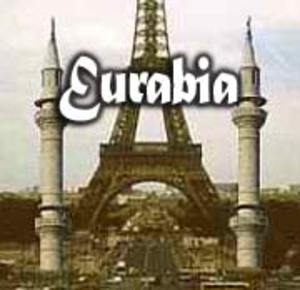

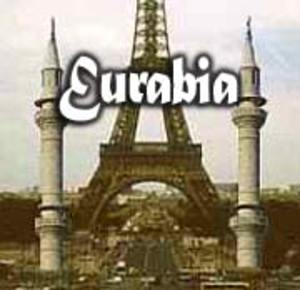
A great deal has been said about Europe turning into Eurabia, and France has often been said to be the center point of this transformation. It's often spoken of as some sort of terrible, accidental mistake that the French have simply somehow allowed to happen. But what if the concept of Eurabia is not accidental, but actually a very deliberate, intentional policy plan of the French? Fjordman at the Brussels Journal explores this idea in depth, and below is an excerpt from his article:

The Eurabia Code, Part I
[...] What follows is a brief outline of the thesis put forward by writer Bat Ye’or in her book “Eurabia: The Euro-Arab Axis.” My information is based on her book (which should be read in full). In addition I have drawn from some of her articles and interviews. I republish the information with her blessing, but this summary is completely my own.

In an interview with Israeli newspaper Haaretz, Bat Ye’or explained how French President Charles de Gaulle, disappointed by the loss of the French colonies in Africa and the Middle East as well as with France’s waning influence in the international arena, decided in the 1960’s to create a strategic alliance with the Arab and Muslim world to compete with the dominance of the United States and the Soviet Union.

“This is a matter of a total transformation of Europe, which is the result of an intentional policy,” said Bat Ye’or. “We are now heading towards a total change in Europe, which will be more and more Islamicized and will become a political satellite of the Arab and Muslim world. The European leaders have decided on an alliance with the Arab world, through which they have committed to accept the Arab and Muslim approach toward the United States and Israel. This is not only with respect to foreign policy, but also on issues engaging European society from within, such as immigration, the integration of the immigrants and the idea that Islam is part of Europe.”

“Europe is under a constant threat of terror. Terror is a way of applying pressure on the European countries to surrender constantly to the Arab representatives’ demands. They demand, for example, that Europe always speak out for the Palestinians and against Israel.”

Thus, the Eurabian project became an enlarged vision of the anti-American Gaullist policy dependent upon the formation of a Euro-Arab entity hostile to American influence. It facilitated European ambitions to maintain important spheres of influence in the former European colonies, while opening huge markets for European products in the Arab world, especially in oil-producing countries, in order to secure supplies of petroleum and natural gas to Europe. In addition, it would make the Mediterranean a Euro-Arab inland sea by favoring Muslim immigration and promoting Multiculturalism with a strong Islamic presence in Europe.

The use of the term “Eurabia” was first introduced in the mid-1970s
, as the title of a journal edited by the President of the Association for Franco-Arab Solidarity, Lucien Bitterlein, and published collaboratively by the Groupe d'Etudes sur le Moyen-Orient (Geneva), France-Pays Arabes (Paris), and the Middle East International (London). Their articles called for common Euro-Arab positions at every level. These concrete proposals were not the musings of isolated theorists; instead they put forth concrete policy decisions conceived in conjunction with, and actualized by, European state leaders and European Parliamentarians. [...]

(bold emphasis mine) Fjordman maintains that while the European press talks endlessly about 9-11 conspiracies that claim WE blew up the WTC ourselves, they have nothing to say about the conspiracy of Eurabia, which is easily documemnted and factual. France as the leader of this movement, has a facinating history with the Arab world, going back to Napoleon, some of which is examined here also.

This article is long and detailed, and the first installment of a series of articles. It goes a long way in explaining how Europe has gotten to where it is today, their complex relationship with the Middle East, and it's ensuing anti-Americanism, and the pivotal role of France in all of this.
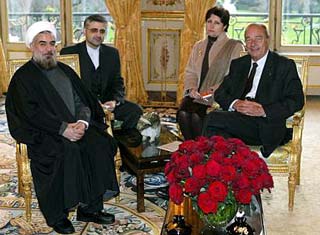


Why Is France Soft on Iran?
The recent divergence in US and French policies with regard to Iran should come as little surprise, given French President Jacques Chirac’s policy that France’s “relations with the United States will never be submissive.” Yet The Independent has posited that France ’s change of mind may in fact be connected with the presence of French peacekeepers in Lebanon – that is to say within range of Iran’s military proxy, Hezbollah. There may be some truth to that assertion, but it is perhaps more instructive to look at France’s Iran policy over the last few decades, the better to round out the context.

In the 1980s, France sided with Iraq during its conflict with Iran, with severe consequences. Between February and September of 1986, seven separate bomb attacks were carried out within France, killing 10 and wounding 152, with each attack accompanied by demands to release five Iranian prisoners. Four years later, these prisoners were indeed pardoned by François Mitterand, despite domestic opposition to the move. [...]

(bold emphasis mine) This is a short article, but it does explain a lot about France's uneasy relationship with Iran.
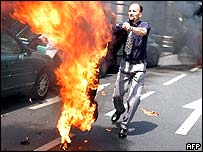

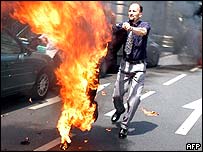
This photo is from a June 2003 article about an Iranian Cult/Terrorist group in France, whose members began setting themselves on fire in protest:

France investigates Iran exiles
[...] An examining magistrate ordered the members of the Iranian People's Mujahedeen (MKO) movement to be investigated for "conspiring with a terrorist organisation", judicial officials said.

They were among 17 detained Iranian opposition supporters - including MKO leader Maryam Rajavi - who appeared before anti-terrorist judges in Paris.

About 200 people from the MKO were arrested in a crackdown by French police over recent days. The 17 held in detention were being questioned over alleged plans to attack Iranian embassies across Europe.

Security around the court was heavy in case supporters of the group tried to set themselves alight - as happened several times last week. [...]

This photo of an Iranian woman who set herself on fire is just so horrible. When you think of "the streets of Paris", this is hardly the image that first comes to mind. I guess this is a reminder that France ain't what it used to be?

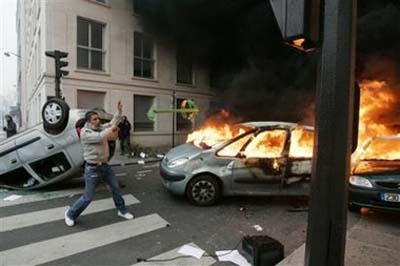
More common in France are the nightly "car-b-ques":
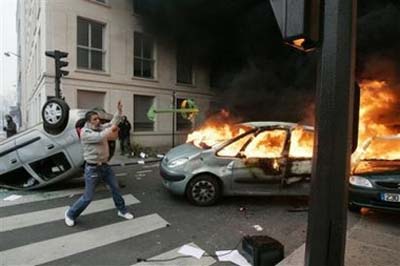

This photo is from last year's Ramadan Riots. The rioting stopped because the French and Belgium governments ordered the police to stop providing information on the rioting. I believe that policy may still be in effect; there have been attempts to start large scale rioting again this year, but without the media coverage, they fizzled out. Yet vandalism and attacks on Jews and the police continue. This year, the average so far for car burnings in France is 112 cars per day, and other violence continues:

[...] The figures are stark. An average of 112 cars a day have been torched across France so far this year and there have been 15 attacks a day on police and emergency services. Nearly 3,000 police officers have been injured in clashes this year. Officers have been badly injured in four ambushes in the Paris outskirts since September. Some police talk of open war with youths who are bent on more than vandalism. [...]

With all the car-b-ques, the French auto industry must be experiencing brisk sales. I'll bet auto insurance has gone way up.
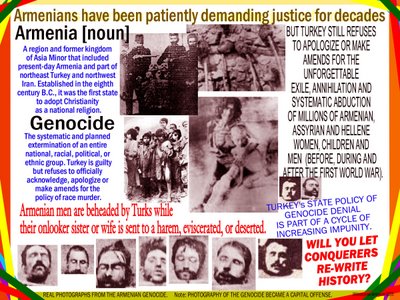


And in true French fashion, just when you start to think they are completely hopeless and spineless, they go and do something upity, politically incorrect and in-your-face. The lastest scandle, is that the French are rudely jabbing their finger in Turkey's eye, by insisting that they recognise the Armenian Holocaust:

French against Turks: Talking about Armenian Genocide
... more recently, it became visible that the Turkish genocide issue was not only angering the French government but it was an identifiable issue upon which the French were pushing for Turkish EU-access membership to be granted – i.e. ‘the Turkish should be pushed to admit the Armenian genocide, and if they refuse, then they shall forfeit a place as an EU-member state’. The opposing French Socialist Party – which pushed through the legislation – held that the bill protects and rewards the Armenians in exile from a country that still refuses to accept the atrocity. Then, on 30 September, in a visit to Yerevan, the French President confirmed his position: “Should Turkey recognize the genocide of Armenia to join the EU? … I believe so. Each country grows by acknowledging the dramas and errors of its past. … Can one say that Germany which has deeply acknowledged the holocaust, has as a result lost credit? It has grown.”

I subsequently reported on how France had been left alone on this position since other EU-member states seemed ready to treat Turkey softly on this issue – I also speculated, quite rightly, that this would have detrimental diplomatic relations with the Turkish government, by arguing: “It might also be thought that Chirac could not afford to push the condition too far, since it may bring substantial damage to Franco-Turk relations before Turkey has even begun to attempt its progress towards European harmonization.” Now, that problematic tension has evolved, it is clear enough for us all to see the aggravation caused, illustrating both bilateral and multilateral tensions. [...]

Turkey has legal restrictions forbidding anyone to claim there was an Armenian Holocaust. France has just passed a bill that does the opposite, forbidding people to claim that the Armenian Holocaust didn't happen. Now France is pushing to force Turkey to own up to the Armenian Genoicde, if they want to join the EU.

I don't think anyone should be passing laws to forbid anyone from discussing anything. Nor am I a supporter of the EU. Yet France is being rather bold, challenging Turkey on this issue while the rest of Europe seemed content to let it slide. Once again, the French are being difficult... and I must say, it's much more fun when they do it to someone else, instead of us, for a change. ;-)


Friday, December 01, 2006

The Pope's Visit to Turkey; a Balancing Act


From Joshua Trevino at the Brussels Journal:
Pope And Patriarch Join Hands
Two hours ago, Pope Benedict XVI and Patriarch Bartholomew I celebrated the Liturgy of St John Chrysostom in the Patriarchal chapel in Istanbul. They then emerged into the sunlight, joined hands and proclaimed their goal of a reunified Church. I was there for both -- and here is my photograph of this incredible event.

That was yesterday, more on this event today:

Under the Turkish Guns, the Christians Roar
[...] Bartholomew ascends to the iconostasis and welcomes Benedict in Greek. Benedict, aware of the cameras surrounding him, replies in English. We must, he says, recall Europe to its Christian heritage before it is too late – and we must do it together. Then they emerge into the cold sunlight of a cold day. They ascend to a balcony overlooking the courtyard where we gather in expectation. They speak briefly. And then, they clasp hands, Pope and Patriarch, smile and raise their arms together. Tears come to my eyes, and I am shocked to see several media personnel crying openly. For an instant, the Church is one. For a shadow of a second, the dreams of Christendom are again real.

Read the whole thing, for some interesting observations about the Turkish police, who are both protecting and "containing" the Christians. In fact many of Joshua's posts go into detail about the Turkish governments restrictions on Christians, and how they are contained, and the reasoning and historical predjudices behind it all.

Johsua has done several posts at the Brussels journal blog covering the Papal visit to Turkey. There is so much history, so much to understand. Here are some links to just a few of his posts, with some excerpts (bold emphasis mine):

A Stillness in Halki
[...] In an interview we had with Australian radio this morning, Robert Moynihan mentioned that all of European history is a nostalgia for Rome. He meant the Roman Empire – I don't know if the insight is his – and it occurred to me that the remains of Constantinople reflect this rather well. The barbarians who ended antiquity emerged from the same formless steppe as the Turks, and like the Turks, they sought to be worthy, in their way, of the heritage of their conquests. If we conceive of the Turks as the last eruption of the barbarians who ended the old Empires – in their case, the last vestige of Imperial Rome – then their modern predicament becomes more comprehensible. In watching the Turks seek to become European (even as Europeans strip the word of any meaning), one recalls Germanic and Gothic rulers seeking to be worthy of their concept of Roman culture. [...]


The famous Blue Mosque


The Loyal Opposition
[...] Kemal Kerincsiz is a sort of archetype of the fanatical nationalism which undergirds the Kemalist state in Turkey. He is well-known as a nationalist gadfly, especially in his role as chief of an ultra-nationalist lawyers' union who has made it his mission to bring Turkish writers to trial. The latest example was that of Elif Shafak, who apparently wrote something a bit too sympathetic to Armenians in one of her fictional works; Kerincsiz swiftly brought her to trial under the notorious Article 301 of the Turkish Penal Code. The Article renders citizens liable for "insulting Turkishness," a vague enough crime, and one that has allowed Kerincsiz to haul nearly forty writers into court -- including Nobel Prize winner Orhan Pamuk. As he says, "We are right to prosecute these cases ... In our culture, no-one can brand their ancestors murderers. Maybe in the West they are more tolerant, but here we can't accept those comments as criticism." The concern for Turkish integrity goes beyond the literary realm. Kerincsiz held forth to Time Magazine last year on his mistrust of Europeans in particular: "History taught us that we cannot trust these Europeans ... Look at what happened in 1920: they divided up the Ottoman Empire, even though they had pledged not to do that. People call us paranoid, but we're not."[...]


The Blue Mosque at night


Bardakoglu: Turkish for Chutzpah
[...] Reuters reports today that Ali Bardakoglu, chief of the Turkish Directorate-General for Religious Affairs, has requested that Pope Benedict XVI explicitly declare Islam to be peaceful: "I think the attitude the Pope should take is that neither Islam nor Christianity is a source of violence." Of course, the Pope does not take this attitude toward his own faith -- see his august predecessor's famous "Day of Pardon" during the Millennial Jubilee -- and there is little rational reason to think thus of Islam. (See, for starters, the Muslim reaction to the Pope's Regensburg remarks; to say nothing of the 9/11 and 7/7 attacks, for which I was present in New York and London respectively.) Bardakoglu's stated desire that the Pope should participate in a propaganda exercise is sadly typical, and profoundly ironic, given the source.

That fact is that Ali Bardakoglu was a rather prominent voice of Muslim indignation following the Pope's Regensburg address. He is on record as accusing the Pope of having an "attitude, which fuels division and lack of mutual trust, [that] is seriously threatening world peace," presumably by inciting Muslims to burn churches, kill priests, etc. He has declared that the Pope harbors a "subconscious Crusader mentality" that is "disrespectful" and "hostile." He has announced that the Pope has a "grudge in his heart" toward Muhammed, and that he does "not think any good will come from a visit to the Muslim world by a person who has such ideas about Islam's prophet." He has stated that the Pope represents an "abhorrent, hostile and prejudiced point of view" toward Islam.

Now, presumably, Benedict XVI is supposed to accede to this man's request for his preferred whitewash of Islam. Bardakoglu may or may not see any irony in this; what is certain is that trafficking in propaganda is part of his stock in trade. [...]

While this sounds merely critical of Turkey, it's more complicated than that. As you read more, you start to understand the forces and predjudices at work here, and how some sort of balance is trying to be achieved. It's difficult. Turkey is in so many ways a crossroads for Eastern and Western culture, and it's often an uneasy mix.

The photos in this post are Joshua's. There is a link below to more of them that he has made available on flickr.com.


Related Links:

From Tracy Wilkinson, LA Times staff reporter:
A tense time for a papal visit
Good commentary from the LA Times, explaining some of the tensions at work in this visit.

Pope and Patriarch
Website devoted to the Pope's visit with the Patriarch.

Joshua Trevino's Photos
He has lots of photos that he has made available at flickr.com.

Hagia Sofia, Christendom's Lost Church
My post from yesterday.