Saturday, March 03, 2007

Giuliani delivers speech addressing CPAC


CPAC (Conservative Political Action Conference) is an opportunity for some of the GOP presidential candidates to make themselves better known. This photo is not from CPAC, but Guiliani did recently make a speech there. A few excerpts from his speech, as reported by Michelle Malkin:

[...] "I believe the Republican Party's greatest contribution is when we give more freedom to people."

"America will prevail against the Islamic terrorists. I have no doubt."

"Maybe we made a mistake in calling this the war on terrorism. This is not our war on them. This is their war on us." (Prolonged applause.)

"This war is over when they stop planning to come over here and kill us. Until then, we have to remain on offense against terrorists."

"America has the right ideas. We should not be embarrassed by ourselves. We are the luckiest people in the world." [...]

For more coverage of the event, check out the following links:

The Conservative Political Action Conference

CPAC Day 1

See what Rudy is up to next:

Rudy does Hollywood


Friday, March 02, 2007

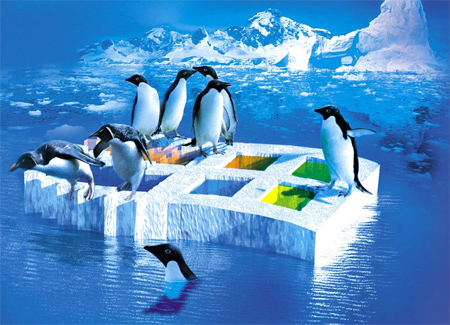
Our South Coast Winter Skies

I never tire of looking at the beautiful skies we have here in Oregon.


A giant fish swallows the sun. The end of another day in paradise.

Thursday, March 01, 2007

Is Apple going to drop OS X and move on?


The cartoon refers to accusations of insider trading leveled against Apple's CEO Steve Jobs. Apple can continue on without Steve if need be. But will Apple continue on supporting it's computer operating system, OS X?

The cartoon is also refering to Apple's new iPhone. Apple has been coming out with a series of products other than it's computer line. Recently the company changed it's name from "Apple Computer" to just "Apple", to reflect it's product diversification. At CoolTechZone.com, Gundeep Hora speculates about the company's commitment to OS X:

Apple Ready to Kill OS X?
[...] As Apple delves into the world of consumer electronics with more products and lucrative markets to go after, owning some 3 percent of the computing population won’t add much to its bottom line. Now, if Apple were to improve on that, then you can be sure Apple will continue to develop it.

Apple used to be persistent about its core product, but its slowly drifting away and changing directions, rightfully so. As such, it may not be surprising for Apple to leave behind OS X sometime in the future. [...]

I don't see them dropping it anytime soon, but if their other ventures become more lucrative, you have to wonder how committed they will remain to their small market share in the PC market.

OS X itself has an interesting history. The core of the operating system is based on FreeBSD, which is an open source Unix variant. I've read estimates that up to 80% of OS X is BSD code. Unlike Linux, which requires changes made to the code to be released back to the community, the open source license of FreeBSD allows anyone to make changes and NOT share them.

That is exactly what Apple has done. So in many ways, OS X is a Unix variant, containing a large portion of proprietary code (It's worth noting that they did release on open source version of the OS, minus the proprietary code, called Darwin).

The interesting thing is, BSD was made to work on a PC. Apple re-engineered it to work on their hardware. I believe that this means that if Apple so wished, they could reverse engineer OS X to work on PC hardware. If Apple ever decided to make a PC version of their software (that could run on ANY PC, not just their own MacIntel hardware), they could give Microsoft some real competition. But will they ever consider doing that?


In another article, Rob Enderle at Datamation has a look at the current situation with Dell, Microsoft, Linux and Apple:

The Emerging Dell-Linux-Apple War

There is a convergence of several factors which are leaving an opening to challenge Microsoft in the desktop OS market. But will either Linux or Apple be able to rise to the challenge quickly enough? And how soon will Microsoft recover from several major blunders that have allowed this situation to occur? Enderle looks at this and more.


Related Link: Free BSD for the Desktop


Like Linux, BSD developers have been pushing to make BSD an attractive and easy to install and use desktop environment.

Curious about BSD? This is my favorite version of BSD for the desktop, which uses the KDE desktop GUI:

PC-BSD

In my opinion, PC-BSD is one of the most complete BSD desktops, and it's relatively easy to install. Here are a few more screenshots, showing different ways it can be configured:


Looks like we will have more desktop choices in our future. Good!
     

Wednesday, February 28, 2007

BeOS lives on... newly incarnated as "Haiku"


Does anyone remember BeOS? An impressive computer OS, that just never really got a large enough following to catch on. I would have pursued using it, but there weren't enough applications for it at the time to make it useful enough. But the base it was built on was fast, and seemed great for graphics.

Recently I came across this article, which gives some details about what's happened with BeOS. It's making a come back under a new name: "Haiku":

Haiku: Long Live BeOS
[...] You may initially think of a haiku as being a form of a poem, but this Haiku is entirely different. The Haiku that we’re talking about is an open source operating system that is strongly inspired by BeOS. When BeOS was discontinued, a development project called OpenBeOS was created to help keep the operating system going, and it was eventually renamed Haiku, which leads us to where we are today.

Far from being some sort of subpar imitation of BeOS, Haiku’s developers have done their best to stick close to their source material, thereby assuring that the BeOS experience can be enjoyed even today. Although this project has been around for some time (dating back to 2001), it was just brought to my attention now, and I guess that’s because it’s starting to gain traction. It should be noted that a full release isn’t available for the public just yet, but if you’re the adventurous developer/tester type, then you can give one of the prerelease builds a try. [...]

I'm glad it didn't just disappear, but it may still not be ready to compete with the big players yet. If you are curious, you can find out more at their web site:

haiku-os.org
     

Sunday, February 25, 2007

Sunday Funnies 02/25/07


I don't want to end these "funnies" on such a gloomy note. Let's remember, that many of us do have a better vision of how we want things to turn out:


Now if we can just work together in a bi-partisan manner to make it a reality. It would help if the Democrat leadership stopped seeing our victory as a threat to themselves. A genuine failure in this war will become a genuine threat to us ALL.
 

Saturday, February 24, 2007

Microsoft, Linux, and our software choices

Microsoft has been hinting for years that Linux contains code that infringes on their copyright patents, and that one day Microsoft may sue both Linux distributors and their customers.


Microsoft has yet to offer any proof of patent infringement. Many say it's just part of Microsoft's campaign of "F.U.D." against Linux; to create an atmosphere of "Fear, Uncertainty and Doubt" surrounding Linux, which has been making large inroads into the server marketplace, and is now becoming a viable alternative in the computer Desktop software market, too.

Years ago Microsoft poured money into a small software company called SCO, which then started to make legal claims against Linux users. Claiming that Linux uses portions of code that belong to SCO, they insisted that companies who use Linux owe licensing fees to SCO, and began sending letters demanding payment.

A legal battle has ensued, which SCO seems to be losing as time goes on. Yet in the interim, many companies were put off of switching to Linux, because of the uncertainty this publicity created. The publicity from that case has been dying down, as the claims by SCO are being proved to be unsubstantiated. But Microsoft isn't finished yet; new dramas lie ahead:

Ballmer fires off Linux patent warning shot
Steve Ballmer has reissued Microsoft's patent threat against Linux, warning open source vendors they must respect his company's intellectual property.

In a no-nonsense presentation to New York financial analysts last week, Microsoft's chief executive said the company's partnership with Novell, which it signed in November 2006, "demonstrated clearly the value of intellectual property, even in the open source world".

The cross-selling partnership means Microsoft will recommend Suse Linux for customers who want a mixed Microsoft/open source environment. It also involves a "patent co-operation agreement", under which Microsoft and Novell agreed not to sue each other's customers for patent infringement.

In a clear threat against open source users, Ballmer repeated his earlier assertions that open source "is not free", referring to the possibility that Microsoft may sue Linux vendors. Microsoft has suggested Linux software infringes some of its intellectual property but has never named the patents in question. [...]

(bold emphasis mine) When Microsoft signed their deal with Novell, many in the linux community feared that Microsoft would use the deal to set a legal precedent for claiming ownership of portions of the Linux source code.

It's uncertain how far Microsoft would pursue this legally. It's believed by many that Microsoft has no case. But it could take years and years of legal battles to prove this. Microsoft has an army of attorneys, and deep pockets with which to pay them. They have learned a lot via their proxy, SCO. The legal battle itself could do a lot to advance Microsoft's interests, even if they can't halt but only slow down the progress of Linux and the Open Source Software (OSS) movement.

How vulnerable is Open Source Software? OSS licensing claims that anyone may use the source code and alter it in any way they wish, as long as they agree to release the altered source code back into the OSS community for others to use. It's the first license of it's kind, and it has never been challenged in a court of law.

There has been speculation that Microsoft's enormous legal team has been preparing for such a challenge for years. Even if such a challenge did not ultimately succeed, it could imped the progress of Linux during a crucial window of time, where Linux is quickly catching up to Windows in the desktop market, offering real competition. Vista does not appear to be catching on quickly, leaving newcomers like Linux an opportunity to advance if they can deliver the goods, thus draining away Microsoft's market share.

Competition is ultimately the best thing for consumers, but Microsoft is not likely to give up their monopoly without a fight. The question is, how dirty will they fight?


On a related note, the owner of the Linux Distribution Linspire, Michael Robertson, has an essay which explains why having freedom of choice about the software we use is vital to our own continued freedom in so many ways:

You Own Nothing

[...] In the guise of "security", Microsoft is trying to dramatically change the way PCs work. Instead of the owner deciding what software they want to install and run, Microsoft is seizing that power from them. Under the smokescreen of security, they are pronouncing that it is good for Microsoft to decide what software you can use.

It's the ultimate marketing challenge to explain to the world that turning over more control to Microsoft is an improvement that computer users should desire and pay money for. Microsoft has floated a series of hyper-technical sounding initiatives like Palladium and Next-Generation Secure Computing Base (NGSCB), each time explaining why it's a good thing for Microsoft to decide what software users should use. Earlier this week, Bill Gates talked about how it was like a "black box flight recorder," a not-so-subtle reference to 9/11 designed to tug on emotions. I leave it to others to comment on whether Microsoft has the security track record to decide what software is secure enough for me to be running. I'm more interested in the liberty and cost issues.

Some of you may be wondering why having choice over software is a "liberty" issue. We are quickly moving to a world where every communication, document, photo, song and movie is digitized and living on a PC or PC-like device. Software is the gateway to access parts of those elements. Without control over the software, there is no control of the underlying digital item. Your access can be taken away or modified at anytime. No control means you do not have ownership. This would be like buying a new home and then finding out that someone else has the keys to the front door and they control your access in and out of the home. You'd hardly feel like a home "owner" in such a situation. [...]


(Here is the Linux Desktop of Michael Robertson's Linspire.)


[...] I don't think Apple or Microsoft are intentionally evil. I just think that corporations cannot resist the urge to block competitors and squeeze customers at every turn. If Microsoft controls what software I can run, they will charge a lot of money for that software because I will be locked in. If Apple has control, they will make it only work on their hardware, which won't be cheap. I don't want any company - even Linspire - controlling my digital world. If a corporation controls my PC, my software or how I use my digital property, then I really don't own it. [...]

(bold emphasis mine) The freedom of software choice is closely tied to the freedom of information and data, and how we are allowed to use and distribute it (for specific examples, read the entire essay). Those who control the hardware, software and data formats can control information and even free speech. These are all good reasons for supporting Open Source Software standards, which leave us free to make our own choices. We are not served well by a monopoly, and in this particular realm, there is just too much at stake.


UPDATE 02-26-07: There is now a website called showusthecode.com, which contains an open letter to Steve Ballmer at Microsoft, challenging him to publicly pledge his support for Microsoft showing the public the code within Linux that violates their intellectual property by May 1st, 2007.

Failure by Microsoft or Ballmer to do so will be taken as verification that their threats and claims are empty and libelous.

I for one would like to see Microsoft produce their proof, or shut up.
     

Friday, February 23, 2007

Is Rudy Giuliani conservative enough to win?


Here are two links to articles by Jonah Goldberg. The first looks at Giuliani as a Republican presidential candidate. Said by some to be not conservative enough, Jonah reminds us that Giuliani is hated by the left in America for reasons a conservative could love:

America's tough guy
[...] Giuliani was considered a raging right-winger as mayor. No doubt this had much to do with the city's political center being so far to the left. But there's more to it than that. When I grew up in New York in the 1970s and 1980s, the job of mayor was, essentially, to manage the city's decline. Crime was not only seen as permanent, some on the left even tried to rationalize it as part of the city's charm.

By the time Giuliani arrived, social chaos was seen as the natural order of things. Giuliani heroically challenged these assumptions. He and his first police commissioner, William J. Bratton, refused to accept that mere containment was the best anyone could hope for.

Some are familiar with Giuliani's quality-of-life campaign against turnstile jumpers, welfare cheats, squeegee men, graffiti artists and porn shops. What's forgotten is that Giuliani was reviled for these efforts by the New York Times, the entertainment industry and the intellectual left - whose numbers are so great in the Big Apple that they actually constitute a voting bloc - and that every day he leaped back into the breach. [...]

He actually made a difference, and didn't flinch despite the abuse heaped on him. These are valuable leadership qualities. The article goes on to suggest that Giuliani needs to convince conservatives that he has made all the right enemies.


In his second article, Jonah has a look at both Giuliani and Mitt Romney, as conservative candidates who are appealing to the same group of voters. Jonah maintains that the focus of many conservatives today has put the WOT ahead of many other social issues:

Canaries in a coal mine
[...] Of course, Giuliani's national profile expanded enormously because of 9/11. And while the press harps on that point, the more interesting part of the story lies elsewhere. The war on terror hasn't just changed Giuliani's profile as a crisis-leader, it's changed the attitudes of many Americans, particularly conservatives, about the central crisis facing the country. It's not that pro-lifers are less pro-life or that social conservatives are suddenly OK with homosexuality, gun control and other issues where Giuliani's dissent from mainstream conservative opinion would normally disqualify him. It's that they really, really believe the war on terror is for real. At conservative conferences, on blogs and on talk radio, pro-life issues have faded in their passion and intensity compared with the war on terror. Taken together, terrorism, Iraq and Islam have become the No. 1 social issue for conservative base of the party.

Note: I didn't say it's become the No. 1 foreign-policy or national-security issue for social conservatives. It's become the No. 1 social issue, at least for many of them. [...]

Both Giuliani and Romney are Republicans who managed to get a lot of things done, despite having predominantly liberal constituencies to condend with. Jonah compares the two candidates to canaries in a coal mine; regardless of whether or not either gets the nomination, how well they do or don't do will tell us a lot about how the Republican campaign will shape up.


Related Links:

Rudy Roundup
What people are saying.

Violent Crime Rate in London is higher than New York City
London is experiencing a gun-crime epidemic, thanks to their ban on handguns.
     

Thursday, February 22, 2007

"Road Rage" has a nasty cousin: "Web Rage"


I almost didn't click on the link to read this article. I thought it probably wouldn't tell me anything I didn't already know.

I assumed it would conclude that anonymity on the internet was the reason people could be so rude, along with the lack of visual cues. It did mention those, but it also went further into some other details, such as the areas and functions of the human brain that rely on those visual and other kinds of cues, and how they are "blind" in cyberspace. With those restraining influences not functioning, not available to help a person judge the next appropriate response, it's easy to see how a civil conversation could be quickly derailed. Yet some people seem to better manage this cyberspace handicap than others. Why?

The essay is called "Flame First, Think Later: New Clues to E-Mail Misbehavior", By Daniel Goleman. An excerpt:

[...] Flaming has a technical name, the “online disinhibition effect,” which psychologists apply to the many ways people behave with less restraint in cyberspace.

In a 2004 article in the journal CyberPsychology & Behavior, John Suler, a psychologist at Rider University in Lawrenceville, N.J., suggested that several psychological factors lead to online disinhibition: the anonymity of a Web pseudonym; invisibility to others; the time lag between sending an e-mail message and getting feedback; the exaggerated sense of self from being alone; and the lack of any online authority figure. Dr. Suler notes that disinhibition can be either benign — when a shy person feels free to open up online — or toxic, as in flaming.

The emerging field of social neuroscience, the study of what goes on in the brains and bodies of two interacting people, offers clues into the neural mechanics behind flaming.

This work points to a design flaw inherent in the interface between the brain’s social circuitry and the online world. In face-to-face interaction, the brain reads a continual cascade of emotional signs and social cues, instantaneously using them to guide our next move so that the encounter goes well. Much of this social guidance occurs in circuitry centered on the orbitofrontal cortex, a center for empathy. This cortex uses that social scan to help make sure that what we do next will keep the interaction on track.

Research by Jennifer Beer, a psychologist at the University of California, Davis, finds that this face-to-face guidance system inhibits impulses for actions that would upset the other person or otherwise throw the interaction off. Neurological patients with a damaged orbitofrontal cortex lose the ability to modulate the amygdala, a source of unruly impulses; like small children, they commit mortifying social gaffes like kissing a complete stranger, blithely unaware that they are doing anything untoward.

Socially artful responses emerge largely in the neural chatter between the orbitofrontal cortex and emotional centers like the amygdala that generate impulsivity. But the cortex needs social information — a change in tone of voice, say — to know how to select and channel our impulses. And in e-mail there are no channels for voice, facial expression or other cues from the person who will receive what we say. [...]

It's rather a detailed explanation for how things can go off track into flaming so quickly. The article also talks about a study done with college students as test subjects, communicating with each other anonymously via computer. The study showed a shocking 20% were deliberately and needlessly rude and offensive.

I would speculate that most of that 20 percent would not have been so belligerent if they were face to face with a stranger, and therefore accountable for their behavior. The interesting question is, how much of the problem is the media of communication used, and how much is it the personalities of the individual people involved?
     

Sunday, February 18, 2007

Sunday Funnies 02/18/07


Tammy Bruce has a good post on this very topic: Hoping for Failure


And just to be fair and multicultural, I'm including this last comic, published by the Egyptian Weekly Al-Ahram, with text translation.

Text at the top says:
<< "Hillary" and "Obama" – A Woman and a Negro are Participating in the Campaign for the American Presidency >>
Text spoken by the Religious Man:
<<"This is another sign of the collapse of the Western civilization">>

Source: The MEMRI Blog

That's really funny, isn't it? Democrats, it's time to WAKE UP.
     

Saturday, February 17, 2007

Gizmo Project: Call Pope Benedict for Free

I think Gizmo is just using the Pope as an example of what their software can do. Yet is it really possible to call the pope long distance, and not even pay anything? That's the claim in this article by Michael Robertson, creator of the Gizmo Project:

Call The Pope For Free

It's now free to call the Pope or anyone else in Vatican City using Gizmo Project. In fact, you can now call telephones in 60 countries for free thanks to a new friends and family type calling program offered by SIPphone. (Read this page for specific instructions for how to get going with it.) Various press accounts have said its either crazy or clever. My inbox is full of lots of questions about this program so I thought I'd address them all at once publicly:

Q: You keep saying, "calls are going to be free", but that's just a marketing ploy right? You don't really mean it, do you?

A: I really mean it - calls will be free. Just look at the calling promotions being offered by some of the leading VOIP companies. They are continually lowering calling costs, which will eventually end at absolutely free calling: [...]


Robertson has some interesting comments about the price of phone calls. He maintains changes are happening, phone prices are dropping and pretty soon, phone calls will be just another digital transmission, FREE of charge like sending an email (for those who have an ISP account, of course). A few more excerpts:

Q: Moving phone calls around the planet costs money - someone has to pay. Nothing is free.

A: A telephone call is simply data representing audio signals moving along copper wires. Sending an email is also data moving along copper wires and so is zapping an instant message around the world. In each of these examples, there are costs involved but the costs are so small that it costs more to try to measure than the actual cost! So basic services can be offered which are free to the user and make money in other ways through premium services, advertising or other cross-sells. Just as you have free email and instant messaging services, a completely free voice service is also nearly practical.

Q: Phone calls require an enormous amount of equipment and cabling so your comparison to email is inaccurate.

A: Many decades ago there was enormous amounts of equipment built to handle phone calls, but that equipment has been paid for many times over. The phone companies own it free and clear and maintenance is minimal. Today, money is being spent on equipment to bring internet connectivity to users either via wireless, DSL or cable lines, which allows for all types of services including TV, video on demand, net access, and calls. The cost of this equipment is covered with a monthly subscription for internet access, making the voice component a tiny slice.

Q: Local calls might be cheap, but long distance calls can be expensive.

A: It doesn't cost more to send an email message to someone far away - it shouldn't cost more to make a call to someone far away - it's just data on a copper wire. Long distance may still be expensive but only because of the exorbitant costs imposed by governments or grandfatherly telephone companies seeking to generate revenue off their citizens who are forced to use their service. Eventually this goes to zero because users are revolting and using net-calling to avoid these fees. [...]

I can't print the whole thing here, but it's worth following the link and reading it all, it's not very long.

Can you REALLY call the pope?

Q: Can I really call the Pope on Gizmo Project?
A: Yes. His username is Pope_Benedict. Double click to call him. If he's not online, right click and dial his home line (remember this is a free call). [...]

I find that hard to believe, the pope taking phone calls, at HOME no less, from all over the world, from just ANYONE, anytime.

Although the Gizmo software sounds interesting, I've already got a good calling plan; I don't use the phone a lot, and I'm not really motivated to install the sofware and try it out, at least not right now. But if I was, I'd be curious to try phoning the pope and see what happens. What would I say?

"Hi. I'm not even Catholic or anything, I just wanted to see if you would answer the phone."

LOL.

I suspect getting through to the pope may be more theoretical than literal. For the call to be free, it has to be from one Gizmo phone computer to another (which the Vatican does have, apparently), but there are other conditions as well. You have to have shared "profiles" with the party you are calling, whatever that means.

You can use Gizmo software to call non-Gizmo people who have regular phones, but the call won't be free. However, it will be very inexpensive, the rates are cheap, just pennies. Even for international calls!

You can read more about the Gizmo project, and even download the software and try it out, at this link:

Gizmo Project

If anyone try's calling the pope, I'd love to hear about it.
     

Friday, February 16, 2007

What can we do with a country like Iran? LOTS.

(You can read Cox & Forkum's related commentary and links HERE.)


In so many ways, terrorist troubles in the Middle East and around the world lead ultimately back to Iran. Yet in so many ways, we seem helpless to do anything about it. The Western World is afraid to bomb Iran; chaos of all sorts would likely ensue, and the world price of oil would probably rise drastically. The U.S. has no will to invade Iran, since we have our hands full with Afghanistan and Iraq. Is there nothing we can do?

Actually, there is quite a bit we CAN do, other than a military strike, according to Victor Davis Hanson, in his latest article:

Tapping Ahmadinejad's Egg
[...] Imagine that Iran is a hardboiled egg with a thin shell. We should tap it lightly wherever we can - until tiny fissures join and shatter the shell.

We can begin to do this by pushing international accords and doggedly ratcheting up the weak United Nations sanctions. Even if they don't do much to Iran in any significant way, the resolutions seem to enrage Ahmadinejad. And when he rages at the United Nations, he only loses further support, especially in the Third World.

We should start another fissure by prodding the European Union, presently Iran's chief trading partner, to be more vocal and resolute in pressuring Iran. The so-called EU3 - Britain, France and Germany - failed completely to stop Iran's nuclear proliferation. But out of that setback came a growing realization among Europeans that a nuclear-tipped missile from theocratic Iran could soon hit Europe just as easily as it could Israel. Now Europeans should adopt a complete trade embargo to prevent Iranian access to precision machinery and high technology otherwise unobtainable from mischievous Russia and China.

Americans should continue to support Iranian dissidents. We need not encourage dissidents to go into the street, where they could be shot. Instead we can offer them media help and access to the West. Americans can highlight the plight of women, minorities and liberals in Iran - just the groups that so appeal to the elite Western left.

And we should announce in advance that we don't want any bases in Iran, that we don't want its oil, and that we won't send American infantry there. That would preempt the tired charges of imperialism and colonialism.

The United States also must stabilize Iraq and Afghanistan. The last thing Iran wants is a democratic and prosperous Middle East surrounding its borders. The televised sight of Afghans, Iraqis, Kurds, Lebanese and Turks voting and speaking freely could galvanize Iranian popular opinion that in time might overwhelm the mullahs. [...]

(bold emphasis mine) I can't print the whole thing, but it's just chock full of good ideas. We must remember that we actually have allies inside of Iran. There are forces inside Iran, even among the ruling mullahs, that want Ahmadinejad out. And if we do all we can to become more energy independent, and bring about a drop in the price of oil... what do you think will happen in Iran? Do read the whole article, it's good stuff!


A Reason to be Optimistic About Islam?


(You can read Cox & Forkum's related commentary and links HERE.)


If only the cartoon where true. But could it be that it's getting closer to reality? There is actually going to be a Secular Islam Summit in St. Petersburg, Fla., on March 4-5. A partial excerpt from Cox & Forkum:

[...] According the chair of the meeting, the rationalist critic of Islam and acclaimed author Ibn Warraq, "What we need now is an Age of Enlightenment in the Islamic world, of the Islamic mind-set or worldview. Without critical examination of Islam, it will remain unassailed in its dogmatic, fanatical, medieval fortress; ossified, totalitarian and intolerant. It will continue to stifle thought, human rights, individuality; originality and truth."

Said one summit delegate, Irshad Manji, author of The Trouble with Islam Today, "This summit is proof positive that reform-minded Muslims are creating a movement. We no longer exist in isolation. Those who hate our message of free thought in Islam will keep trying to pick us off individually, but collectively we're not going anywhere except forward."

(bold emphasis mine) YES! They are going to have some great speakers too, check out the links to find out more.


Related Link:

Jamal Miftah: a moderate Muslim's plight [video]
     

Wednesday, February 14, 2007

Is Mitt Romney's Underwear Sacred?

Inquiring minds want to know: What kind of underwear does Mitt Romney wear?
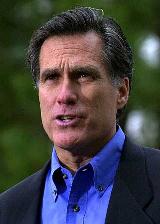
At least that is what some members of the press think we need to know. A reporter asked him that very question recently. She said she felt embarrassed asking him, and he refused to answer, saying it was a personal matter, so she quickly moved on to the next question.

What does it matter what kind of underwear Republican Presidential Candidate Romney wears? Well it doesn't matter at all, to me personally, as I'm sure it didn't to the reporter. What it comes down to, is the issue of Mormon under-garments. What's it all about? What do Mormons believe about it? Does Romney share those beliefs? Does it even matter if he does?

Religions often use clothing choices to set their membership apart from other people. The reporter who asked him that question may have felt compelled to ask it, because as a candidate for President, Romney is setting himself up as a leader of our society. If he chooses to set himself apart in this particular way that Mormons do, people will naturally have questions about that.

When that reporter asked that question, I could see that she put Romney in a difficult position. By refusing to talk about it, it could seem like he was hiding something. Yet if he did agree to talk about it, it would have seemed undignified for a presidential candidate to be answering questions about his underwear to a reporter. It would also open the door for more awkward personal questions that might compromise his dignity. What's a Mormon presidential hopeful to do?

According to the blog Mormon Coffee, it seems that Mitt has found the answer. Here's a quote:

[...] Romney responds more generally when asked if he has participated in an endowment ceremony, in which men and women take vows of secrecy about temple rites and of obedience to the Lord, and begin the daily practice of wearing a sacred "temple garment" resembling abbreviated long underwear.

"I do attend the temple of my church...and people can learn about that by contacting the church," he says, adding: "I'm sure on the Internet you can find every single aspect of what's entailed." [...]

He says anyone who wants to know can look it up on the web. That is exactly what I have done. Here are some answers I've found:

Mormon Garments?


The photo above is from Wikipedia, and shows samples of the underwear (more respectfully referred to by Mormons as "garments"). This is an older, pre 1979 style. I'm told contemporary garments look more modern. The genuine articles are much sought after on E-Bay, apparently. You can't buy them in stores. The Wiki link has more information about the symbols, which aren't obvious in the photo.

In high school I had a friend who converted to Mormonism, and she took me to attend their services for a while. I did the whole thing with talking to the Missionaries, reading the Book of Mormon, etc. I also did some research at the library... and ultimately concluded that the Mormon religion was not for me.

Yet with all that, I didn't know about the special underwear. Maybe that's something they only tell you about after you join. Anyhow, I did learn a few things from this web site: www.mormon-underwear.com. An excerpt:

[...] If you look at a pair of garments, there is nothing physically special about them. They are made from a variety of light-weight fabrics, and most garments are white. (There are some special colored garments that can be worn by members of the armed services, but for the vast majority of Mormons, garments are always white.) The white color symbolizes purity and the length and cut of the garment helps assure modesty in dress and appearance. The garment bears several simple marks related to gospel principles of obedience, truth, and discipleship in Christ.

The meaning attached to the garment by devout Mormons transcends the fabric and design used to create the garment. It is sacred to the wearer not for what it is, but for what it represents. It reminds the wearer of the continuing need for repentance and obedience to God, the need to honor binding covenants voluntarily made in the temple, and the need to cherish and share truth and virtue in our daily living. By so doing, the garment helps the wearer to focus his or her life on Jesus Christ and to thereby lay claim on the blessings promised to those who do so. [...]

The underwear is not supposed to show when you are dressed, so I guess that is maybe why you never see Marie Osmond at a party wearing a gown-less evening strap like a Hollywood tramp. The garments favor modesty.

On other sites around the internet, I read that there are stories about how some Mormons believe the underwear kind of "magically" protects them. Conversely, some overzealous evangelicals make wild claims against the underwear, calling it Satanic, and claim inaccurately that Mormons never take their underwear off, even when bathing. Don't believe everything you read. Just like other people, they take them off for sports, swimming, bathing, and sex.

There is supposedly a special "sports" version for athletes that's for sale on e-bay. I didn't confirm it, because ... I really don't care. This isn't a big issue, nor should it be.

Still want to know more? Check out Mormon Underwear FAQs.


UPDATE:
I've rewritten this post, because I was originally too glib regarding the subject matter, and thus needlessly offended some people, which was not my intention. If I caused offense, I apologize.

I assumed that anyone reading this post would click on the embedded links. The first link is to an earlier post I did about Mitt Romney's health care initiatives in Massachusetts, and a glimpse at his presidential aspirations.

The other links are to what I believe to be MORMON sources that are explanations about the garments. The Wikipedia link is not a Mormon source, but in a secular way fits in with what the Mormon sources say. I hope it clears up some misconceptions and rumors about the meaning of Mormon garments.

Whether Mormonism is a religion or a cult is a contentious topic for some. It's also something people can decide for themselves; the topic is too big to tackle here, and is a distraction from the original purpose of this post. That purpose is to ask: Will Romney's Mormonism be an issue with the voters, and should it be?

I used the underwear as an example of this, since a reporter had already broached the subject, and it seemed likely to come up again. For me, it's not an issue. I'm not religious myself, and I find many people's religious beliefs a bit strange. But I tolerate religion as a person's personal choice. As long as they don't use it as a weapon to attack me with, I'm fine with it.

Romney being a Mormon is no different to me than being a Catholic, a Protestant, a Hindu or anything else. I'm not voting for a religion, I'm voting for the best candidate to do a job. I think Mitt Romney has great potential for the job position he is seeking, and should be given every serious consideration. We don't worry about Mormons holding other positions in our government and society, and this should be no different.

I have known many Mormons since moving out West. I may not personally care much for their religion, but have found them to be mostly very friendly, likable people, who are very family and children oriented. I've always found that quality admirable. They are often fine patriots and upstanding citizens.

We shall have many important things to consider in this coming election year. If Mitt expects to win, clearly he has to gain the trust and confidence of non-Mormons, even people who actively dislike that religion. The best way to do that is to dispel their fears. Hopefully the information here will contribute to doing just that.


Related Links:

Pressure on Romney to firmly address Mormon faith

The Real Mitt Romney? Is he electable?
     

Monday, February 12, 2007

Monday Funnies 02/12/07

Old Lady versus Sports Car Jerk

Here's a Monday Funnie to start your week.

Hat tip to Nealz Nuze for the YouTube link.


Speaking of old ladies, here's a few other things I've come across:


The following is a joke involving a lady who is not necessarily old, but is feisty:


The Power of Toilet Paper

Fresh from my shower, I stand in front of the mirror complaining to my husband that my breasts are too small. Instead of characteristically telling me it's not so, he uncharacteristically comes up with a suggestion.

If you want your breasts to grow, then every day take a piece of toilet paper and rub it between them for a few seconds."

Willing to try anything, I fetch a piece of toilet paper and stand in front of the mirror, rubbing it between my breasts.

"How long will this take?" I asked.

"They will grow larger over a period of years," my husband replies.

I stopped. " Do you really think rubbing a piece of toilet paper between my breasts every day will make my breasts larger over the years?"

Without missing a beat he says "Worked for your butt, didn't it?"

He's still alive, and with a great deal of therapy, he may even walk again.

Stupid, stupid man.

Sunday, February 11, 2007

Sunday Funnies 02/11/07

(For a good article on this topic, read: There's No Place Like Home. It's a fair and balanced look at socialized medicine vs. our system of health care.)


(You can read related commentary and links here.)

I've posted previously about the Culture of Death:
Children raised in a murder-suicide culture


(You can read related commentary and links here.)


(You can read related commentary and links here.)