Showing posts with label open source. Show all posts

Tuesday, February 07, 2023

MoneyManager Ex: A Free Alternative to Quicken

If you dont want a program as complicated as Quicken, but want/need something more complex than a spread-sheet, you might want to consider the open-source accounting software "MoneyManager Ex". I've been using it for a bit, and it's quite easy to use:


It has features that allow generating reports, making budgets, etc.
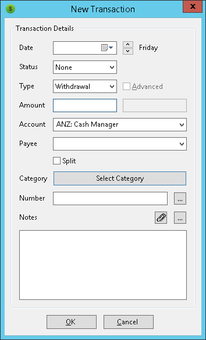
A window opens, when you want to make transactions, which is easy to learn and use:


It doesn't have a balancing feature like Quicken, for checkbook reconciliation.  But you can reconcile the account by matching your transactions to you bank statement and checking them off as "reconciled" when they match.  Unless you write hundreds of checks or have hundreds of online transactions, it shouldn't take long to do.

If you think it might meet your checkbook register management needs, download and use it for free, and give it a try:

https://moneymanagerex.org/

https://sourceforge.net/blog/july-2020-community-choice-project-month-money-manager-ex/


Monday, March 08, 2021

Linux OS choices for beginners

Best Linux Distributions That are Most Suitable for Beginners
Brief: It’s easy to get overwhelmed by the list of Linux distributions available. In this article, we will mention the best Linux distros for beginners.

Let’s face it, Linux can pose an overwhelming complexity to new users. But then, it’s not Linux itself that brings this complexity. Rather, it’s the “newness” factor that causes this. Not getting nostalgic, but remembering my first time with Linux, I didn’t even know what to expect. I liked it. But it was an upstream swim for me initially.

Not knowing where to start can be a downer. Especially for someone who does not have the concept of something else running on their PC in place of Windows.

The first thing that confuses a newcomer is that Linux is not a single operating system. There are hundreds of Linux distributions. We have covered why there are so many Linux in detail, so I am not going to discuss it again.

Here are a few lists of Linux distributions based on different criteria:

[...]

They review 9 different distributions to choose from. See the full article for photos and screenshots, embedded links and more.


Tuesday, January 14, 2020

Windows 7 support ends. So where to now?

Microsoft suggests upgrading to windows 10. That would be fine... if it worked. They offered free windows 10 upgrades. I tried that, and it was disastrous. It seemed to work well at first, but as time went on, updates would cause different parts or functions of the the computer (like SOUND) to stop working. Turns out, that unless your computer hardware -all of it- has been "Windows 10 certified", Microsoft does not guarantee that it will work on YOUR computer. Wish I knew that before I installed it. By the time I discovered this, it was too late to roll it back from Windows 10 to Windows 7.

So if you want to "upgrade" to Windows 10, you are probably better off getting a computer with it already installed and certified for that hardware. Then, the Windows 10 fun can begin. It has some good features. Yet, some things never change:


But... what should you then DO with your old Windows 7 machine? You can keep using it for a while longer of course, but as time goes on, without security updates, it will become riskier and riskier to use.

Personally, I found a solution with my aborted Windows 10 computer, that couldn't be rolled back to Windows 7. I'm using it with all my Windows 7 machines now. The solution is a Linux operating system called Linux Mint. It's a complete, free opensource operating system that you can download and install, free of charge.


There are several versions you can choose from. I prefer the Linux Mint Debian Edition (LMDE), because it's a "rolling" distribution; you only have to install it once, then it updates itself continuously after that. Other versions use Ubuntu as a base, and major upgrades require a complete reinstall every three to five years.

It's probably the easiest Linux system for a novice to download and use, and easy to learn and use too. A perfect way to extend the life and usefulness of older computers that cannot be successfully upgraded to Windows 10. Highly recommended.
   

Sunday, March 17, 2013

Android VS iPad. Is Android Winning?

Looks like that may be the case:

Android Tablets Pushing Aside iPad: IDC
Influx of low-cost Android-based devices will tip the tablet market in Google's favor this year, says IDC.
[...] Android tablets may have a leg up on the Apple iPad and iPad Mini thanks to their lower price point. Devices such as the Asus Nexus 7, with its $199 price tag, are appealing when compared to more expensive Apple hardware. The iPad Mini, for example, starts at $329 and jumps up quickly if you add features such as LTE 4G or more storage. Consider, also, the recently announced Galaxy Note 8 from Samsung. This appealing 8-inch tablet brings many of the Note II smartphone's features up to tablet size at a price that still beats the iPad.

The Nexus 7, Galaxy Note 8 and other Android tablets will account for 48.8% of the 190.9 million tablets shipped during 2013 (about 93.6 million tablets). That's up from IDC's previous forecasts for the year, which were much lower at 41.5%.

At the same time, IDC said, Apple's share of the tablet market will slip from the 51% of shipments it held at the end of 2012 to about 46% of shipments (about 87.9 million) by the end of 2013.

That means Android-based tablets will outmatch the iPad for the first time, with 48.8% of the tablet market this year, compared to 46%. That will certainly sting Apple, as it defined the current tablet market with the iPad.

Android and Apple aren't the only players in the game, however. Believe it or not, Microsoft is going to make some noise in the tablet market this year, said IDC, thanks to Windows 8 (think Surface Pro) and Windows RT. Both of Microsoft's tablet platforms will steal share that would otherwise have gone to Apple or Google, but not everything is necessarily going well with Microsoft's tablet plans. [...]

But then there is also Samsung's own operating system, "Tizen":

Samsung's future is Tizen, not Android
[...] Up until now, everybody had assumed that Tizen would focus on the lower and middle end, with Android focussing on higher-end phones (and also low-end). This new statement by Samsung seems to contradict just that; Tizen will be on high-end devices.

Add all of this together and it becomes clear what Samsung is going for. The company wants to decrease its dependence on Google, and Tizen is the way they're going to do that. For most Samsung smartphone owners, TouchWiz is Android, and since Tizen could easily get a TouchWiz-like user interface, the average consumer wouldn't notice a thing. OpenMobile's Application Compatibility Layer takes care of the application situation, and will allow Android applications to run on Tizen unmodified.

In other words, since most Samsung users are familiar with TouchWiz and Android applications, Tizen should not provide them with any difficulties - yet, at the same time, it will give Samsung control over its own platform, independent from Google. It won't have to conform to Google's wishes, it won't have to deal with sudden code drops from the Android team - it can do what it wants.

Of course, this won't happen overnight; it'll be a gradual process that may take several years. I also highly doubt Samsung will drop Android altogether - most likely, Samsung's big sellers, top-of-the-line devices will run Tizen, while others will run Android. [...]
More choice. Good! Read more about the open-source Tizen OS here.
     

Saturday, May 26, 2012

The New Commodore OS is Finally Here!

Actually, it came out last November, I just missed the party. Here is the release trailer, I thought it looked spiffy:


I posted previously about the New Commodore Company, which is releasing a New Commodore 64 and other Commodore-lookalike computers, that use conventional PC hardware on the inside. But the new Commodore Operating System, they promised, would bring back the "fun" in computing that the old Commodore Computers had.

I read somewhere that the new Commodore OS is based on Linux Mint 10. That's fine with me, Linux Mint is a great distro. The eye candy they've added is nice, and it looks like they have bundled it with lots of apps and software.

Introducing Commodore OS Vision
Commodore OS Vision is our customized GNU/Linux distribution for Commodore enthusiasts that is designed to unleash your creative potential and help you enjoy your computing experience to the fullest. Commodore computers were well known for their unique operating environments, so we seek to do the same, by providing a distinctive, attractive, advanced and fun operating system experience. Various themes are included, inspired by the Commodore 64 and various versions of the Commodore Amiga Workbench user environments, but with a modern spin, which includes many slick graphical effects which showcase the capabilities of our new Commodore machines.

Commodore OS Vision is not a derivative of the original AmigaOS developed for 68K microprocessor computers in the 1980's, but an entirely modern operating system based on GNU/Linux.

[...]

Pre-installed on all Commodore USA hardware, Commodore OS Vision comes pre-loaded with dozens of the latest and greatest productivity, creativity and entertainment software the open source world has to offer. Featuring dozens of exciting 3D games, the latest web browsing technology, a Microsoft Word compatible Office Suite, advanced graphical manipulation programs, 3D raytracing software, advanced software development tools and languages, photo and movie editing and sound and music composition programs, there is no task too big or too small for a Commodore or AMIGA computer to accomplish.

[...]

The Commodore OS Vision project was created as an operating system option for Commodore enthusiasts purchasing Commodore USA computers. It is but the first step on the path to creating the ultimate Commodore experience for our customers. This retro-futuristic OS experience takes design cues in its appearance from classic Commodore and Amiga operating systems and evolves them further to create a distinctive and modern 21st century look which adds personality to our new Commodore machines. The selection of software included also has a retro slant which would be familiar to many Commodore fans, making them feel at home. It features the latest iteration of the classic Gnome 2.x user interface, which many prefer for its simplicity, stability and straight forward access to applications.

Commodore OS Vision stands on the shoulders of giants, with a lineage that traces back to fantastic linux operating system distributions such as Debian, Ubuntu and Mint, which you might also be interested in installing on our machines. Commodore OS Vision auto-installs a graphical operating system boot menu facilitating this further, making your new Commodore machine a technology tinkerers delight. [...]

Wow. Follow the link for more details.

I love the retro-feel. It's still in Beta though. No phone support for it, although there is an online forum at commodore-amiga.org. They say the best is yet to come. I sure hope so.


Also see:

A thorough 12 minute tour/review on Youtube: Spatry's Cup of Linux

Here is it's listing on Distrowatch: Commodore OS Vision
     

Friday, August 19, 2011

Has "Wintel" been replaced by "Quadroid"?

A case can be made for it. First, the Wintel monopoly is dying off, ironically from it's own practices:

HP is Wintel's latest victim
NEW YORK (CNNMoney) -- For nearly three decades, personal computer makers thrived by building their PCs around two key ingredients: Intel chips and Microsoft Windows.

It's an unprecedented success streak in the fast-changing tech market, where new technologies displace old ones in an eyeblink. But now, it looks like the "Wintel" party is finally winding down.

[...]

"The tablet effect is real," HP CEO Leo Apotheker said Thursday on a conference call with analysts. "Consumers are changing how they use PCs."

In the new "post-PC" era, razor-thin profits are no longer attractive.

"The PC business only returns a few points of margin. HP is really good, and they only return 5%," said Martin Reynolds, analyst at Gartner. "Staying in the PC business is relatively risky. Who knows where these things will go over the next few years?"

[...]

"I think what we're seeing -- what HP's move is really about -- is the aftermath of the Wintel strategy, in which you give all the profits to Intel and Microsoft," said Carl Howe, analyst at Yankee Group.

While companies like HP and Dell are getting by with single-digit margins in their PC businesses, Microsoft (MSFT, Fortune 500) is the fourth-most profitable company in the Fortune 500. Intel (INTC, Fortune 500) is 14th.

"Guess what? That model is driving them all out of business," Howe continued. "It has made companies like Apple look really smart. Wintel is falling apart."

HP would follow IBM's exit of the PC market -- albeit seven years later.

IBM's move is looking more and more prescient: When it sold its iconic PC business to Lenovo in 2004, IBM (IBM, Fortune 500) said it believed the PC market was commoditizing. It didn't want to play in a market with so little upside.

Even Microsoft appreciates the changing tide. It's planning for the post-PC era by developing a new version of Windows for tablet PCs, running on mobile chips designed by British company ARM (ARMH). That's also why it's fighting so hard to make Windows Phone work: Microsoft realizes it can't afford to be left out of the computing platform of the future.

So if we're really witnessing the "final collapse of the Silicon Valley PC era," as Howe suggested, who's next to go? [...]

Read the whole thing to find out. But don't just look at who's next to go; consider also, perhaps more importantly, who's next to come, and why:

Android and Qualcomm are the new Wintel
NEW YORK (CNNMoney.com) -- Google's Android mobile operating system has been credited with saving struggling handset manufacturers, but it may ultimately be the thing that kills a number of them off.

Before Android came around, mobile devices typically had hardware integrated with custom operating software, which differentiated LG phones from Samsung phones from Motorola phones, and so on. No two devices from rival manufacturers were at all alike.

But now, for the first time ever in the wireless ecosystem, a standard platform is emerging: At least a dozen handset makers have brought to market more than 90 different smartphones that run Android, and more than three quarters of those handsets have Qualcomm chips embedded in them, according to a new study by consultancy PRTM.

The Qualcomm-Android standard, or "Quadroid" as PRTM calls it, is becoming a parallel to the Windows-Intel, or "Wintel," standard that developed in the 1990s.

Like with Wintel PCs, Quadroid devices' software and hardware is essentially a commodity -- they're very similar on every phone, making differentiation a difficult task. Form factor is still a battleground -- some people want keyboards, some don't -- but drop past the top-tier of the very newest devices and the distinctions are tiny. Kickstands, dual screens, very high resolution cameras and OLED touchscreens are among the features Quadroid smartphone makers are using to set themselves apart.

It was a problem that Wintel PC companies tried to solve -- mostly unsuccessfully -- with customizability (Dell), unique design (Alienware), and cow-print boxes (Gateway).

But Quadroid has an added wrinkle: Android is open source, meaning it's free for device manufacturers to use and manipulate. That makes the barrier to entry almost nil, opening the door to a number of no-name manufacturers to produce smartphones that compete with the big guys. Two years ago, no one had heard of HTC or Kyocera, LG had virtually no smartphone presence, and Motorola (MOT, Fortune 500) had been left for dead. Now they're at the industry's vanguard. [...]

So a whole bunch of new players have jumped in and are at the head of the new trends, where Microsoft and Intel have not been able to go... yet. They are rushing to catch up and cash in. Will they make it? Will the competition they face produce better products? And will it all end up again being just a few major companies dominating everything in the end? We shall see.
     

Sunday, November 07, 2010

I've discovered "aTunes", and it's good!

It's a cross-platform music player and manager:


aTunes: GPL Audio Player and Manager
aTunes is a full-featured audio player and manager, developed in Java programming language, so it can be executed on different platforms: Windows, Linux and Unix-like systems, ...

Currently plays mp3, ogg, wma, wav, flac, mp4 and radio streaming, allowing users to easily edit tags, organize music and rip Audio CDs. [...]

I discovered it when I downloaded it from a Linux repository. One of my favorite features is, that it finds the lyrics to the song you are playing, and displays them in the sidebar.

I've since downloaded the Windows version too. Here is a review of aTunes from CNET:

CNET editors' review of aTunes 2.0.1
When we tested aTunes, the fast installation was followed by shockingly sluggish tree navigation, required to add our song library. Fortunately, the subsequent scan was flawless, handling 7,500 tracks in about 10 minutes. So in music terms, the show started off with some bad feedback, but then aTunes really got rockin'.

The tabbed interface keeps the various panes from getting too cluttered, managing both primary and secondary information elegantly. Icons just below the Menubar let users hide the AudioScrobbler, the Navigator, and the Song properties windows, which makes the UI far more customizable than it might seem. The impressively useful AudioScrobbler pane surfaces nearly all secondary song information, making it easier to discover an artist's biographical details, using tabs to prevent clutter and keep track lists and song lyrics organized. Built-in links encourage discovery of similar songs and related videos on YouTube. [...]

It does go on to say there is room for improvement, but the review is also from two years ago; it's worth noting that there have been updates since then, the most recent was in June 2010. It suits my needs well.
     

Saturday, June 28, 2008

Linux to Microsoft: THANKS! And so long...

Is Microsoft making some huge mistakes? It's not hard to see why some people think so. From PCWorld.com:

Dear Microsoft: Thanks for the Help, Linux
You gotta love it. Microsoft has decided that it will go ahead and kill off easy access to XP on June 30th. On behalf of desktop Linux users everywhere, and our first cousins, the Mac fans, thanks. You've given us the best shot we'll ever have of taking the desktop.

But it gets even better! Microsoft has also announced that it will be releasing Windows 7 on January 2010. They'll blow that ship date. Microsoft has never set a shipping date it could meet. But, who in their right mind would now buy Vista?

I mean, come on, I don't think anyone with their wits about them would buy Vista anyway. Vista is to operating systems what the 1976 Tampa Bay Buccaneers are to the National Football League, the worse of all time. Vista was trash; Vista is trash; and now Microsoft, as expected, is throwing Vista on the trash dump.

It also helps that Microsoft has decided to go ahead and dump XP, the operating system its customers want, no matter how loudly they say they want to keep buying XP. Now that's showing your customers how much you really care about what they want.

Desktop Linux is poised to make the most of this opportunity to convince Windows users that there is a better way. [...]

The article has lots of embeded links, and goes on to explain in detail why this is going to be so favorable to Linux. I won't cry for Microsoft, but it sure seems like they are shooting themselves in the foot... at best.


Saturday, May 17, 2008

Card and Tile Games: Pysol Fan Club Edition

I've long been a fan of Pysol (Python Solitaire) games. The originator of the project stopped development, but let the program's fans take over. This has resulted in the PysolFC (Fan Club edition).


Free to download and use, it has 1048 games, card games and Mahjongg and various other Asian games. It has an easy to install Windows version (download the setup.exe file). It was originally developed for Linux. The Linux version can be more problematic to install, but I expect we will start seeing more easy to install versions in many Linux repositories soon.

PySolFC: a Python solitaire game collection
[...] PySolFC is a collection of more than 1000 solitaire card games. It is a fork of PySol Solitaire.

There are games that use the 52 card International Pattern deck, games for the 78 card Tarock deck, eight and ten suit Ganjifa games, Hanafuda games, Matrix games, Mahjongg games, and games for an original hexadecimal-based deck.

Its features include modern look and feel (uses Tile widget set), multiple cardsets and tableau backgrounds, sound, unlimited undo, player statistics, a hint system, demo games, a solitaire wizard, support for user written plug-ins, an integrated HTML help browser, and lots of documentation.

PySolFC is distributed under the terms of the GNU General Public License. [...]

This is my favorite card game/Mahjongg program, it's only a 6.90 MB download (for windows), it has a variety of options in the pull down menus, for sound effects, unlimited redeals, auto complete, auto drop, hints, score keeping, assorted animation controls, mouse controls etc, and a music soundtrack too. If you like these kinds of games, this is a program for you.
     

Wednesday, March 26, 2008

Firefox 3, beta #5: Is it usable yet?

Normally I don't use beta software because of potential bugs, but I began using firefox way back when, before it was even offically released, because it was already so good. Now we have the latest beta version of Firefox 3 about to be released. Just how usable is it? Steven J. Vaughan-Nichols at Desktoplinux.com asks that very question, in this review of Beta#4. (Beta#5 is due to be released tomorrow):

Is Firefox 3 ready for prime time?
[...] Over the last few days, I've used this system for my usual work and fun. The first thing I noticed is that, even as a beta, Firefox 3 is faster than Firefox 2.12. In particular, screen updates were snappier.

That was impressive, but what was far more impressive was how Firefox ripped through JavaScript-based applications and applets. Here, I found that Firefox 3 ran about three times as fast as Firefox 2 with the same programs. For example, Firefox 3 zoomed along in Gmail.

This wasn't just my impression. Using the SunSpider JavaScript Benchmark, Firefox 3 Beta 4 ran this popular JavaScript basics benchmark in 5,694.6 milliseconds. Firefox 2.12 ran the same tests in 19,616 milliseconds. So, it's actually running JavaScript faster than my eyes alone were telling me.

What made me even happier than Firefox's newly boosted performance is that the new version finally does a decent job of memory management. In the past, Firefox was like a boat with holes in the hull. It would run great at first, but as time went on it would leak more and more memory, and it would get slower and slower. Eventually, and I know because I've seen it, it would sink.

This time the developers have patched up hundreds of memory leaks and the good ship Firefox can run without slowing and sinking a system from constantly leaking memory. Better still, Firefox now includes its own memory garbage collector: the XPCOM Cycle Collector. With this, Firefox modules can do a much better job of releasing memory to the system when it's no longer needed by any running routines.

As far as features are concerned, Firefox 3 comes with a greatly augmented Places Organizer that works hand-in-glove with the Location bar & auto-completion and the Smart Bookmarks Folder. This gives you, for example, the ability to add tags to bookmarks or Web pages, and then easily search for, say, Web pages tagged "Red Hat" that you've looked at in the last week. My one problem with this is that I have never been convinced of the value of tagging. To me, it's always seemed a lazy way of organizing that's all too prone to typos. I'm far happier using a cataloging system to keep track of what's what. Your browser usage may vary.

The beta browser also has several security improvements. One that I really appreciate is that now when I log onto a password-protected site, Firefox 3 asks me whether I want to save my password, after I've managed to log in. As one of the fastest, but sloppiest, typists in the known universe, I really appreciate Firefox waiting until I get it right before asking if I want to preserve my password. [...]

(bold emphasis mine) Wow, this sounds like it's going to be really good, I may download beta 5 and find out for myself. See the full article for embedded links and more information.


Sunday, December 09, 2007

Open Source Software for Linux & Windows

From CNET:
Open-source software rated: Ten alternatives you need
Open source products comprise the work of many collaborators -- sometimes thousands of them, and often separated by oceans. Each person works on small portions of a project, and anyone is welcome to contribute. The finished product will be available freely for anyone to download and, in most cases, modify.

All very touchy-feely, carey-sharey, but why should you care about open source? You should care because the vast majority of common applications, even complex commercial stuff such as Adobe Photoshop, Windows Media Player and Microsoft Office, have free, open-source alternatives. And this point is worth reiterating: open-source software is free. No cost. Zero. Zilch. [...]

This Cnet site in the UK provides an overview of ten free open-source applications that are available for Linux and Windows. Follow the link to the intro, and you'll find they devote a page to each application. You can check them out and see what they do, and if any of them are right for you.
     

Sunday, November 18, 2007

Is Microsoft preparing to challenge Open Source?

I think MS is prepared to try any number of things to stay on top of the game. Could it be, that one of the things they are doing, is trying to position themselves to challenge Open Source Software by attempting to redefine what Open Source means? Consider this from the Linux Journal:

Is Microsoft Hijacking Open Source?

[...] What really worries me is what looks like an emerging pattern in Microsoft's behaviour. The EU agreement is perhaps the first fruit of this, but I predict it will not be the last. What is happening is that Microsoft is effectively being allowed to define the meaning of “open source” as it wishes, not as everyone else understands the term. For example, in the pledge quoted above, an open source project is “not commercially distributed by its participants” - and this is a distinction also made by Kroes and her FAQ.

In this context, the recent approval of two Microsoft licences as officially “open source” is only going to make things worse. Although I felt this was the right decision – to have ad hoc rules just because it's Microsoft would damage the open source process - I also believe it's going to prove a problem. After all, it means that Microsoft can rightfully point to its OSI-approved licences as proof that open source and Microsoft no longer stand in opposition to each other. This alone is likely to perplex people who thought they understood what open source meant.

Nor is this the only way in which Microsoft is carefully draining away the original power of openness. As many have pointed out, Microsoft's attempt to have its OOXML document format declared an ISO standard will devalue the whole point of having open standards. Moreover, the way in which Microsoft has gone about this – by encouraging friendly parties to join the ISO voting bodies – has damaged the open standards process well beyond this particular case. As Andy Updegrove points out, we are already seeing the knock-on consequences of this, as real open standards are stuck in a kind of administrative limbo thanks to Microsoft's corporate hacking of the ISO machinery.

What we are seeing here are a series of major assaults on different but related fields – open source, open file formats and open standards. All are directed to one goal: the hijacking of the very concept of openness. [...]

These deals with Linux companies agreeing to buy IP lawsuit protection may somehow later be used to try to establish some sort of precedent... I can't see exactly where it's all going; there are so many parties involved, and much depends on what others do or don't do, not just on what Microsoft does. But it is evident that Microsoft's increasingly active involvement with open source is also giving it power to shape it's growth and direction. It's a situation that needs to be closely watched.
     

Thursday, November 08, 2007

School textbooks: no more dead trees versions?

School textbooks could be going the way of the dinosaurs, as technology makes other options possible:

Free Online Materials Could Save Schools Billions
By Greg Toppo
USA Today
11/07/07 11:37 AM PT

Could Free-Reading offer a glimpse of the future, when big, bulky -- and expensive -- textbooks go the way of the film strip? Adam Newman of Eduventures, an education research and consulting firm in Boston, thinks so. "This is a shot across the bow for a lot of people," he says.

Since March, Dixon Deutsch and his students have been quietly experimenting with a little Web site that could one day rock the foundation of how schools do business.

A K-2 teacher at Achievement First Bushwick Elementary Charter School in Brooklyn, N.Y., Deutsch, 28, has been using Free-Reading.net, a reading instruction program that allows him to download, copy and share lessons with colleagues.

He can visit the Web site and comment on what works and what doesn't. He can modify lessons to suit his students' needs and post the modifications online: Think of a cross between a first-grade reading workbook and Wikipedia Latest News about Wikipedia, the popular online encyclopedia written and edited by users.
More Teacher-Friendly

If Deutsch wants to see a lesson taught by someone who already has mastered it, he clicks on a YouTube Latest News about YouTube video linked to the site and sees a short demo. "I find it's more teacher-friendly than a textbook," he says.

Oh, and it's free. [...]


The article goes on to give some examples where this is being implemented, and what it could mean for the education industry.


Related Link:

www.eduventures.com

Would you buy a $50 eBook Reader?
     

Monday, July 09, 2007

Will the Neo1973 smart phone become a viable Open Source alternative to Apple's iPhone?


Apple's iPhone is making a big splash, and is setting a standard that other phones will be compared to. The market is responding, and we are going to see an increasing number of cell phones with features like the iPhone.

There is an open source software phone coming out that looks very promising, the first model is being called the Neo 1973 smart phone, by a company called OpenMoko. It has a touch screen like the iPhone, and... here's an excerpt from an article in eWeek:

OpenMoko: An iPhone Alternative for Developers?
[...] although the concepts behind both the iPhone and an OpenMoko-based phone are similar, "fundamentally, we're totally different," Moss-Pultz said in an interview with eWEEK. "End user freedom is our passion. Apple is about giving you an incredibly polished experience—exactly how they want you to have it. The end user really has no freedom. They cannot change the device if they don't like the way Apple choose to make things. OpenMoko is the anti-iPhone."

He said he likes to describe OpenMoko as a movement to create an open platform that empowers customers to personalize their phone—much like a computer—in any way they see fit.

"Apple makes sure their entire software stack stays closed," Moss-Pultz said. "We chose to make the entire software stack open. From a control standpoint—the things corporations love—this borders on insanity. But, I think, by pushing these borders, we will let loose the possibility for immense innovation." [...]

It's available for purchase now, for about $300, although it's being aimed at developers right now; I believe anyone can buy one, but it won't really be marketed to the general public until October.

I've read that it's not as slick and polished as the iPhone is right now, but it does have the potential to be a real contender. I'll be keeping an eye on this one. Their main website is here:

Latest on OpenMoko

There is another interesting article at Libervis.com:

Forget iPhone, hail OpenMoko, the true revolution
[...] The current situation in the mobile phone market isn't very flattering if you care about standardization and openness. Basically every manufacturer has their own proprietary platform. If you want to extend your mobile phone with new features and software you are generally dependable solely on the phone manufacturer itself. The vision behind OpenMoko describes a completely different world. It is a world where there is a common standard platform for mobile phones which is open and therefore friendly to developers. It is a world where once you buy your phone you can install or remove software from it as you wish, customizing the phone and its capabilities in much the similar manner you can customize your PC. It is a world which is, thanks to the visionaries and enthusiasts behind the OpenMoko project, near.

This is the real mobile communications revolution we should be expecting. It is not merely about creating a technologically superior mobile phone that looks good. It is about creating an open common environment which welcomes innovators of all kinds to converge and create technological superiority not dependable on one vendor. [...]
(bold emphasis mine) My greatest interest in open source software is based on the fact that I don't want to be "locked" into using one vendor's software, be it Microsoft, Apple, or anyone else. I want to be free to pick and choose the software on any of my digital devices, and be free to customize it to my needs as much as possible. In this regard, I think the Neo Smart Phone shows great promise.
     

Monday, May 14, 2007

Microsoft generates more FUD about Linux

Gates' strategy: If you can't beat them, assimilate them?

Back in February, Microsoft inked a deal with Novell to support their version of Linux, and they also made an agreement not to sue each other, or each others' customers, for patent infringement. I did a post back then about Microsoft's possible intentions. Many people were critical of Novell, warning that Microsoft would use the deal to claim ownership of Linux code. So what we are seeing today really isn't surprising. It's actually the continuation of a battle that's been going on for a long time.

Steven Vaughan-Nichols at DesktopLinux.com sums it up nicely. Some excerpts:

Microsoft's reignites its war on Linux
Analysis -- Microsoft CEO Steve Ballmer on May 14 claimed that "Linux violates over 228 patents. Someday, for all countries that are entering WTO [the World Trade Organization], somebody will come and look for money to pay for the patent rights for that intellectual property."

With that comment, Microsoft declared war against Linux and open source yesterday... Oh wait. My mistake, Ballmer made that attack in November 2004.

What Microsoft did yesterday, in an interview with Fortune, was to have Brad Smith, Microsoft's general counsel, reiterate and elaborate those tired old claims. This time around, Microsoft claims that the Linux kernel violates 42 of its patents, while the Linux graphical user interfaces break another 65. In addition, the Open Office suite of programs infringes 45 more, an assortment of email programs violate 15 others, and an assortment of free and open-source programs allegedly transgress 68 more patents.

[...]

How are these programs violating the patents? Heck, which patents are being violated? We don't know. Microsoft isn't saying.

Gosh, vague threatening IP (intellectual property) claims without any facts.

Where have we heard that before? Could it be from early days of the long discredited claims against Linux by SCO? Claims that have fallen from grandiose heights to 326 unimportant lines of code?

If we look closer at Microsoft's claims, we see that we don't need a court to dismiss them. [...]

(bold emphasis mine) The story of SCO is interesting. I believe it goes thus:

Microsoft bought large shares of stock in SCO, a struggling Linux company. SCO then began to make copyright infringement claims against other Linux vendors, demanding royalty payments. When it finally came to trial, SCO did not succeed. But the threats and the trial dragged on for years, and helped Microsoft's campaign to create FUD (Fear, Uncertainty and Doubt) about Linux, thereby slowing it's progress.

SCO was a small company. I think it was a practice shot for Microsoft; many people claim they used SCO as a proxy, to see how much damage they could do, and what to expect. No doubt they learned things from that, and now Microsoft itself is making infringement claims.

Since Microsoft is a much bigger company, with much greater legal resources, the threat is a lot more significant. Even if they don't succeed in destroying the legality of Open Source Software, the FUD this generates can slow or stop the progress of Linux, which has been steadily cutting into Microsoft's profit margins in many markets.

The article has more details and many good embedded links; it's not long, and it's a good introduction to the ongoing battle.


Could Microsoft's strategy backfire? From a legal standpoint, some advocates of Open Source Software believe Microsoft could be on shaky ground.

More on the legal perspective from Roger Parloff at CNNmoney.com. An excerpt:
Microsoft takes on the free world
[...] The free world appears to be uncowed by Microsoft's claims. Its master legal strategist is Eben Moglen, longtime counsel to the Free Software Foundation and the head of the Software Freedom Law Center, which counsels FOSS projects on how to protect themselves from patent aggression. (He's also a professor on leave from Columbia Law School, where he teaches cyberlaw and the history of political economy.)

Moglen contends that software is a mathematical algorithm and, as such, not patentable. (The Supreme Court has never expressly ruled on the question.) In any case, the fact that Microsoft might possess many relevant patents doesn't impress him. "Numbers aren't where the action is," he says. "The action is in very tight qualitative analysis of individual situations." Patents can be invalidated in court on numerous grounds, he observes. Others can easily be "invented around." Still others might be valid, yet not infringed under the particular circumstances.

Moglen's hand got stronger just last month when the Supreme Court stated in a unanimous opinion that patents have been issued too readily for the past two decades, and lots are probably invalid. For a variety of technical reasons, many dispassionate observers suspect that software patents are especially vulnerable to court challenge.

Furthermore, FOSS has powerful corporate patrons and allies. In 2005, six of them - IBM (Charts, Fortune 500), Sony, Philips, Novell, Red Hat (Charts) and NEC - set up the Open Invention Network to acquire a portfolio of patents that might pose problems for companies like Microsoft, which are known to pose a patent threat to Linux.

So if Microsoft ever sued Linux distributor Red Hat for patent infringement, for instance, OIN might sue Microsoft in retaliation, trying to enjoin distribution of Windows. It's a cold war, and what keeps the peace is the threat of mutually assured destruction: patent Armageddon - an unending series of suits and countersuits that would hobble the industry and its customers.

"It's a tinderbox," Moglen says. "As the commercial confrontation between [free software] and software-that's-a-product becomes more fierce, patent law's going to be the terrain on which a big piece of the war's going to be fought. Waterloo is here somewhere." [...]

(bold emphasis mine) I like the comparison to a cold-war. In this situation, Microsoft reminds me of North Korea, threatening to heat the war up unless people agree to pay them extortion money (or in Microsoft's case, royalties on code that's not proven to be theirs).

This article IS quite long. I personally find it interesting. I used to work for a large group of attorney's, and the largest firm specialized in patents and intellectual property. If you are at all interested, it's a good in depth look at the legal/business aspects involved.


Related Links:



Microsoft's Linux stance threatens self-harm

Microsoft, Linux, and our software choices

showusthecode.com


Monday, March 19, 2007

OpenOffice.org: the alternative to MS Office

For Windows, Mac and Linux: a free office suite program

OpenOffice.org is both the name of a program, and the website you can download it from. The software is an open-source, cross-platform Office Suite that is comparable to Microsoft Office. It has versions that work with Windows, Macintosh, and Linux/Unix, and it's available free of charge.

Here is a link to recent review by Anne Krishnanof at Linux Insider, of the latest version:

OpenOffice: More Pros Than Cons     An excerpt:

[...] Users tend to love it. Reviewers across the Internet give OpenOffice thumbs up for being just as good as office suites by Microsoft and Lotus. They always point out the price is right when you consider that the 2007 version of Microsoft Office for individuals ranges from US$150 to $450.

OpenOffice offers many of the same applications as Microsoft Office, including a word processor, spreadsheet, presentation program and database, rivaling Word, Excel, PowerPoint and Access. It also includes a drawing program and an equations program.

The software looks and feels like Microsoft Office, and it can read and display most files created in other programs. According to one reviewer, it also does just fine saving documents that can be read by the proprietary programs.

You can download the program from OpenOffice.org or order it on a CD to run on Windows, Linux or Mac operating systems. You can even run it from a thumb drive, meaning you can carry the programs with you and use them on any computer you choose.

There are catches to OpenOffice, depending on how you want to use the programs, but not any related to this being an open source project. Like any software, OpenOffice has some things that it does better than others, and some features it lacks altogether. [...]

It's a good review that is also honest about possible shortcomings, like the lack of office-wide calendar sharing and other things that I don't even need.

It's ideal for my work situation, an office in an RV Park. I use it for business correspondence, Memos, creating stationary and park forms, and it also has desktop publishing capabilities which come in handy for creating signs and making advertising brochures.

I use both Linux and Windows XP, and I can use the same OpenOffice files on both operating systems, which is very convenient. There is no license fee to pay, and I can install it on as many computers as I want. If you haven't got an office suite yet or are looking for an option to MS Office, you may want to check it out.


Related Links:

OpenOffice.org 2 - Product Description
Get more details of it's many features here. Also links to more screenshots.

Why the Office Format Wars are Not Over
A good article by Glyn Moody at Linux Journal, explaining why it's NOT over (despite what Microsoft says) and what is at stake.

OpenOffice.org Training, Tips, and Ideas
A blog devoted to OpenOffice training, tutorials, and discussions. Updated regularly, its an excellent resource for the power user.

For Linux AND Windows... FREE
A prior post of mine, about Openoffice and a book that helps people make the transition to it from MS Office.