Showing posts with label Religion. Show all posts

Monday, December 07, 2015

Whose Islam is it anyway?

I've noticed more articles like this lately, about Muslims who live in Western countries, complaining about being asked to apologize for terrorist acts that have nothing the do with them:

This British teen hilariously captures why Muslims are tired of being told to condemn ISIS
Within hours of the attacks in Paris, the familiar ritual began: the calls for Muslims to denounce ISIS rolled in, as they inevitably do after a terrorist attack by a group claiming to act in the name of Islam.

This is a common occurrence, and Muslims — myself included — are tired of it. We're tired of being held responsible for the atrocities committed by individuals whose actions and beliefs are abhorrent to us and completely at odds with our values and our understanding of our religion. We're also tired of people acting as if we haven't already condemned ISIS, al-Qaeda, and terrorism over and over and over, loudly, publicly, "unreservedly," and in great detail.

It just starts to get old after a while.

[...]

It wasnt the views or opinions of politicians that made me respond but the views of the general public when fridays terror attacks happened which were extremely unfortunate there were only 2 opinions on my twitter time line the first was of people demanding an apology for what happened which was met by either muslims apologising for the acts that occured or the other view, which was my view of muslims asking why we should apologise as ISIS has nothing to do with Islam? [...]
The last part I put in bold. I get tired of hearing Muslims saying that. Why? Because ISIS and other terrorist groups commit their acts in the name of Islam. Looking at it quite objectively, the majority of terrorist actions in the world are being committed by Muslims, in the name of their religious beliefs. To keep saying that it has nothing to do with Islam, treats the rest of us like we are stupid, or not paying attention.

Perhaps it would be more accurate to say that ISIS has nothing to do with YOUR interpretation, YOUR understanding of Islam? In fact, the author of the article practically says as much later on:
[...] This isn't the first time Muslims have used social media to express irritation at being told to "do more" to counter extremist ideology and to apologize for the actions of strangers who have perverted our beliefs and who actually kill way more Muslims than they do any other group. [...]
Yes, very true. As is true the fact that many Muslims and Muslim groups often denounce the acts of terrorists, which is good news. Which is ironically, why you don't hear about it much. The Media tends to focus primarily on bad news. Muslims denouncing terrorism, not so much. If you follow the above link to the article, there are embedded links to many such denunciations. Much like many I've seen elsewhere. But it's not typically front-page, headline news.

I essentially don't disagree with the author. I would just balance it a bit by adding that the reasons people ask for denunciations by Muslims living in Western countries is, that we like to believe that our Muslim neighbors and coworkers really do denounce the violence, that YOUR interpretation of Islam genuinely is peaceful, and therefore you wont murder us at the next holiday office party.

It's human nature for you to complain about the unfairness you feel in your situation. It's also human nature for us to not want to be murdered, to wish for and welcome immigrants who want to join us and support our culture, not kill us and destroy it. We have already had too many refujihadis. If people are getting fed up with that, it shouldn't be a surprise to anyone.

Ideally, peace loving Muslims who wish to join Western cultures should be our allies against terrorism. Unfortunately, it's not always easy to tell who is who, or when a seemingly integrated immigrant may "convert" to more extremist views and act on them. It's doubly unfortunate, because the extremists want us to be distrustful and alienated from those Muslims who would be our natural allies.

And talking about "Whose Islam is it anyway", have a look at this really, uh, "different" perspective:

How a Blonde Tattooed Texas Girl Became an ISIS Twitter Star
Last Monday, I had 60 followers on Twitter. Today, I have more than 4,300. Not to brag or anything, but that's more than Benjamin Wittes; more than Bobby Chesney; more than Jack Goldsmith; more than my boss, Daniel Byman. But here's the problem: A healthy number of them are Islamic extremists, including no small number of supporters of the Islamic State of Iraq and Syria (ISIS). A lot of them live in Saudi Arabia.

And some of them want to marry me.

The reason is a single tweet.

Early last week, the hashtag “#MuslimApologies” began trending on Twitter. The hashtag was a tongue-in-cheek response to those—such as right-wing radio host Laura Ingraham—who, in the wake of the beheadings of Westerners by ISIS, have questioned why Muslims have not been more vocal about denouncing terrorism carried out in the name of Islam (except that many have). Tired of constantly being asked to apologize for the acts of a few vile individuals who twist Islam to justify their barbarism, Muslims on Twitter decided to take a humorous stand—by apologizing for everything: the Twilight saga, World Wars I and II, that Pluto is no longer a planet, and, my personal favorite, that Mufasa had to die in The Lion King. Some also used the hashtag to sarcastically apologize for the important contributions Islamic culture has made to the world, from algebra to coffee to the camera obscura.

Of course, I wanted to get in on the fun.

[...]

If you were to pass me on the street, you would never suspect I’m a Muslim: I don’t wear hijab. I have platinum blonde hair and blue eyes. And I am heavily tattooed. I grew up in Texas and was raised Southern Baptist. I use the word “y’all” a lot—and not ironically. But I am Muslim. I also speak Arabic and hold a Master’s degree in International Security with a focus on terrorism and the Middle East. Several years ago, I realized that although I had long studied, analyzed, and written about Islamic political theory and how jihadist ideologues like Osama bin Laden use the Qur’an to justify their heinous acts of violence, I had never actually read the Qur’an. So I read it—and what I found in its pages changed my life. I found answers to questions about faith and belief and morality that had been plaguing me since my youth. I found the connection to God I thought I had lost. And three years ago, I converted to Islam.

Just to be clear: I detest the twisted interpretations of Islam espoused by the likes of Al Qaeda and ISIS just as much today as I did before I converted—in fact, probably more so, since now I see it not only as a sick bastardization of a beautiful religion, but a sick bastardization of my beautiful religion. When I read the Qur’an, I find a God who is beneficent, who is merciful, and who cherishes mankind. I find a religion that encourages independent thought, compassion for humanity, and social justice. The jihadis claim to love these same things about Islam, but have somehow decided that the best way to share God’s message of mercy and compassion with the world is to blow up mosques and behead humanitarian aid workers. Great plan, guys.

After sending my tweet, I went to bed. When I awoke the next morning, I was pleasantly surprised to find that my humble little tweet had been retweeted numerous times and I had picked up dozens of new followers. Several people—almost all Muslims—had responded expressing their happiness for me and welcoming me to Islam. So that was nice. I also got a few trolls, of course: people telling me I was brainwashed, trying to convince me that the CIA created ISIS, or asking me if I had engaged in female genital mutilation yet. That was less nice, but to be expected; it is Twitter, after all. Then things took an unexpected turn. My tweet went viral—at last check, it had been retweeted more than 11,300 times—and I soon began to notice a disturbing trend: of the thousands of people who were retweeting and following me, many of them had the black flag of ISIS as their Twitter profile photos. Others had pictures of themselves holding swords, standing in front of the black ISIS flag. Uh-oh.

[...]

You know all those articles (some better than others) that have sprung up lately about how ISIS is this social media juggernaut that is remarkably adept at spreading their propaganda online? Well it turns out that you don’t become a propaganda juggernaut by conscientiously vetting your sources or fact-checking. Who knew?

So it doesn’t matter that I also happen to tweet things in support of LGBT rights, post YouTube videos of The Clash, or actively try to get the “#No2ISIS” hashtag trending. All that matters are the tweet about becoming Muslim and the tweet with the picture of pro-ISIS graffiti.

Here’s the thing: it’s clear that my tweet about becoming Muslim struck a nerve with a lot of Muslims, both here in America and in the broader Muslim world. Non-Muslims sometimes don’t realize how much hatred and negativity gets thrown at Muslims and how utterly soul crushing it can be to have to defend yourself and your beliefs on a daily basis, and it’s really nice to see someone saying something positive about Islam.

At the same time, though, it’s precisely the actions of ISIS and their followers and the words of intolerance emanating from the Salafi camp that provoke this reaction against Muslims. And I, for one, do not appreciate having my conversion story used to attract more people to a repugnant ideology that spawns suicide bombings and beheadings. [...]
Read the whole thing for embedded links, her twitter posts, responses to those posts, and more. Not to mention her photo; she definitely IS a platinum blond without a hijab. Her story is fascinating. Just when you think you have it figured out, it takes another twist or turn. Two things I gained from reading this are:

One: There certainly is more than one way to interpret Islam. Your mileage may vary. And...

Two: Be careful of what you say on social media, and who you say it to. Your words can easily be taken out of context and used by other people for purposes you never intended.

At first it confirmed what I've always thought about social media like Twitter; that it is inherently shallow, and because you can't use it to speak about anything in depth, it's way too easy to be misunderstood. But, on the other hand, any one who follows up her story (actually bothers to find out more about it and her) might have their minds blown.

Islam isn't going away, and if it finds more ways to peacefully coexist with the rest of the world, so much the better. Many of it's adherents keep insisting it's a religion of peace. Well, let's see more of it, folks. Seeing is believing. Actions speak louder than words. Although I'm sure many would argue that the majority of Muslims in the world are peaceful, are not terrorists, and in fact are often victims of terrorists. So, what do we do?

I would like to see a follow up to this story, to see what happens next. Will Jennifer regain control of the Twitter message SHE wants to communicate? I'll be watching.


Also see:

Bombing Syria Won’t Make Paris Safer

The CAIR Effect: See something, do nothing


Sunday, February 08, 2015

The French Republic and Religion

Here is an interesting perspective:

I never knew how differently France and America value religion
I made my first trip to France in December 2003, when I visited my French cousins in Paris. At the time, newspapers were headlined with the motto of the French Republic, but with the last word changed: “Liberté, Egalité, Laicité.”

That was the buzzword at the time: laicité, or secularism. A law was being advanced to forbid students at public schools from displaying any religious symbols — no headscarves for Muslim girls, no yarmulkes for Jewish boys. The law passed, and it's still in effect.

I debated the law with my cousins around the dinner table, and it became clear that we came from starkly different societies. If the US enshrined freedom of religion, France seemed to be embracing freedom from religion. People’s religious affiliations should not be present at all in the public sphere, my cousins said.

Now I'm back in Paris. I joined my French cousins Ivan and Katia at the huge march that followed the deadly attacks on the Charlie Hebdo magazine and the Hyper Cacher kosher supermarket. Religion was again at the forefront of the national conversation in France.

“I am here because I want the religion and the religious people to stay away from the Republic,” Ivan said. “If we want to live together, we have to respect laws of the Republic and keep religion home.”

My cousin Katia mentioned a recent train ride she took. “A lady came with a black dress. Only her face was not covered … and she had black gloves,” she said. “It hurts me. And the same thing about Jewish people with a [yarmulke] and a hat. I can’t stand that.”

“What does that say to you?” I asked. “What message are those people putting out?”

“I’m different and I’m showing it,” she said. “They want to belong to community, which I understand, but why showing it to others? This I don’t understand.”

The word "community" has come up a lot on my visit here. We often talk in America about the Muslim community or the Jewish community, taking for granted that our ethnic or religious identities don’t negate our identities as Americans. But in France, I’ve learned that “community” is something of a dirty word.

The French Republic rests on the notion of secularism, that your "community" is France itself. To many, belonging to a community in France carries the connotation that you wish to be apart from French society. [...]
Read the whole thing. It would seem that there are many younger people there looking to belong to a community, and some of them are looking for it in religion.


Tuesday, August 12, 2014

"Blondie", Satanism, and Christian Contemplativism

Two more interesting posts on the Philosophy for Life blog:

Crowley’s Children
A couple of weeks ago, I wrote a blog-post analysing the video for Blondie’s Rapture, and pointing out the voodoo, occult and mystic symbolism in it. I wondered if Blondie were into that sort of thing, or perhaps I was seeing things. It turned out they were, and one of them – the bassist Gary Lachman – had even become a historian of the occult.

I met up with Gary in the British Library, to ask him about the influence of occult ideas on rock and roll – and particularly the ideas of Aleister Crowley. I’m interested in this because I’m interested in ecstatic states and how we reach them in modernity. Sex, drugs, rock n’ roll, and magic are part of that story. It’s not always a very nice story.

[...]

Crowley was a poster-boy for liberationist philosophy. It makes perfect sense that he would be picked up by rock and roll and later forms of pop music, because in many ways it’s tailor-made to the adolescent sensibility. Think of Jim Morrison’s ‘we want the world and we want it now’, or Iggy Pop: ‘I need more than I’ve ever done before.’ When you’re young you want to throw away all constraints on you. Crowley did that his whole life. His whole thing was excess in all directions.’

Liberationists want to liberate themselves from any social hang-ups, which means liberating themselves from traditional morality and even from reason itself. ‘Turn off your mind and float downstream’, as Timothy Leary said and John Lennon later quoted. Leary and other key figures in the 60s saw in Crowley a genius explorer of altered states of consciousness accessed through drugs, music, poetry and sex – just as they were trying to do. His Rite of Eleusis was a blueprint for the acid tests of the 1960s, and the raves of today – which also aim to bypass rational thought and get the audience into trances. [...]
Read the whole thing for embedded links, pics and videos. It was a fascinating read. Crowley's ideas pervade our society through pop culture. And when you see how Crowley ended up, it's not hard to see why many of his rock and roll followers crashed and burned. I love what the author, Jules Evans, says about the conscious and subconscious mind, and how Crowley used it, and the way Jules concludes the article. Good lessons for us all.

Gary Lachman apparently saw through the Crowley philosophy, and wrote a book about him, showing what a flawed man he was. Thank goodness.

Just for the heck of it, here is a video from 1979 of the band Blondie performing the song "Heart of Glass":


I had come across that video recently, and so when I saw Blondie mentioned at the beginning of that blogpost, it drew me in.

And on that same blog, I also enjoyed reading this article, which is an interview with the Bishop of London:

The Bishop of London on Christian contemplation
[...] I have a simple map of spiritual reality. We spend most of our time at the mental ego level, on the surface, with the self negotiating the world around – a self which we have largely manufactured and confected. It is very difficult to get modern people to understand prayer is not just a form of thinking at that level. That’s one of the fundamental errors and difficulties people encounter at the beginning of learning to pray.

At that mental ego level, there are often things of darkness which are unacknowledged. At the end of The Tempest, Prospero says of Caliban, ‘this thing of darkness I acknowledge mine’, but often those dark things are left unacknowledged within us. And much religion is really dangerous and I would say lethal, because it is in effect the surreptitious re-ascent of the bruised ego.

We project parts of ourselves – our anger, all kinds of personal psychic material – into the middle distance, deifying it and conducting a solipsist conversation. God is very often a projection of some of this unacknowledged material.

You can see it very clearly: the God which causes people to smite and slay. Sane religious cultures which have lasted for a very long time have discerned that the real fruits of the spirit are love, joy, peace and various other things. They certainly aren’t homicidal impulses.

So you have the mental ego level – and the adventure of prayer is to go beyond and beneath that – into the psychic zone, in which very often there are gifts of the spirit, charismatic gifts of various kinds – glossolalia, gifts of prophecy, and ecstatic utterance.

There is a great danger in falling in love with yourself once again as a spiritual person, in becoming too intrigued by these things, and to think ‘because I have these things I am a really serious Christian’. There has to be a continued Copernican revolution, and that revolution always turns us outwards in generosity to our fellows and in adoration to God. St Anthony the Great says we must see the Spirit in our neighbour, and love them.

But instead, what can happen when you have notable charismatic gifts, is once again a turning inwards, an admiration of the self. Lucifer the light-bringer fell, because he fell so in love with his own reflection.

And then after the psychic zone, there is what is called the heart, which for the Hebrews was not the blood pump, the heart for the Hebrews was the vitals, where the spiritual centre was actually located. And once you were quiet enough and had been educated by silence and stillness, and had gone through this journey, from time to time, you tasted from the eternal well-spring that there is at the heart of every life and all life, where the spirit is already there and praying in ways we can’t understand. [...]
The bold emphasis is mine. I found it interesting that, even though this is a different subject from the Crowley article, there are some parallel ideas expressed, about where people go wrong in looking for happiness. Not everyone finds happiness in the same way, but among the ways they do, there are often core ideas, realizations and truths, even inside of seemingly different philosophies. The perennial philosophy in philosophy, which is one of my favorite areas of interest.
     

Sunday, June 29, 2014

The perennial philosophy in philosophy

Aldous Huxley wrote about The Perennial Philosophy that runs through all theologies. It's made me think recently, about the commonalities that run through many philosophies.

Recently, I've posted about Buddhism as a philosophy. More recently still, I've been reading about Epicureans and Stoics, and have been struck by the similarities they share with each other, and with Buddhist philosophy.

I'm not the only one who has noticed:

Buddhism, Epicureanism, and Stoicism
[...] Stoics aimed not at getting rid of emotions (despite the popular caricature of Stoics as Spock-like figures), but rather to channel them in a more productive direction. This was achieved through a combination of logic, concentration and reflection, and eventually evolved into various contemporary forms of cognitive behavioral therapy. (In this sense, both Buddhism — with its various meditative techniques — and Stoicism have entered the realm of modern practices, which can be pursued essentially independently of the philosophies that gave origin to them.) The ultimate goal of the Stoic was apatheia, or peace of mind, which I think is akin to both the Epicurean ideal of ataraxia and the Buddhist goal of nirvana (again, with due consideration given to the significant differences in the background conditions and specific articulation of the three philosophies). And of course Stoics too had a ready-made recipe for their philosophy, in the form of a short list of virtues to practice (nothing compared to the above mentioned panoply of Buddhist lists though!). These were: courage, justice, temperance and wisdom.

I am sure one could continue with this conceptual cross-mapping for a while, and of course scholars within each of the three traditions would object to or modify my suggestions. What I am interested in here, however, is pursuing the further questions of what the common limitations of the philosophies of Buddhism, Epicureanism and Stoicism are, as well as what positive contributions they have made to humanity's thinking about (and dealing with!) the universe.

I am inclined to reject both Buddhism’s and Stoicism’s metaphysics, being significantly more happy with the Epicurean view of the world. I don’t think there is any reason to think that concepts like logos or karma have any philosophical substance, nor do they do any work in actually explaining why things are the way they are. The Epicurean embracing of a materialist metaphysics, instead, is in synch with the development of natural philosophy and eventually of modern science. [...]
Read the whole thing, for a thoughtful comparison of the three philosophies. And for the embedded links, and some interesting comments afterward.

While reading about the Stoics, I came across this informative timeline on the Stoics' wikipedia page:


Since I don't have a lot of leisure time to study philosophy, I decided to cut to the chase and read Marcus Aurelius, who seems to be the culmination of the stoic philosophers. I had read a little bit of his writing in the past, and was favorably impressed, so I've ordered a book of his meditations.

Even though Marcus was a Stoic, he had studied Epicurus. I wondered if one could mix Marcus Aurelius and Epicurianism as practical wisdom for a good life? It seems I am not the first one to ask that question:

Can one mix Epicurus and Marcus Aurelius to create a great recipe for a good life?
It is time to present two of my all-time favorites among humanistic thinkers of the past. Number one on my list is early Greek philosopher Epicurus. He did create a comprehensive and wholly rational recipe on how to attain a maximal state of peace of mind.
My second choice is the Roman emperor-philosopher Marcus Aurelius. He did teach how to use self-restraint for achieving tranquility of mind.

These two great men had much in common. Marcus Aurelius was well aware of the teachings of the much earlier Epicurus, even if he belonged to a competing school of philosophy. Marcus Aurelius was a Stoic and Stoicism did compete for followers with Epicureanism in the time of Marcus Aurelius.

Stoics did, in fact, at times pour scorn over Epicurus. However, the fact remains that their philosophy contains very many elements that were taken quite straight out of Epicureanism. Many ideas that were presented by Marcus Aurelius could have as well been uttered by Epicurus or his followers as well. [...]

Marcus Aurelius

I think we are blessed to have so many great minds from the past that we can still learn from. Wisdom we can build on.  I'm very much enjoying all this!


Also see:

"Never let the future disturb you" or Marcus Aurelius and Epicurus on foundations for a good life


Friday, June 20, 2014

Buddhism: a philosophy for the 21st century?

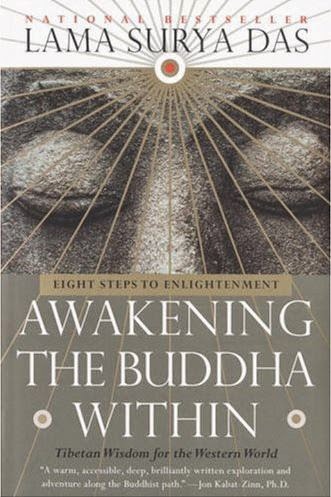
NOT a religion, but a philosophy. I've recently finished reading this book:


Awakening the Buddha Within: Tibetan Wisdom for the Western World
Lama Surya Das, the most highly trained American lama in the Tibetan tradition, presents the definitive book on Western Buddhism for the modern-day spiritual seeker.

The radical and compelling message of Buddhism tells us that each of us has the wisdom, awareness, love, and power of the Buddha within; yet most of us are too often like sleeping Buddhas. In Awakening the Buddha Within, Surya Das shows how we can awaken to who we really are in order to lead a more compassionate, enlightened, and balanced life. It illuminates the guidelines and key principles embodied in the noble Eight-Fold Path and the traditional Three Enlightenment Trainings common to all schools of Buddhism:

Wisdom Training: Developing clear vision, insight, and inner understanding -- seeing reality and ourselves as we really are.

Ethics Training: Cultivating virtue, self-discipline, and compassion in what we say and do.

Meditation Training: Practicing mindfulness, concentration, and awareness of the present moment.

With lively stories, meditations, and spiritual practices, Awakening the Buddha Within is an invaluable text for the novice and experienced student of Buddhism alike.
I actually struggled with this book quite a bit. There were several times, where I almost quit reading it.

There was much I simply could not agree with. In fact, it very much reminded me of why I never pursued Buddhism, even though I like a lot of the things the Buddha is said to have taught. Every time I've tried to learn more about Buddhism, there would be something irrational that would put me off.

I felt that many times while reading this book, but it was a mixture of things, it wasn't all off-putting. I persevered with it, and by the end I was glad I did. I bought the book in the first place because I was hoping that it would:

A.) Teach me about Tibetan Buddhism.

B.) Be an interesting story of the life Surya Das (formerly known as Jeffrey Miller from Long Island) chose for himself, becoming a Tibetan Buddhist Lama.

C.) Teach me some things I could integrate into my own life.

In the end, I have to say it did all of those things. Surya Das has lead a life I would not have liked to have had, but thankfully he did it and I got to read about it and get the benefit of his insights from that, without having to do it myself. Sometimes you can learn a lot from a book, even if you don't agree with much of what it says. It challenges your ideas and makes you think. This was one of those books.

While reading the book, I found myself looking up a lot of things he was referring to on the internet. It was on-line that I found this essay by Sam Harris. I found myself agreeing with much of it:

Killing the Buddha
“Kill the Buddha,” says the old koan. “Kill Buddhism,” says Sam Harris, author of The End of Faith, who argues that Buddhism’s philosophy, insight, and practices would benefit more people if they were not presented as a religion.

The ninth-century Buddhist master Lin Chi is supposed to have said, “If you meet the Buddha on the road, kill him.” Like much of Zen teaching, this seems too cute by half, but it makes a valuable point: to turn the Buddha into a religious fetish is to miss the essence of what he taught. In considering what Buddhism can offer the world in the twenty-first century, I propose that we take Lin Chi’s admonishment rather seriously. As students of the Buddha, we should dispense with Buddhism.

[...]

For the fact is that a person can embrace the Buddha’s teaching, and even become a genuine Buddhist contemplative (and, one must presume, a buddha) without believing anything on insufficient evidence. The same cannot be said of the teachings for faith-based religion. In many respects, Buddhism is very much like science. One starts with the hypothesis that using attention in the prescribed way (meditation), and engaging in or avoiding certain behaviors (ethics), will bear the promised result (wisdom and psychological well-being). This spirit of empiricism animates Buddhism to a unique degree. For this reason, the methodology of Buddhism, if shorn of its religious encumbrances, could be one of our greatest resources as we struggle to develop our scientific understanding of human subjectivity.

[...]

Religion is also the only area of our discourse in which people are systematically protected from the demand to give evidence in defense of their strongly held beliefs. And yet, these beliefs often determine what they live for, what they will die for, and—all too often—what they will kill for. This is a problem, because when the stakes are high, human beings have a simple choice between conversation and violence. At the level of societies, the choice is between conversation and war. There is nothing apart from a fundamental willingness to be reasonable—to have one’s beliefs about the world revised by new evidence and new arguments—that can guarantee we will keep talking to one another. Certainty without evidence is necessarily divisive and dehumanizing.

Therefore, one of the greatest challenges facing civilization in the twenty-first century is for human beings to learn to speak about their deepest personal concerns—about ethics, spiritual experience, and the inevitability of human suffering—in ways that are not flagrantly irrational. Nothing stands in the way of this project more than the respect we accord religious faith. While there is no guarantee that rational people will always agree, the irrational are certain to be divided by their dogmas.

[...]

What the world most needs at this moment is a means of convincing human beings to embrace the whole of the species as their moral community. For this we need to develop an utterly nonsectarian way of talking about the full spectrum of human experience and human aspiration. We need a discourse on ethics and spirituality that is every bit as unconstrained by dogma and cultural prejudice as the discourse of science is. What we need, in fact, is a contemplative science, a modern approach to exploring the furthest reaches of psychological well-being. It should go without saying that we will not develop such a science by attempting to spread “American Buddhism,” or “Western Buddhism,” or “Engaged Buddhism.”

If the methodology of Buddhism (ethical precepts and meditation) uncovers genuine truths about the mind and the phenomenal world—truths like emptiness, selflessness, and impermanence—these truths are not in the least “Buddhist.” No doubt, most serious practitioners of meditation realize this, but most Buddhists do not. Consequently, even if a person is aware of the timeless and noncontingent nature of the meditative insights described in the Buddhist literature, his identity as a Buddhist will tend to confuse the matter for others.

There is a reason that we don’t talk about “Christian physics” or “Muslim algebra,” though the Christians invented physics as we know it, and the Muslims invented algebra. Today, anyone who emphasizes the Christian roots of physics or the Muslim roots of algebra would stand convicted of not understanding these disciplines at all. In the same way, once we develop a scientific account of the contemplative path, it will utterly transcend its religious associations. Once such a conceptual revolution has taken place, speaking of “Buddhist” meditation will be synonymous with a failure to assimilate the changes that have occurred in our understanding of the human mind.

It is as yet undetermined what it means to be human, because every facet of our culture—and even our biology itself—remains open to innovation and insight. We do not know what we will be a thousand years from now—or indeed that we will be, given the lethal absurdity of many of our beliefs—but whatever changes await us, one thing seems unlikely to change: as long as experience endures, the difference between happiness and suffering will remain our paramount concern. We will therefore want to understand those processes—biochemical, behavioral, ethical, political, economic, and spiritual—that account for this difference. [...]

Read the whole essay for embedded links and more. Harris expounds further on some of the ideas mentioned in the above excerpts, as he makes his case, and it's a good read. But back to the "Awakening the Buddha Within" book:

At the end of that book, even Jeffrey - oops, excuse me, "Surya Das" - said there were many types of Buddhism, and that one didn't have to embrace or believe in many of the beliefs held by Buddhists, or even believe in God. In the end, he said you could take from it what you wanted or needed.

I appreciated the lack of insistence on following dogma, but also found it a little ironic that he seemed to be indirectly supporting at least a portion of Sam Harris's essay; that Buddhist teachings don't have to be mixed up with religion.

I would not go so far as to say the two authors agree, but they seem close to agreement on some points. I think perhaps that Das is saying the teachings don't have to be mixed with religion, whereas Harris is more forcefully arguing that they should not be. That's not agreement, but pretty darn close.


Also see:

On criticizing fellow Buddhists
The tyranny of "Consensus Buddhism"!


Wednesday, June 18, 2014

One Priest's perspective

I thought this was a very thoughtful and well-considered piece:

What our parish does about gay relationships
Pope Francis has asked our bishops to report to Rome on what is actually happening in the parishes in regard to marriage and family life. Among the many topics to be discussed are "same-sex unions between persons who are, not infrequently, permitted to adopt children."

I think that our parish is a fairly typical middle-class, mostly white, English-speaking, American parish. I also think it would be fair to say that our approach to same-sex couples, including marriage and adoption, is evolving. One might characterize our approach as public silence and private acceptance.

In public, we are silent about the fact that some of our fellow parishioners are gay, even though some people are aware of their relationships.

In private, we are accepting their relationships so long as we don't have to acknowledge them.

Such a modus vivendi is not really an ethical resolution to the question. In fact, it is merely a strategy for avoidance.

There seem to be two great divides in my parish over issues facing lesbian, gay, bisexual and transgender people. One divide is generational. The other divide is personal.

The generational divide is the most obvious and clear-cut, but not absolute. Older people are less accepting of LGBT relationships. Younger people see no problem. In fact, younger people often think the church should move beyond mere acceptance to affirmation. The dividing line seems to be about age 50.

This generational divide is radical and serious. For some young people, it determines whether or not they will remain Catholics. One young man left our church over the issue. As the older Catholics die off, the church will find very little acceptance of its current negative position on gay relationships. We will find ourselves culturally marginalized in countries like the United States.

The personal divide is more subtle and harder to quantify. People who know someone in their family or circle of friends who is publicly gay are much more accepting of LGBT people than people who claim they don't know anyone who is gay. Of course, the fact is, everyone actually does know someone who is gay. They just know that their friend or family member is gay but does not admit it.

Personal experience is important. More and more people are coming out as gay. More and more people will have to accept their relationships. Our younger people nearly always know someone who is out as gay and find it very easy to accept. This is a sea change from a generation ago.

More and more gay relationships are being discussed, even in a conservative community like ours. In the past few years, at least a dozen parents have come to me to tell me that their children are gay. They are supportive of their children. They want to know how I will respond. I always encourage them to accept and love their child.

Two of my friends who go to other parishes left the Catholic church when their children came out. They simply could not accept a church that judged their children to be "intrinsically disordered." If someone is put in the position of choosing between his or her child and the church, they will obviously and quite rightly choose their child.

The hyperbolic and harsh language of the church will have to change. It is not accurate, and it is not charitable. [...]
It's worth reading the whole thing. He chooses his words carefully, and explains his reasoning well. The story he told at the end left me a bit teary.

I thought it was a great response to what the Pope was asking about. But judging by some of the comments left after the article, it would seem that there are still plenty of people who don't want the "hyperbolic and harsh language" to change at all, and they are willing to give away free samples too.


Sunday, January 05, 2014

When was Buddha Born?

Which is to say, what century:


How two archaeologists’ hunch led to stunning claim about Buddha’s birth date
The two archaeologists had a hunch that the Buddha’s birthplace in southern Nepal held secrets that could transform how the world understood the emergence and spread of Buddhism.

Their pursuit would eventually see them excavate the sacred site of Lumbini as monks prayed nearby, leading to the stunning claim that the Buddha was born in the sixth century BC, two centuries earlier than thought.

[...]

“The Eureka moment came in 2011, when we came across a brick temple located below the existing Asokan temple, and below that a sort of void.

“It became clear then that there was much more to this excavation.”

Over the next two years, archaeologists, geophysicists and hired workmen from Nepal and Britain worked on the site, digging in the presence of meditating monks and nuns.

“It was a very moving, very special experience to dig for traces while pilgrims prayed and paid homage,” Acharya said.

They dug for a few weeks each year and sent the samples to laboratories for analysis.

Radiocarbon and optically stimulated luminescence techniques were used to date fragments of charcoal and grains of sand found at the site.

The archaeologists also found holes, apparently meant to secure posts, in the open void below the brick temple.

“The intact holes suggested that whoever had built the brick temple had taken care not to damage the ancient structure below, suggesting the site was always considered holy,” Coningham said.

Lab tests confirmed the existence of roots within the void below the brick structure, suggesting it may have been a shrine where a tree once grew, possibly the hardwood sal tree under which many believe the Buddha was born.

The discovery, revealed in November, sparked huge excitement, but some historians have urged caution, saying the ancient tree shrine could have been built by pre-Buddhist believers.

“The worship of trees, often at simple altars, was a ubiquitous feature of ancient Indian religions,” Julia Shaw, a lecturer in South Asian archaeology at University College London told National Geographic’s online edition.

“It is also possible that what is being described represents an older tree shrine quite disconnected from the worship of the historical Buddha,” Shaw added.

According to Coningham, however, if the Buddhists had appropriated the tree shrine from non-Buddhists, the site would not have survived relatively unscathed.

“Also, the inscriptions at Bodhgaya (where the Buddha achieved enlightenment) reveal a thriving culture of tree worship, which suggests continuity,” he added. [...]
The article goes on to say that what they are finding would seem to match what the local people believe, that Buddha was born around 623 BC.


Wednesday, December 25, 2013

Jesus was born in Bethlehem because of ....Taxes?

Yup. Looks like it:

The Christmas tax story
With Mary so close to delivering her child, why did she and Joseph risk traveling to Bethlehem? Taxes.

A census was ordered to determine the taxes due from the residents of the Roman Empire. Each person had to return to his home town to meet the decree's requirements.

So Joseph and Mary headed out from Nazareth in Galilee to Judea, specifically to the city of David known as Bethlehem, an estimated three-day trip, because Joseph was of the house and family of David.

And the rest is Biblical history. [...]
Follow the link for the scripture references and various embedded links.

Gosh. Taxes. They're everywhere.

Merry Christmas!
     

Sunday, December 22, 2013

The State of Religion In America Today

It ain't what it used to be:

Religion in America’s states and counties, in 6 maps
[...] With what is arguably the most widely observed holiday of the nation’s most popular religion right around the corner, now seems as good a time as any to look at the state of religion in America’s states and counties. All six of the maps and data below—which depict religious popularity, diversity and adherents—come from the “2010 U.S. Religion Census: Religious Congregations & Membership Study,” an every-decade research effort sponsored by the Association of Statisticians of American Religious Bodies, which gathers statistics for religious groups or scholars interested in such. [...]
Fascinating maps, of interesting categories.

The Telegraph newspaper examines some of the data in detail:

Lots of atheists, more Muslims, fewer Christians and Jews: this is the new America
[...] Did you know there are – possibly – now more religious Muslims than religious Jews in Florida? I know, it seems incredible. Miami Beach has had 15 Jewish mayors, there are getting on for 200 synagogues in South Florida – and, of course, it was the hunting ground of the despicable Bernie Madoff.

[...]

There are still more Jews than Muslims in Florida, loosely defined; these figures measure Judaism as a religion. That said, even to compare the two 20 years ago would have seemed ridiculous. Florida has a small but vibrant, growing Muslim community, half of it from India, followed by Pakistanis – only 150,000 registered voters to date. As you'd expect, 80 per cent voted for Obama in the last two elections; but in other elections they're swing voters, and in Florida you ignore those at your peril. As for the Jewish community, the retirement communities are reflecting the national picture. [...]
Read the whole thing for more interesting facts, figures and maps. And guess what is the most popular non-Christian religion in the American West? No wonder I love living out here. I can feel it.
     

Sunday, June 02, 2013

"Who the heck was Anne Hutchinson?"

A well known New Age guru has released a novel called "God". I was reading the blurb from the back of the book, part of which said this:
[...] Job in the Old Testament experienced something completely different from Paul in the New Testament, Socrates chased a mercurial spirit almost unrecognizable to the strange voice that called to Rumi, and Shankara moved from town to town sharing the truth about a God that stood in marked contrast to the one that guided Anne Hutchinson—yet one sees an undeniable pattern. These visionaries took the human race down unknown roads, and Chopra invites us to revisit their destinations. Tearing at our hearts and uplifting our souls, God leads us to a profound and life-altering understanding about the nature of belief, the power of faith, and the spirit that resides within us all. [...]
I had heard of most of those names before, but I thought, "Who the heck was Anne Hutchinson? And why is she listed with those others?" I googled her name and found her Wikipedia page. It's really quite a story. I was a bit embarrassed that I didn't know, being a New Englander myself:
[...] Anne Hutchinson, born Anne Marbury (1591–1643), was a Puritan spiritual adviser, mother of 15, and important participant in the Antinomian Controversy that shook the infant Massachusetts Bay Colony from 1636 to 1638. Her strong religious convictions were at odds with the established Puritan clergy in the Boston area, and her popularity and charisma helped create a theological schism that threatened to destroy the Puritans' religious experiment in New England. She was eventually tried and convicted, then banished from the colony with many of her supporters.

Born in Alford, Lincolnshire, England, Anne was the daughter of Francis Marbury, an Anglican minister and school teacher who gave her a far better education than most other girls received. She lived in London as a young adult, and married there an old friend from home, William Hutchinson. The couple moved back to Alford, where they began following the dynamic preacher named John Cotton in the nearby major port of Boston, Lincolnshire. After Cotton was compelled to emigrate in 1633, the Hutchinsons followed a year later with their 11 children, and soon became well established in the growing settlement of Boston in New England. Anne was a midwife, and very helpful to those needing her assistance, as well as forthcoming with her personal religious understandings. Soon she was hosting women at her house weekly, providing commentary on recent sermons. These meetings became so popular that she began offering meetings for men as well, including the young governor of the colony, Henry Vane.

As a follower of Cotton, she espoused a "covenant of grace," while accusing all of the local ministers (except for Cotton and her husband's brother-in-law, John Wheelwright) of preaching a "covenant of works." Following complaints of many ministers about the opinions coming from Hutchinson and her allies, the situation erupted into what is commonly called the Antinomian Controversy, resulting in her 1637 trial, conviction, and banishment from the colony. This was followed by a March 1638 church trial in which she was excommunicated. With encouragement from Providence founder Roger Williams, Hutchinson and many of her supporters established the settlement of Portsmouth in what became the Colony of Rhode Island and Providence Plantations. After her husband's death a few years later, threats of Massachusetts taking over Rhode Island compelled Hutchinson to move totally outside the reach of Boston, into the lands of the Dutch. She settled with her younger children near an ancient landmark called Split Rock in what later became The Bronx in New York City. Tensions with the native Siwanoy were high at the time. In August 1643, Hutchinson and all but one of the 16 members of her household were massacred during an attack. The only survivor was her nine-year old daughter, Susanna, who was taken captive.

Hutchinson is a key figure in the development of religious freedom in England's American colonies and the history of women in ministry. She challenged the authority of the ministers, exposing the subordination of women in the culture of colonial Massachusetts. She is honoured by Massachusetts with a State House monument calling her a "courageous exponent of civil liberty and religious toleration." She has been called the most famous, or infamous, English woman in colonial American history. [...]
If you follow the wiki link, there's lots more information, and embedded links too. The details of her trial were chilling. Her descendants included three U.S. presidents, and, well, read the whole thing, if you enjoy history.


Sunday, December 16, 2012

Faith, and Response to a Tragedy

Newtown was a lot like the town I grew up in. I haven't anything to say about it, that hasen't been said by others. I did like this post from The Anchoress:

Newtown and the God who Knows
[...] People will ask, “where was God, in all of this.” God was in the teachers who pulled little kids into classrooms and went into lockdown, and in the first responders who got survivors to safety and reunited with their parents (pray for the first responders, too; they suffer — often in silence — after they have made safe). God was right beside everyone, and is with them in grief. Because he is the God Who Knows all we feel and experience. [...]
She's is Catholic, and is trying to respond to this as a person of Faith. I'm not a Catholic, but I think you don't need to be Catholic to understand or appreciate some of the subtleties she is communicating.

H.T. to Michelle Malkin for the link.


Wednesday, December 12, 2012

A "Martin Luther" for Islam?

Who Wrote the Koran?
For more than two decades, Abdulkarim Soroush has been Iran’s leading public intellectual. Deeply versed in Islamic theology and mysticism, he was chosen by Ayatollah Khomeini to “Islamicize” Iran’s universities, only to eventually turn against the theocratic state. He paid a price for his dissidence. Vigilantes and other government-supported elements disrupted his widely attended lectures in Iran, beat him and reportedly nearly assassinated him. In a country where intellectuals are often treated like rock stars, Soroush has been venerated and reviled for his outspoken support of religious pluralism and democracy. Now he has taken one crucial step further. Shuttling from university to university in Europe and the U.S., Soroush is sending shock waves through Iran’s clerical establishment.

The recent controversy began about eight months ago, after Soroush spoke with a Dutch reporter about one of Islam’s most sensitive issues: the divine origin of the Koran.

[...]

Soroush has been described as a Muslim Luther, but unlike the Protestant reformer, he is no literalist about holy books. His work more closely resembles that of the 19th-century German scholars who tried to understand the Bible in its original context. Case in point: when a verse in the Koran or a saying attributed to Muhammad refers to cutting off a thief’s hand or stoning to death for adultery, it only tells us the working rules and regulations of the prophet’s era. Today’s Muslims are not obliged to follow in these footsteps if they have more humane means at their disposal.

Soroush’s latest views have not endeared him to the powerful conservative wing of Iran’s establishment. Some have accused him of heresy, which is punishable by death. There have been demonstrations by clerics in Qom, the religious capital of Iran, against his recent work. But Iran’s supreme leader, Ayatollah Ali Khamenei, unexpectedly warned against feeding the controversy. He said those who are employing “philosophy or pseudo-philosophy” to “pervert the nation’s mind” should not be dealt with “by declaring apostasy and anger” but rather countered with the “religious truths” that will falsify their arguments.

In Iran today, many opponents of the government advocate the creation of a secular state. Soroush himself supports the separation of mosque and state, but for the sake of religion. He seeks freedom of religion, not freedom from religion. Thus he speaks for a different — and potentially more effective — agenda. The medieval Islamic mystic Rumi once wrote that “an old love may only be dissolved by a new one.” In a deeply religious society, whose leaders have justified their hold on power as a divine duty, it may take a religious counterargument to push the society toward pluralism and democracy. [...]


Wednesday, February 01, 2012

Mitt and the Mormon Question. No Problem.

At least it shouldn't be. Here's one good reasoned viewpoint on the subject:


Would A Mormon President Subvert American Democracy?
[...] What follows below is not a Romney-fan’s propaganda. Actually, my favorite used to be another aspirant. The LDS affiliation of Mitt Romney exposes us again to the temptation to make religion into a criterion for picking a candidate. Now then, the theological validity of Mormonism’s version of Christianity is beyond my competence and my interest. To many, the implications of a President embracing that creed are of concern. However, American public life and her high-level politics have created indicators that Mormons will not kidnap America and replace its system with their theocracy.

The record of Utah State, when it was ardently LDS, is also an argument. In practice, LDS keep the worldly realm separated from the private pursuit of heaven. Yes, Mormonism involves a way of life. Furthermore, the Church is interested in conversions. Nevertheless, the instinct to “rescue souls” stops short of imposing the “right way” upon non-believers. Unlike the Sharia, it refrains from making outsiders to adhere to enforced norms that limit every aspect of life. Since Mormons know a personal realm, the faith can place politics outside of religion’s sphere. Accepting or rejecting Mormon theology does not have political consequences. The faith does not command unquestioned obedience in the public realm. At any rate, it does not do so to a larger extent than does the now discarded scarecrow of “Popism”.

The second point issues from an old moral obligation. To those that had no contact with Mormons such testimonials could be revealing. Nevertheless, at the outset a cautionary note is needed. We tend to judge exotic groups by the first “samples” we encounter. The resulting generalization can be quite misguided. I recall my college roommate and now best friend “I have never met a Hungarian before. So this is what you guys are like.” Since I am rather unlike other Magyars, I thought that this “discovery” was ironic.

Now to my story. In the seventies, we were moving back to the US. We knew that we had abandoned a secure existence to face uncertainty. On the plane, we sat near to a large group. Soon a gentleman came over and congratulated us because of the behavior of the children. Given our trepidation, this felt reassuring. I told Mr. Hugh Smith that much and explained our probable predicament. He then identified himself as a Mormon returning from Israel. [...]

Read the whole thing. Mr. Smith sounds like many of the Mormons I've known.
     

Sunday, June 05, 2011

Preparing for the Rapture in the I.T. world

This was written in anticipation of Harold Camping's May 21st prediction, but could easily be recycled for the next prediction by anyone. Hilarious advice:


10 Things IT Groups Need to Know About The End of the World
[...]

7. Avoid disruption.

At 5:45 p.m. Saturday, invite all the Christians on staff to pray in a conference room or auditorium. That way you minimize the network and systems disruption, not to mention the drama, when they all vanish.

6. Review all software licenses.

Make sure they don't expire immediately before or after The Rapture.

Despite being employees of West Coast companies, your Cisco or Microsoft reps might be among the missing (possibly less likely with Apple). Afterward, you might be able to push for a Rapture Discount on new software and hardware.

5. Install mobile device management software.

With an application like MobileIron, you can shut down and lock, and later locate, any cellphones left behind by Raptured staff. Otherwise you could be hit with huge data charges if the phones were on and online when their users were taken. And make sure they're all equipped with bumpers so when they hit the desk or the pavement they won't break.

4. Postpone the upgrade to Windows 7.

You could save money (fewer users) and avoid disruptions (missing tech support staff) by waiting until after The Rapture to move to Microsoft's Windows 7 operating system.

3. Block all internal video transmissions and external streaming for 48 hours.

Let's face it, if you're in a telepresence conference and people start blinking out, it's bound to be disconcerting. Plus, you just know YouTube is going to be flooded with video clips of people's family, friends, acquaintances, or worse, themselves, poofing into thin air. The UnRaptured won't be able to stop themselves from clicking on the links, and the video traffic will bring your network to its knees. [...]

Isn't it nice to know someone's thought about all the practical follow-up details? Read the whole thing for more advice. The author knows his topic rather well.


Related Link:

Finding God Through Open Source
     

Monday, November 08, 2010

Advice from Thomas Jefferson...

... in a letter to his nephew, Peter:

QUESTION WITH BOLDNESS. . .
Dear Peter, — I have received your two letters of December 30 and April 18, and am very happy to find by them, as well as by letters from Mr. Wythe, that you have been so fortunate as to attract his notice & good will; I am sure you will find this to have been one of the most fortunate events of your life, as I have ever been sensible it was of mine. I enclose you a sketch of the sciences to which I would wish you to apply, in such order as Mr. Wythe shall advise; I mention, also, the books in them worth your reading, which submit to his correction. Many of these are among your father’s books, which you should have brought to you. As I do not recollect those of them not in his library, you must write to me for them, making out a catalogue of such as you think you shall have occasion for, in 18 months from the date of your letter, & consulting Mr. Wythe on the subject. To this sketch, I will add a few particular observations. [...]

Jefferson goes on to make several observations. Fascinating reading, especially his observations about religion.


Sunday, August 15, 2010

God vs Science: Nothing to do with Einstein, everything to do with an "Urban Legend"

My Dad has a Christian friend from his days in the Navy, whom he emails with. He forwards a lot of joke emails he gets, and some of the emails are from his Christian friend. This is one of those:

Subject: God vs Science

This has been around before, but worth reading again! Some of you may have not seen it a great arguement.


God vs. Science

'Let me explain the problem science has with religion.' The atheist professor of philosophy pauses before his class and then asks one of his new students to stand.

'You're a Christian, aren't you, son?'

'Yes sir,' the student says.

'So you believe in God?'

'Absolutely. '

'Is God good?'

'Sure! God's good.'

'Is God all-powerful? Can God do anything?'

'Yes'

'Are you good or evil?'

'The Bible says I'm evil.'

The professor grins knowingly. 'Aha! The Bible! He considers for a moment. 'Here's one for you. Let's say there's a sick person over here and you can cure him. You can do it. Would you help him? Would you try?'

'Yes sir, I would.'

'So you're good!'

'I wouldn't say that.'

'But why not say that? You'd help a sick and maimed person if you could. Most of us would if we could. But God doesn't.'

The student does not answer, so the professor continues. 'He doesn't, does he? My brother was a Christian who died of cancer, even though he prayed to Jesus to heal him. How is this Jesus good? Can you answer that one?'

The student remains silent. 'No, you can't, can you?', the professor says.

He takes a sip of water from a glass on his desk to give the student time to relax. 'Let's start again, young fella. Is God good?'

'Er..yes,' the student says..

'Is Satan good?'

The student doesn't hesitate on this one. 'No.'

'Then where does Satan come from?'

The student falters. 'From God'

'That's right. God made Satan, didn't he? Tell me, son. Is there evil in this world?'

'Yes, sir..'

'Evil's everywhere, isn't it? And God did make everything, correct?'

'Yes'

'So who created evil?' The professor continued, 'If God created everything, then God created evil, since evil exists, and according to the principle that our works define who we are, then God is evil.'

Again, the student has no answer. 'Is there sickness? Immorality? Hatred? Ugliness? All these terrible things, do they exist in this world?'

The student squirms on his feet. 'Yes.'

'So who created them?'

The student does not answer again, so the professor repeats his question.

'Who created them?' There is still no answer. Suddenly the lecturer breaks away to pace in front of the classroom. The class is mesmerized. 'Tell me,' he continues onto another student. 'Do you believe in Jesus Christ, son?'

The student's voice betrays him and cracks. 'Yes, professor, I do.'

The old man stops pacing. 'Science says you have five senses you use to identify and observe the world around you. Have you ever seen Jesus?'

'No sir. I've never seen Him.'

'Then tell us if you've ever heard your Jesus?'

'No, sir, I have not..'

'Have you ever felt your Jesus, tasted your Jesus or smelt your Jesus? Have you ever had any sensory perception of Jesus Christ, or God for that matter?'

'No, sir, I'm afraid I haven't.'

'Yet you still believe in him?'

'Yes'

'According to the rules of empirical, testable, demonstrable protocol, science says your God doesn't exist. What do you say to that, son?'

'Nothing,' the student replies.. 'I only have my faith.'

'Yes, faith,' the professor repeats. 'And that is the problem science has with God. There is no evidence, only faith.'

The student stands quietly for a moment, before asking a question of His own. 'Professor, is there such thing as heat? '

Yes.

'And is there such a thing as cold?'

'Yes, son, there's cold too.'

'No sir, there isn't.'

The professor turns to face the student, obviously interested. The room suddenly becomes very quiet. The student begins to explain.' You can have lots of heat, even more heat, super-heat, mega-heat, unlimited heat, white heat, a little heat or no heat, but we don't have anything called 'cold'.

We can get down to 458 degrees below zero, which is no heat, but we can't go any further after that. There is no such thing as cold; otherwise we would be able to go colder than the lowest -458 degrees. Everybody or object is susceptible to study when it has or transmits energy, and heat is what makes a body or matter have or transmit energy. Absolute zero (-458 F) is the total absence of heat.

You see, sir, cold is only a word we use to describe the absence of heat. We cannot measure cold. Heat we can measure in thermal units because heat is energy. Cold is not the opposite of heat, sir, just the absence of it.'

Silence across the room. A pen drops somewhere in the classroom, sounding like a hammer.

'What about darkness, professor. Is there such a thing as darkness?'

'Yes,' the professor replies without hesitation. 'What is night if it isn't darkness?'

'You're wrong again, sir. Darkness is not something; it is the absence of something. You can have low light, normal light, bright light, flashing light, but if you have no light constantly you have nothing and it's called darkness, isn't it? That's the meaning we use to define the word. In reality, darkness isn't. If it were, you would be able to make darkness darker, wouldn't you?'

The professor begins to smile at the student in front of him. This will be a good semester. 'So what point are you making, young man?'

'Yes, professor. My point is, your philosophical premise is flawed to start with, and so your conclusion must also be flawed.'

The professor's face cannot hide his surprise this time. 'Flawed? Can you explain how?'

'You are working on the premise of duality,' the student explains. 'You argue that there is life and then there's death; a good God and a bad God. You are viewing the concept of God as something finite, something we can measure. Sir, science can't even explain a thought.' 'It uses electricity and magnetism, but has never seen, much less fully understood either one.

To view death as the opposite of life is to be ignorant of the fact that death cannot exist as a substantive thing. Death is not the opposite of life, just the absence of it.' 'Now tell me, professor. Do you teach your students that they evolved from a monkey?'

'If you are referring to the natural evolutionary process, young man, yes, of course I do.'

'Have you ever observed evolution with your own eyes, sir?'

The professor begins to shake his head, still smiling, as he realizes where the argument is going. A very good semester, indeed.

'Since no one has ever observed the process of evolution at work and cannot even prove that this process is an on-going endeavor, are you not teaching your opinion, sir? Are you now not a scientist, but a preacher?'

The class is in uproar. The student remains silent until the commotion has subsided. 'To continue the point you were making earlier to the other student, let me give you an example of what I mean.' The student looks around the room. 'Is there anyone in the class who has ever seen the professor's brain?' The class breaks out into laughter. 'Is there anyone here who has ever heard the professor's brain, felt the professor's brain, touched or smelt the professor's brain? No one appears to have done so.

So, according to the established rules of empirical, stable, demonstrable protocol, science says that you have no brain, with all due respect, sir.'

'So if science says you have no brain, how can we trust your lectures, sir?'

Now the room is silent. The professor just stares at the student, his face unreadable. Finally, after what seems an eternity, the old man answers. 'I Guess you'll have to take them on faith.'

'Now, you accept that there is faith, and, in fact, faith exists with life,' the student continues. 'Now, sir, is there such a thing as evil?' Now uncertain, the professor responds, 'Of course, there is. We see it every day. It is in the daily example of man's inhumanity to man. It is in the multitude of crime and violence everywhere in the world. These manifestations are nothing else but evil.'

To this the student replied, 'Evil does not exist sir, or at least it does not exist unto itself. Evil is simply the absence of God. It is just like darkness and cold, a word that man has created to describe the absence of God. God did not create evil. Evil is the result of what happens when man does not have God's love present in his heart. It's like the cold that comes when there is no heat or the darkness that comes when there is no light.'

The professor sat down.

If you read it all the way through and had a smile on your face when you finished, mail to your friends and family with the title 'God vs. Science'

PS: the student was Albert Einstein

Albert Einstein wrote a book titled God vs. Science in 1921.


[END]

The whole thing seemed a bit "off" to me. Einstein was Jewish, and I never heard of him being a Christian, so I did some research. It turns out that Einstein never wrote a book called "God vs Science". He did not believe in a personal God, and was resentful of the stories being told by religious people, claiming that he did. This from Einstein's Wikipedia page sums it up:

Religious views

The question of scientific determinism gave rise to questions about Einstein's position on theological determinism, and whether or not he believed in God, or in a god. In 1929, Einstein told Rabbi Herbert S. Goldstein "I believe in Spinoza's God, who reveals Himself in the lawful harmony of the world, not in a God Who concerns Himself with the fate and the doings of mankind."[94] In a 1954 letter, he wrote, "I do not believe in a personal God and I have never denied this but have expressed it clearly."[95] In a letter to philosopher Erik Gutkind, Einstein remarked, "The word God is for me nothing more than the expression and product of human weakness, the Bible a collection of honorable, but still purely primitive, legends which are nevertheless pretty childish."[96]

Repeated attempts by the press to present Albert Einstein as a religious man provoked the following statement:

It was, of course, a lie what you read about my religious convictions, a lie which is being systematically repeated. I do not believe in a personal God and I have never denied this but have expressed it clearly. If something is in me which can be called religious then it is the unbounded admiration for the structure of the world so far as our science can reveal it.
—Albert Einstein[97]

Einstein had previously explored this belief, that man could not understand the nature of God, when he gave an interview to Time Magazine explaining:

I'm not an atheist and I don't think I can call myself a pantheist. We are in the position of a little child entering a huge library filled with books in many different languages. The child knows someone must have written those books. It does not know how. The child dimly suspects a mysterious order in the arrangement of the books but doesn't know what it is. That, it seems to me, is the attitude of even the most intelligent human being toward God.
—Albert Einstein[98]

I also read other sources on line about this, belittling Christians for "knowingly spreading this lie around the internet, to advance their religion".

That may be too harsh an accusation. I suspect many Christians pass this on because they believe it, and are ignorant of the facts. Ideally they ought to check the facts first before passing it on, but that can be said about many things that get passed around through email. In the end, the reader must verify.

I'm sure lots of Christians liked this story too because, it let's God off the hook where evil is concerned, and argues for the existence of faith. Yet I think it's ironic, too. The argument by the Christian against the atheist is that the atheist is working from a premise of duality. Yet isn't much of conventional Christian doctrine also based on the belief in duality? The argument against duality actually sounds like an argument in support of Eastern religion.

Snopes.com says that this email is actually a variation of an urban legend, where a Christian student puts an atheist professor in his place:

Snopes.com: Einstein and the "Evil is the absence of God" argument

Snopes gives all the details, and similar popular arguments that are often used to bolster religious faith in the face of atheistic arguments. And explains why Einstein got pulled into the story.

Here is another post by a blogger about this email story:

God vs Evil: A Philosophical Chain Email

In the comments below it, someone quotes some excerpts from a paper by Albert Einstein, called “Science and Religion.” While Einstein was not conventionally religious, he wasn't an atheist either. If you follow the link, there are some interesting quotes from the paper, as well as some other quotes by Einstein.

According to Snopes, Einstein, as a "generic genius", got incorporated into this Urban Legend. I suspect that his paper then got referred to as a book, the title got changed slightly, and claims were made about the content and the author's beliefs that don't hold up to scrutiny.

It's interesting to see how facts over time can get distorted. And it's great that a bit of searching on the internet can explain it all, uncover the history and connect the dots, and set the record straight again.


Sunday, August 01, 2010

Chelsea Clinton's "interfaith" marriage

From a Rabbi's blog, earlier this month:

Why Chelsea Clinton's Wedding Matters & the Celebrity Double-Standard
I'm hesitant to write about Chelsea Clinton's upcoming wedding to Marc Mezvinsky, who was raised in Conservative Judaism, because I want to respect the private lives of the bride and groom. However, when the bride is the daughter of the 40th President of the United States, I suppose she is classified as a celebrity and her wedding is fair game as a topic for discussion.


This marriage will spark conversation in the Jewish world about two main issues: How intermarriage affects the Jewish community; and, whether there is a double-standard in the Jewish community when it comes to the intermarrying ways of celebrities.

[...]

Some interesting questions surrounding the Chelsea Clinton wedding should make this even more interesting:

* The wedding will take place on Shabbat (July 31, 2010), so how will this affect whether observant Jewish (shomer Shabbat) guests will attend. Even if they stay within walking distance of the Astor mansion, according to Jewish law weddings are not to take place on the Jewish Sabbath.

* If Chelsea does convert before the wedding, will her conversion be disputed publicly by the Orthodox who will claim that a Conservative (or Reform) conversion isn't "kosher." And, many will question her commitment to Judaism -- didn't she do this only for the sake of marriage and how much preparation and deliberation did she put into this?

* If Chelsea doesn't convert, how many of the Bill and Hillary's Orthodox friends will attend the wedding anyway? Will their attendance at an interfaith wedding (and on Shabbat to boot) signify an endorsement? And what about Conservative rabbis who are technically not supposed to attend interfaith weddings? Will some make an exception for such notable nuptials?

* Finally, might this high-profile interfaith wedding turn the tides and lead to greater acceptance and sensitivity toward interfaith marriage? After all, as Gibson writes, "The main body of Conservative Judaism [CJLS] voted to allow interfaith families to be buried in Jewish cemeteries, and in March, the Jewish Theological Seminary of America hosted a two-day workshop "sensitizing" students to "issues of intermarriage and changing demographics." There is even talk of allowing Conservative rabbis to attend the interfaith weddings of friends -- and this just four years after the movement adopted an official policy emphasizing the importance of converting a non-Jewish spouse. [...]

I would question, just how much of a religious conservative the groom is, because of the things mentioned above. He doesn't seem very "observant" of some things. Just because he may have been raised to be strictly observant, doesn't mean he chooses to continue to be, especially if he's going to marry a shiksa. Or are some observances being overlooked due to the "celebrity" factor? Anyway, time will tell what's up with them. I won't be losing any sleep over it, and they don't look worried about it either:


Now that the wedding has happened, here are some more details on the interfaith aspects of the wedding from Rabbi Miller's blog.


Also see:

Who is Marc Mezvinsky? Chelsea Clinton's Husband is Invesment Banker at Hedge Fund

Bridegroom's Father is Ex-Congressman & Convicted Felon
     

Sunday, April 04, 2010

Religious Observances, and The Thing Itself


Taking Up the Dr. Seuss School of Catholicism
Any Sunday school kid knows that the best piece of Christian theology was written not by St. Augustine or Reinhold Niebuhr but by Dr. Seuss. How the Grinch Stole Christmas! - the story of how the Whos joyfully celebrate Jesus' birth even after a spiteful wretch robs all their holiday stuff - portrays faith more meaningfully than any church father or Yale philosopher ever did. Published for Christmas 1957, the book's obvious target was Yuletide commercialization. But its deeper message - don't confuse the accessories of religion with religion itself - seems especially relevant for Roman Catholics like me on Easter 2010.

This is the most uncomfortable Easter that Catholics have faced since the throes of the U.S. clerical sex abuse scandal in 2002. A new deluge of priest-pedophile stories, mostly in Europe, has cast another Good Friday pall over the resurrection celebration. This time some of the hierarchical cover-up may have even involved, if only indirectly, the man who would become the current Pope, Benedict XVI. And the Catholic Church's defensive response (as persecuted as the Jews?) has once again made it look like a dark fraternity in a Dan Brown novel instead of a luminous shepherd of souls, a self-interested corporation instead of the selfless ministry that Christ entrusted to St. Peter.

Little can alleviate the pain and suffering of the abuse victims. But at least in one sense, the Dr. Seuss sense, Catholics can use the Easter spirit of renewal to turn this heartbreak into something positive by putting their religion - their singular communion with Jesus' life and teachings - above their church. We're in this mess largely because we've continued to let the Catholic Church believe that it's somehow more important than the Catholic religion. And that's got to stop. [...]

Where that gets messy is, each Catholic's interpretation of what IS the Catholic Religion, what it means. I'm not Catholic, but as an outside observer, there seems to be a growing dissonance between what the Clergy in the Vatican believe, and what Catholics around the world believe.

I've always been more attracted to spirituality than religion, because while religious observances and rituals can be helpful reminders of what's important, too often the observance of them becomes more important than the thing they were meant to focus you on; then, the vessel matters more than the contents.

The Dr. Suess story was about the commercialism of Christmas not being The Thing Itself, and how the Whos of Whoville understood that when all the trappings of the holiday were taken away. The writer of this essay seems to be speculating that trappings of the Catholic church may be getting in the way of The Thing Itself, that's most important. He says it's the Catholic Religion. Yet even religion can obscure The Thing Itself; one must always be mindful of that.

I've got my opinions about what's happening with the Catholic Church, but I'm not going to get into it here; this is for Catholics to sort out. I'm sure they can, and hope they will. I just thought this essay was thought provoking, and might help move the discussion along. If the topic interests you, read the whole thing.
     

Thursday, January 21, 2010

America and Europe: the religious divide

American and European attitudes toward religion differ quite a lot. The following article examines, in depth, many of the factors that account for this:

Religious Divide Across The Atlantic
[...] In Europe, for many centuries, the nexus of religion with political power was very strong. The Catholic Church preached not liberty but authority and obedience. Calvinism, which preached equality and individuality, had quickly degenerated into theocracy where it could acquire political power. And revolutionary Lutheranism, which had opposed papal power, soon turned into a state religion that sanctified secular power in Germany and Scandinavia. It is only in the last century that full rights of citizenship have become independent from belonging to the ‘correct’ faith in much of Europe. Just like secular ideologies try to cling to political power today, following the Treaty of Augsburg (1555) churches accommodated themselves to the supremacy of Kings and aristocracies, and they traded the granting of the ‘divine right’ to rulers for many privileges (regarding land, taxes, etc…). Therefore, whoever wanted to attack authority in Europe had to attack the churches, and while these churches might have been different among individual countries, within countries usually one church had a near-monopoly on faith. Revolutions on the European Continent thus became as much anti-clerical as anti-royal (or anti-prince), and the common denominator of the civil faiths that arose in the 18th and 19th centuries – liberalism, socialism and communism – was anti-clericalism. Also in the 20th century, fascism and nazism saw churches as rivals for power and effectively ‘nationalized’ them (like Lenin/Stalin did before, and Putin does today). To this very day, to be a “progressive” in Europe requires to be a-religious (and often anti-religious), and hence there is the mistaken belief that modernity necessarily leads to (or requires) secularization.

The American experience has been very different, and there never existed a significant split between anti-clericalism and clericalism in the United States like it did in Europe. The Founders of the American Republic were on the whole very religious people, and they did not have to burn down churches and murder priests to establish their republic, like they did in France. Already de Tocqueville had pointed to the paradox that by establishing a rigorous separation of church and state (through the rejection of the concept of a state religion) the Founding Fathers had actually strengthened the role of religion in general in the United States. Faith (in its myriad forms) was viewed as the friend of freedom, not its enemy, and it was not despised or derided as an enemy of the Enligthenment in America. The contemporary Joffe points to another factor, namely that the protestants who settled America spoke largely English, not French. That means that they had benefited from the Scottish-English Enligthenment which was already a hundred years old at the time of the French Revolution. The latter was marked by Danton’s and Robespierre’s “deadly hatred of all things Deist”. By contrast, the great minds of the earlier Scottish-English Enlightenment - Berkely, Hume, Locke, Hutchinson – had no problem with God. And neither did the American offspring of that Enlightenment. They saw “natural law” and “natural rights” as transcending man-made laws, and Berkeley’s empiricism required God as ultimate proof of reality.

So, in short, because religion had been part of an oppressive state in Europe, it was later banned from the public sphere. Europe’s buildings, cathedrals, art, etc…attest to it having been a great Christian civilization in the past, but a visitor there today will not find much God in the public space. In America, the same visitor can easily encounter God in a football stadium, or at the end of a speech by…President Obama. And the essential reasons for that are (a) the early separation of church and state in America’s original 18th century Constitution, which has stood the test of time more than any other to this day, as well as (b) the non-denominational character of God in America. In America religion was never politically as powerful as it has been in Europe, but its influence has proven to be more lasting because it has relied on its own resources and thus remained in control of its own principles/message or, if you will, free from state control. [...]

If you read the whole article, it's rather long, but there is lots of meat to chew on. It is, to me, a very interesting topic.