Saturday, May 14, 2011

The Japanese Coastal Town That Survived

The town with the highest wall and gate, survived the Tsunami intact:

How one Japanese village defied the tsunami
FUDAI, Japan – In the rubble of Japan's northeast coast, one small village stands as tall as ever after the tsunami. No homes were swept away. In fact, they barely got wet.

Fudai is the village that survived — thanks to a huge wall once deemed a mayor's expensive folly and now vindicated as the community's salvation.

The 3,000 residents living between mountains behind a cove owe their lives to a late leader who saw the devastation of an earlier tsunami and made it the priority of his four-decade tenure to defend his people from the next one.

His 51-foot (15.5-meter) floodgate between mountainsides took a dozen years to build and meant spending more than $30 million in today's dollars.


"It cost a lot of money. But without it, Fudai would have disappeared," said seaweed fisherman Satoshi Kaneko, 55, whose business has been ruined but who is happy to have his family and home intact.

The floodgate project was criticized as wasteful in the 1970s. But the gate and an equally high seawall behind the community's adjacent fishing port protected Fudai from the waves that obliterated so many other towns on March 11. Two months after the disaster, more than 25,000 are missing or dead.

"However you look at it, the effectiveness of the floodgate and seawall was truly impressive," Fudai Mayor Hiroshi Fukawatari said.

Towns to the north and south also braced against tsunamis with concrete seawalls, breakwaters and other protective structures. But none were as tall as Fudai's. [...]

The port's boats and warehouses were destroyed, but the community was protected.


Read the whole thing. The man who had the floodgate built died in 1997, but the article ends with words from a speech he made when he retired. They turned out to be somewhat prophetic.


Tuesday, May 10, 2011

Amateur Radio Officer in Kabul will be Missed

I heard about this attack in the news. And as sometimes happens, I later read in the ham radio news that one of the people involved was an Amateur Radio operator.


James McLaughlin, WA2EWE/T6AF, Killed By Afghan Pilot
04/27/2011
James McLaughlin, WA2EWE/T6AF, was one of several Americans killed in Kabul, Afghanistan on Wednesday, April 27. News sources say that eight American troops and a US contractor died Wednesday after an Afghan military pilot opened fire during a meeting in an operations room of the Afghan Air Corps at the Kabul airport -- the deadliest episode to date of an Afghan turning against his coalition partners, officials with the NATO-led International Security Assistance Force (ISF) in Afghanistan said. McLaughlin -- a retired US Army Lieutenant Colonel -- was a contractor serving as a flight instructor for Afghan pilots.

Licensed since 1972, McLaughlin was a career US military officer. Bob Magnani, K6QXY, told the ARRL that McLaughlin was just in the US a week ago, visiting his family: "His son Adam, KD6POE, works for me. He told me that his dad had been in Afghanistan and Iraq many times over the past few years, most currently serving as a flight instructor.” McLaughlin posted on his qrz.com page that “almost every day, I operate at around 1230 - 1430 UTC. Sometimes I am QRV until around 1500 UTC.”

Voice of America Correspondent Steve Herman, W7VOA/T6AD/HL9OA -- currently in Seoul, South Korea -- remembers meeting McLaughlin for the first time. “I first met Jim in August 2009 when we were the only two hams operating in Kabul,” he wrote in an e-mail. “We exchanged tips on operating in our unusual environment. Jim had put together a fine radio shack in his quarters and was especially enthusiastic about his RTTY and PSK capabilities, as well as the ladder line-fed wire dipole he had managed to string up at a height of 50 feet through some trees.

“Less than 24 hours after our initial discussion, a suicide bomb went off in Kabul near the spot where we had arranged to meet. The blast killed seven people and injured nearly 100. The explosion site was also close to Jim’s QTH and it blew out windows in his residence adjacent to the US Embassy. It was obvious from spending time with Jim that ham radio was an important morale-boosting pastime and he usually spent a couple of hours per day QRV, logging thousands of QSOs” As of March 26, 2011, McLaughlin had logged 4359 QSOs, most of them on RTTY and PSK.

McLaughlin was also an active MARS operator. “He was one of our most dedicated MARS members in Army MARS Region 11,” Dan Wolff, KA7AGN/DL4VCW/AEM1WF/AEA1RD, told the ARRL. Wolff is the MARS Region 11 Director. “He relayed and delivered literally hundreds of MARSgrams every year for our region. I’ve known him for many years and he was always devoted to supporting our deployed service members. He will be deeply missed on MARS circuits and the ham bands as well.” -- Thanks to Russ Bentson, K6KLY, CNN and Fox News for the information

A brave man, and so much to admire about him. My condolences to his family.

The photo is from his page listing on QRZ.com. You can do a search there for his call sign, to see his page.
     

Friday, May 06, 2011

When Cash Literally Flies Away

With the help of thieving starlings:


For the full story and more pics, see:    Change is in the air!
     

Sunday, May 01, 2011

The Planets Line Up with the Moon

Well at least they did. Actually, this morning was the last chance to see them lined up with the Moon. But then planets themselves will continue to be lined up for a couple of weeks:

Six Planets Now Aligned in the Dawn Sky
If you get up any morning for the next few weeks, you’ll be treated to the sight of all the planets except Saturn arrayed along the ecliptic, the path of the sun through the sky.

For the last two months, almost all the planets have been hiding behind the sun, but this week they all emerge and are arrayed in a grand line above the rising sun. Mercury, Venus, Mars, and Jupiter are visible, and you can add Uranus and Neptune to your count if you have binoculars or a small telescope.

[...]

While astrologers view planetary alignments as foretellers of disasters, modern amateur astronomers look forward to them as nothing more than grand photo ops.

If you go out any morning for the next four days, you’ll be treated to a view of the crescent moon and all but one of the naked eye planets.

Because the moon moves rapidly from one morning to the next, it will only be part of the lineup for the next four mornings, but the four naked-eye planets will be there for the next few weeks.

Venus is, as always, the brightest and most visible of the planets, and it can be your guide to spotting the others. About half way between Venus and the rising sun is Jupiter, the second brightest planet.

Mars will be a tiny speck just above Jupiter, and Mercury another tiny speck about half way between Jupiter and Venus. Uranus is slightly more than one binocular field above and to the right of Venus, and Neptune is much farther to the right, about 40 degrees away in Aquarius. The Moon will be just above Venus on Saturday morning, and just above Jupiter and Mars on Sunday morning. [...]

I read somewhere that ancient peoples thought it was a bad omen, because they believed the planets were gods. Ignorance believes all kinds of things.

The article also mentions that there will be no planetary lineup occurring in 2012, no matter what the New Age Dingbats claim. So enjoy it while you can ;-)
     

Saturday, April 23, 2011

Whatever happened to GEOS by Berkley Softworks? LOTS of things...

Here is a trip down memory lane for Commodore 64 users who used GEOS software:

GEOS: The Graphical Environment Operating System
[...] The Graphical Environment Operating System was released in 1986, created by Berkeley Softworks: a small company start-up by serial entrepreneur Brian Dougherty. GEOS is a classic Mac like GUI running on Commodore 64 / 128 hardware, then later the Apple II, and PC.

[...]

Even though Berkeley Softworks started out small, with only two salespeople, the new software proved very popular because of low price for the necessary hardware (and of course the capability of the OS). This was due in part to the aggressive pricing of the Commodore 64 as a games machine and home computer (With rebates, the C64 was going for as little as $100 at the time). This was in comparison to an atypical PC for $2000 (which required MS-DOS, and another $99 for Windows 1.0) or the venerable Mac 512K Enhanced also $2000.

In 1986, Commodore Business Machines announced the C-Model revision of the Commodore 64 in a new Amiga-like case (dropping the 'breadbox' look), and bundling GEOS in the US.

At its peak, GEOS was the second most widely used GUI, next to Mac OS, and the third most popular operating system (by units shipped) next to MS-DOS and Mac OS.

[...]

GEOS came at a time before the world wide web, before home computers were PCs, before mass storage that you could afford, and long before Bill Gates and Windows were No.1.

GEOS did not pioneer the GUI; most of its features were already present in the larger OSes of the day, like the classic Mac (albeit, not Windows). What GEOS did show is that cheap, low-power, commodity hardware and simple office productivity software worked. You did not need a $2000 machine to type a simple letter and print it. This gave some sense of perspective in the heady 'Golden Age of Computing' of the 80s and even now, as some alternative OSes struggle to port bloated software from other platforms.

Many OSes can claim all sorts of things, and in-fight over who invented what- first. GEOS helped drive the proliferation of the newfangled GUI concept to regular users without the need for the famous Apple Hype Machine (likely one reason why GEOS is now all but forgotten).

GEOS was able to introduce home users to Point & Click, Cut / Copy / Paste, WYSIWYG Word Processing and what you expect from a GUI without having to afford an expensive Mac or PC with Windows. Before GEOS, the home user had to go to work to even see a GUI.

Then there was GEOS on the PC (more about this at the end of the article), which had the Start Menu concept two and a half years before Windows, and a PDF-like UI model 10 years before Mac OS X ;) [...]

It's a long article, and it goes on about the history, what happened, to both the software and company. There are still people using GEOS on old C64's, and the old GEOS even kept evolving on the C64, even having a web browser called "Wave". It was supported by a company called CMD, right up until 2009. The article contains details and links all about it.

One can even download and use the old GEOS sofware on a modern PC, using C64 emulator software:


The article is full of screen shots. Gosh, the memories it all brings back!

It goes on to tell how GEOS evolved into GeoWorks for the PC, and how they resisted being assimilated by Microsoft, only to be crushed by them later. The software rights were bought and sold several times, it seems. A small version of GEOS still lives today, on cellphones and handheld devices. The article continues:

[...] Anybody can wax lyrical about 'what could have been', at the end of the day GEOS, both Commodore and PC versions, were genuine technical masterpieces in their own right - involving great skill. They stood true to being an affordable OS, that got the most power out of the least hardware. GEOS might not be an Open Source system but just because it's commercial, that does not negate the clear love for engineering that went into it.

Sure GEOS is all but forgotten now, but that doesn't mean it didn't contribute to what helped shape computer usage in the 80s and 90s. Considering that even an OS as popular as GEOS was can fade away, then there is no accuracy or inaccuracy in waxing lyrical that even Microsoft could be entirely forgotten one day in the far future. These things happen.

I love Commodore/GEOS because it represents something that no longer exists in the computer industry anymore. The Commodore 64's hardware is (programatically) beautifully designed. It is possible for one person to know the entirety of the machine, every function, every chip, every quirk. This gave the individual the power to create almost without limits, as shown by the continual modern day upgrades of the C64 and the popular demo and music scene. Today's hardware is just too complex to fully understand the whole system. Only a small percentage of the PC's actual power is ever used because of a rapidly moving platform that solves problems by throwing more hardware in. [...]

Yes, it came at a unique time in history. It made computing affordable for many people who otherwise would have never had the opportunity to own and use their own personal computer, until many years latter. And it really showed the world how much could be done, with so little.

I posted earlier about how the Commodore Brand is attempting to make a comeback: "The Commodore 64 goes Back to the Future".

The new company plans on using a new Commodore OS, based on the Linux operating system. I'm all for it, and hope it goes well. It will be fun to see how it works out, and even more fun if it succeeds. Yet I will still miss the old days of computing, when it was a new frontier. It was a unique time, and won't ever be quite that way again.
     

The importance of Magnesium in your diet

A recent doctor's visit showed that I have a vitiman D defeciency, and that I have kidney stones. What do those two things have in common? Magnesium.

Preventing Kidney Stones
Just Takes Understanding the Cause

While doctors seem to think that Preventing Kidney Stones is a big mystery and they just simply don't counsel patients how to prevent kidney stones at all except to tell them to drink more water. But it's really not that mysterious at all when you understand what causes kidney stones in the first place and many clinical studies clearly show how to prevent kidney stones. But the fact that most people don't know how to prevent kidney stones is simply a lack of understanding of the Signs of Magnesium Deficiency by their doctor. [...]

While it does focus a lot on the magnesium factor, there are other factors too that people with stones should be aware of. For example, drinking citrus juices is valuable in dissolving stones. Read the whole thing. But there are also other things about Magnesium worth knowing:

Take Magnesium AND Vitamin D
To Avoid Vitamin D Side Effects


Vit D needs magnesium to convert D into a form that can be absorbed by the body. Some people who take D have symptoms they think are caused by D, but if they are deficient in magnesium when they start taking D, they may actually be experiencing symptoms of magnesium deficiency, exacerbated by using D.

Magnesium in the body is also used up by many drugs, and a deficiency of magnesium can cause many so-called drug "side effects":

Surprising Magnesium Facts
Read some Amazing Magnesium Research

[...] As well as interfering with the absorption of nutrients, low Magnesium Levels also interfer with the absorption of some drugs.

One drug in particular, a heart drug called digoxin, is used to treat an abnormal heart condition called atrial fibrillation. In one study, patients with this fast heart rhythm required twice as much of the drug digoxin to slow their heart rate when the patients had low magnesium levels.

In some studies, the atrial fibrillation actually changed into the correct heart rhythm using ONLY magnesium and NO DRUGS- which are usually required for this heart problem. [...]

It all makes for interesting reading.
     

Tuesday, April 19, 2011

Facebook and A.I. = Brave New World

So what does the Face of the future look like?
[...] But the trend Facebook is looking to capitalise on is the gradual move away from computers to mobile devices and the development of Artificial Intelligence.

"Mobile-driven applications will be the way people will interact," says Billy Mahon, CEO of Superior Internet Marketing.

"So in the future it won't be about PCs or laptops. More people have smart phones even now than laptops, so it seems obvious that this will be the future of social media."

While new media guru Dr Mohanbir Sawhney says he can't even begin to visualise what a mobile device will look like in 2015, he is sure of one thing: "You will have your lifestyle at your fingertips."

This will help customise the information you receive, inform the decisions you make and even influence the products you buy.

"For instance, I will be able to download all of my preferences, my personality and details of my likes and dislikes," says Sawhney.

"Then I may provide this information to a 'shopping bot' (robot or automated application) that I will then delegate the task of negotiating and transacting on my behalf. You will see the evolution of "D2D" commerce (Device-to-Device) without human intervention."

Other heavyweights agree that this type of Artificial Intelligence could be the future of social networking and help transform the likes of Facebook over the next decade or so.

"I think that in 10 years, if you ask a question on a social network and you get an answer, you will not know if a computer or a person has answered you," says Yury Milner, chief executive of DST Global, the Russian firm that invested $50 million in Facebook alongside Goldman Sachs.

"On the other hand, when you receive a question, you will not know if it has been asked by a person or an artificial intelligence."

Social networks, such as Facebook and Twitter, are being used as a platform on which to test AI due to their vast wealth of conversational data. The volume of information generated by Facebook alone is daunting with 10.2 million comments and 2.7m photos uploaded every 20 minutes.

"There was as much information generated in the last two days as there was in the history of civilisation up to 2003," noted Milner earlier this week. So AI applications and devices could become key as the stream of information we encounter on a daily basis continues to expand.

There is already an application available on Facebook called Ultra Hal (inspired by the computer in 2001) that is an artificially intelligent chat interface. It allows Facebook users chat to it and it actively learns to improve its intelligence during the discussions.

The firm behind the Ultra Hal software Zabaware sells a commercial version that is clever enough to be "used as a companion or entertainment product" and "can discuss any topic" or "be used as a personal assistant."

In November Spanish Scientists helped AI take another leap forward by creating a computer programme that can recognise emotions in a human voice. [...]

The excerpt is from the 2nd half of the article. The first half is about the growth and power of Facebook, and all the things it's expanding into. Brave New World, here we come...


Also See:

Artificial Intelligence Interacts with and Learns from People on Social Networks

Ultra Hal: His "Second Life" is really his first one
     

Monday, April 18, 2011

What does it mean to be "vitamin D deficient"?

My doctor recently told me that I'm not getting enough vitamin D, and that I need to take a supplement. Vitamin D is one of the ones that it's possible to overdose on, so I looked it up. Overdosing on D, while possible, isn't that easy to do. And in fact, many people actually have a deficiency.

This website can tell you just about anything you want to know about vitamin D:

Learn the Symptoms of Vitamin D Deficiency Before It’s Too Late!

It has lots of links. One of them was this one:

Which kind of vitamin D should I take?

It says, among other things, that recent studies have show that the maximum vitamin D levels that have previously been recommended as normal can and should be considerably higher.

This other site was also very informative too:

vitamin d deficiency symptoms guide
     

"Peak Oil" and/or "Increased Demand"?

The Peak Production theory:

Peak oil
Peak oil is the point in time when the maximum rate of global petroleum extraction is reached, after which the rate of production enters terminal decline. This concept is based on the observed production rates of individual oil wells, and the combined production rate of a field of related oil wells. The aggregate production rate from an oil field over time usually grows exponentially until the rate peaks and then declines—sometimes rapidly—until the field is depleted. This concept is derived from the Hubbert curve, and has been shown to be applicable to the sum of a nation’s domestic production rate, and is similarly applied to the global rate of petroleum production. Peak oil is often confused with oil depletion; peak oil is the point of maximum production while depletion refers to a period of falling reserves and supply.

[...]

Some observers, such as petroleum industry experts Kenneth S. Deffeyes and Matthew Simmons, believe the high dependence of most modern industrial transport, agricultural, and industrial systems on the relative low cost and high availability of oil will cause the post-peak production decline and possible severe increases in the price of oil to have negative implications for the global economy. Predictions vary greatly as to what exactly these negative effects would be. If political and economic changes only occur in reaction to high prices and shortages rather than in reaction to the threat of a peak, then the degree of economic damage to importing countries will largely depend on how rapidly oil imports decline post-peak.

Optimistic estimations of peak production forecast the global decline will begin by 2020 or later, and assume major investments in alternatives will occur before a crisis, without requiring major changes in the lifestyle of heavily oil-consuming nations. These models show the price of oil at first escalating and then retreating as other types of fuel and energy sources are used.[3] Pessimistic predictions of future oil production operate on the thesis that either the peak has already occurred,[4][5][6][7] that oil production is on the cusp of the peak, or that it will occur shortly.[8][9] The International Energy Agency (IEA) says production of conventional crude oil peaked in 2006.[10][11] Throughout the first two quarters of 2008, there were signs that a global recession was being made worse by a series of record oil prices.[12] [...]


A Dark Warning on Global Oil Demand
Many top corporate and political figures gathered in Houston on Tuesday for the annual CeraWeek conference on the outlook for energy, and they got an earful from John B. Hess, chairman and chief executive of the Hess Corporation.

“An energy crisis is coming, likely to be triggered by oil,” he predicted. “Demand is expected to grow on an annual basis by at least one million barrels per day, driven by the developing economies of the world and by a growth in transportation as we go from one billion cars today to two billion cars in 2050.”

The problem, he said, is not that the world is running out of oil. He estimated that while the world has produced one trillion barrels of oil, two trillion more remain in the ground. Meanwhile surplus oil production capacity is three billion to four million barrels a day.

But watch out for the future. “As demand grows in the next decade, we will not have the oil production capacity we will need to meet demand,” Mr. Hess said. “Supply will then have to ration demand, and prices will skyrocket – with the likely outcome of bringing the world’s economy to its knees.”

So where are oil prices going? “The $140-per-barrel oil price of three years ago was not an aberration,” he said. “It was a warning.”

Mr. Hess’s policy prescription was not surprising: he wants more drilling, including in the Gulf of Mexico, and more natural gas used in the generation of electricity, among other proposals. His stark vision of the global energy future stood out nonetheless.

Either way, Peak Oil or Increased Demand, the same end result: rationing? Are the days of abundant cheap energy about to become a thing of the past? At least in the way that we knew it be. As more energy producing sources are developed, and more efficient ways of using energy are implemented... well. I can't say exactly how it's going to turn out. But it's likely going to be different from what we have known. Another unfolding aspect of Our Brave New World.


Confidence is slipping as debt grows...

Last month it was US bonds. Now, this:

S&P cuts long-term outlook for US debt to negative
WASHINGTON – Standard & Poor's Ratings Service downgraded its outlook Monday on U.S. government debt, expressing unprecedented doubts over the ability of Washington to bring the massive federal budget deficits under control.

The agency lowered the long-term outlook to "Negative" from "Stable," saying there is a one in three chance the United States could lose its top investment rating on its debt in the next two years.

S&P said it has little confidence that the White House and Congress will agree on a deficit-reduction plan before the fall 2012 elections and doubts any plan would be in place until after 2014.

The government is on pace to run a record $1.5 trillion deficit this year, the third consecutive deficit exceeding $1 trillion. President Barack Obama and congressional Republicans are sparring over how to reduce the nation's red ink. Their differences over where to cut have put a crucial decision over raising the nation's debt limit in jeopardy.

"We see the path to agreement as challenging because the gap between the parties remains wide," said Standard & Poor's credit analyst Nikola G. Swann.

Stocks plunged after the rating agency lowered its outlook The Dow Jones industrial average fell more than 200 points in afternoon trading.

S&P reaffirmed its investment-grade credit ratings on the U.S. long- and short-term debt itself. But it said the U.S. government is in danger of losing the top ranking if it doesn't come up with a credible plan for reducing its debt. [...]

Time is running out. It never should have been allowed to get this bad.
     

Tuesday, April 12, 2011

The Commodore 64 goes Back to the Future


Add this to the "Everything old is new again" file. The old C64, which was an 8-bit machine with 64 kilobyts of memory, is back as a modern PC with a 64-bit processor and up to 4 gigabytes of memory:

New Commodore 64 is Finally Here--For Real!
[...] The new Commodore 64 is, like the old 64, an entire system inside a (rather thick) keyboard. The old Commodore 64 originally cost $595 and featured an MOS Technology 6510 microprocessor, an impressive 64KB of RAM, and VIC-II graphics that supported a screen resolution of 320 by 200 pixels.

The new system, which also starts at $595, is a little more modern: it's got a Dual Core 525 Atom processor, an Nvidia Ion2 graphics chipset, 2GB of RAM (upgradeable to 4GB), a 160GB hard drive, and built-in Wi-Fi. On the left side of the keyboard there's a slot or tray-load DVD (upgradeable to Blu-ray), and on the right side there's a multi-format card reader, along with a USB 2.0 port. The rear features four additional USB 2.0 ports; mouse and keyboard PS/2 ports; DVI, VGA, and HDMI ports; Ethernet; and support for 6-channel HD audio. It runs Linux, but you can install Windows if you like. [...]


Neat! Way cool! You can see more about it here.


I have previously posted about the old C64, which I had used extensively in the 80's and 90's. I'm a sucker for nostalgia, so I suspect this new version with the old look is aimed at people like me.

The thing is though, that for the specs that it has, it's kinda pricey. For $595.00, you can buy a conventional laptop or desktop pc with more computing power than this has. But then, there is more to the new commodore than just hardware:

[...] Commodore USA, LLC was founded by Barry Altman in April of 2010, with the express purpose of reviving and re-establishing the famous Commodore computer brand. We are Commodore and AMIGA fanatics, just like many of you. We ask ourselves what could have been, and we are appalled by Apple revisionism. Commodore is back, and we're determined to bring the much loved brand back to the mainstream and restore its prominence in the tech industry to that which it richly deserves. It ain't over 'till we say so.

When Commodore went out of business, due to some bad management decisions, I often thought "What could have been?". They were way ahead of their competitors in some ways; the C64 computer was a multi-media computer before anyone even used the word multi-media. When Commodore closed it's doors, for me, a lot of the "magic" of computing went away with them:

[...] Commodore played a major role in the micro-computer era, which was a hot-bed of activity and innovation in technology. It was an era of distinctive platforms each with different capabilities and focus. Commodore's influence on the computing landscape was unparalleled, arguably even by the likes of Apple, Atari and IBM, their traditional rivals. When Commodore met its premature demise in the mid-nineties, we believe something of great value was lost in the tech world. Many Commodore fans and users were devastated, feeling that the magic had gone. Almost twenty years later there continues to be a huge cult following for the various generations of Commodore computers produced, with countless websites devoted to them, and thousands of enthusiasts who regularly meet at annual events all around the world. At Commodore USA, LLC we are striving to rekindle that magic that had left the world, to renew the fanbase, and to take the brand to new heights. To fight back against Apple revisionism. To start a new revolution. [...]

It seems as if they aren't just making a pc with a nostalgiac look. They want to bring Commodore back into the game as a major player. And part of their game plan is to offer a new Commodore OS. From their FAQ page:

10. What is Commodore OS?
Our new Commodore operating system, will be a unique Commodore and AMIGA centric Linux distribution, that will grow over time into something far greater. Commodore OS will not be your run of the mill Linux distribution. Every consideration will be given to retaining the look and feel of the classic Workbench environment, however there are limits to what is possible at this time, and we do not seek to re-invent the wheel. Our sights are set on creating an operating system environment competitive with the likes of those offered by Microsoft and Apple. An operating system that is inviting and accessible to new and old Commodore owners featuring modern day paradigms. With the inclusion of a plethora of the best open source games and applications, we intend to champion the open source movement and show the world what open source is capable of.

Yay! I'm enthused about that! I started tinkering with Linux around 1997, looking for some of that "magic", the fun, that got lost when switching over to PC's using Windows. I've found some of it, even more as Linux has continued to evolve. But now, we are going to have a new PC compatible Commodore brand that can run any operating system that can run on a conventional PC, AND have it's own branded Linux that it will be promoting. How good is that?

Pretty good, I'd say. BUT, one could still buy a laptop with better hardware specs, and install Linux on it oneself. So the reasons for going with the Commodore might be part nostalgia, and part wanting to support their effort to get back in the game with their own Linux OS. And if they start selling a lot of them, the price might come down, more in line with other hardware.

As of today, they are shipping the computer with Ubuntu Linux, because the Commodore OS isn't quite ready yet. People who buy the C64 now are promised they will be sent a disk with the new OS as soon as it is ready. Hmmm.

It will be interesting to see if they succeed. I've got this computer on my Wish List, but I'm not ready to press the "buy" button just yet. I think I may wait and see what happens with other people first. But I hope they succeed.

They also have a line of other computers as well, new Amiga's and computers like this new VIC-Pro:


It has higher specs than the C64. It looks like the kind of machine I expect the old Commodore company would have been offering now, if they had stayed in business. It's almost like, what could have been... now is.

They are offer a whole line of computers, which they will be expanding, too.


I will be watching with great interest, poised to push the "buy" button.


Also see:

The Commodore 64 is back, and it leaves the 1982 version in the dust

About Commodore USA, LLC


Food, Blood Types, Science and Beliefs

The Eat Right for Your Type diet, based on blood types, has been around for years, and surrounded by a lot of controversy. It's been called "unscientific" and "blood astrology" by it's detractors. Yet it has many supporters.

It's detractors claim that people get good results from the diet, because anyone who stops eating junk food and starts to eat healthy, whole foods instead (as the blood type diet instructs) is going to feel better; however, that doesn't justify ALL the ideas advocated in the BT diet.

That makes sense to me. Yet there are some scientific rebuttles to some of the criticisms of the BT diet, that also make sense to me. So what is the truth? How much of it is science, and how much is it just people's beliefs? If some of it is junk science, is ALL of it junk science?

With so many things in life, there isn't always a black and white, yes or no answer. Sometimes the true parts are mixed in with lies or errors, and you have to sort it out. I expect some of the claims of the BT diet may have merit.

I've read advice by some people who have had success with the diet, yet who also agree with some of the criticisms about it. They say, use the diet as a GENERAL guide, but don't follow it religiously; that you must also listen to your body, and what it tells you about how certain foods make you feel.

They point out that even the author of the BT diet, has moderated his opinions, and now claims that one need only follow 70-80% of the advice for one's blood type, to achieve good results.

I can only wonder if at least some of the guidelines for the BT diet are worth considering. This website had some interesting explanations:

What is the blood type diet®?

[...] Fetus germ layer development is the sole important reason that we have blood type.

The five major ways people died in the 20th century were blood type specific.

Different blood types make different enzymes in the liver and pancreas.

It’s been known since the 1950’s that blood type O is more prone to ulcers.

It’s been known since the 1960’s that blood type A is more prone to heart disease.

PubMed contains over 6,000 MEDLINE articles about blood type that are not related to blood transfusions [...]

At the source page, each of those sentences is a hyperlink to the source article making the claim. At the bottom of the page, are three links to a brief tutorial that explains the blood type diet, along with extensive footnotes to back up the claims that are made. It makes for interesting reading.

I've been reading up on the BT diet lately, because of all the trouble I've been having with Uric Acid (Gout, kidney stones). My uric acid levels are on the high side of normal, and my doctor wants me to consider taking Allopurinol for it. I don't want to.

Uric acid is produced from eating meat. Interestingly enough, the BT diet says my blood type should be a vegetarian. I resisted that idea at first, but then I remember for several years, up until 2004, I ate a mostly-vegetarian diet, and I felt pretty good (but of course, I was also YOUNGER back then!). Anyhow, I'm wondering if I should "play" with the BT diet, and see if I get any worthy results? I may do that. Good old fashioned trial and error.
     

Sunday, April 03, 2011

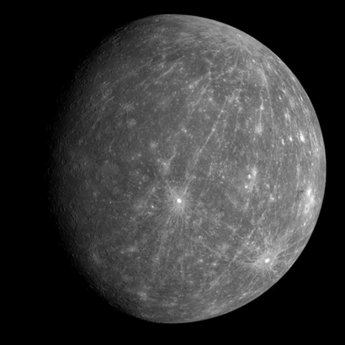
Photos of Mercury from the Messenger Probe

Apparently it took years to arrive there, because it had to follow a convoluted path to avoid being destroyed by the sun's gravitational pull.


First photos of Mercury from orbit

There are 19 pics. Some in color, but not a lot of color to see. Some purple, blue and beige tinges. Mostly grey, looks a lot like the moon at first, but there are significant differences. The photo quality is MUCH better than the old photos from the Mariner mission. And it has a lot more than just cameras, measuring all kinds of new data. Did you know Mercury has an atmosphere?


It's a planet with plenty of mysteries yet to be revealed.

Secrets of Mercury
The closest planet to our sun, and the smallest in the solar system, is also one of the least understood. Compared to more glamorous planets like Mars, Jupiter and Saturn, Mercury has received much less attention from scientific study missions. But NASA's Messenger probe is set to reveal the secrets behind the odd planet. The probe has flown by Mercury three times and will enter orbit around the planet in March — the first spacecraft ever to do so.

Here's a look at some of Mercury's most enduring mysteries. In the words of Messenger science team member Robert Strom, "The best is yet to come. What you're seeing here is just the tip of the iceberg." [...]

I find it all fascinating, and will continue to follow it with great interest.
     

Thursday, March 31, 2011

Some fun quotes about the future of computers

I came across these, and found them amusing:

Hella Quotes
RE: Computers

"Computers in the future may weigh no more than 1.5 tons." --Popular Mechanics, forecasting the relentless march of science, 1949

"I think there is a world market for maybe five computers.' --Thomas Watson, chairman of IBM, 1943

"I have traveled the length and breadth of this country and talked with the best people, and I can assure you that data processing is a fad that won't last out the year." -The editor in charge of business books for Prentice Hall, 1957

"But what ... is it good for?" -Engineer at the Advanced Computing Systems Division of IBM, 1968, commenting on the microchip.

"There is no reason anyone would want a computer in their home." -Ken Olson, president, chairman and founder of Digital Equipment Corp., 1977

"640K ought to be enough for anybody." -Bill Gates, 1981

What a difference hindsight can make. Though I'm sure some of those quotes were accurate in the context of the times in which they were spoken.
     

Sunday, March 27, 2011

The "Radiation Network" Radiation Map of USA

I found this interesting. A non-government source of radiation monitoring, with real-time updates:


RadiationNetwork.com
[...] Welcome to RadiationNetwork.com, home of the National Radiation Map, depicting environmental radiation levels across the USA, updated in real time every minute. This is the first web site where the average citizen (or anyone in the world) can see what radiation levels are anywhere in the USA at any time (see Disclaimer below). [...]

The map here is just a screenshot. Follow the link to see the real-time map, and the legend that explains what the numbers mean.
     

Thursday, March 24, 2011

Lola the Dachshund's shocking story

The poor little beast! And what a shock for her owner:


Dog Found Alive in Massachusetts Apartment One Month After Devastating Fire
HYDE PARK, Mass.-- Fire destroyed Terisa Acevedo's apartment nearly one month ago. She was told that everything was gone, including her 2-year-old Dachshund named Lola.

But on Monday, when Acevedo, 24, went back to her apartment to tend to some business, she heard some scratching at the door, MyFoxBoston reports.

"I called out her name and she started crying. She's been in the house the whole time!" Acevedo said.

The amazing discovery led to a reunion that seemed impossible. Lola was found in the rubble of the apartment, which had been destroyed by fire. [...]

It says Lola's recuperating at an animal hospital now. She must have hid during the fire. Then to survive for a whole month, during a MA winter... the poor snookie. She's lucky to be alive.

This article says she went home today with her owner:

Lola, the miracle dog, reunited with owner

(NECN: Boston, Mass.) - A doctor at the MSPCA-Angell Animal Medical Center presented a healed-up Lola back to her owner on Thursday.

The veterinarian confirms Lola is in good health, but will be on a restricted diet for a few weeks while she gets completely back to normal. [...]

Follow link for video.
     

Are you ready for Firefox 4.0? Is IE9?

Firefox 4 soars, thanks to Microsoft's Luddite customers
[...] Firefox 4 clocked about 5 million downloads on its first day and is fast approaching 7 million this morning, as the new browser from Mozilla attracts huge interest from around the world.

That doesn’t match the record-breaking performance of Firefox 3, but it trounces the 2.35 million downloads that Microsoft reported in the first 24 hours after the Internet Explorer 9 release.

[...]

Even though Windows XP is nearly 10 years old at this point, more than 40 percent of Internet users are still clinging to it, putting IE9 at a disadvantage in the numbers game by not supporting XP.

Firefox, in contrast, continues to support Windows XP. Mozilla knew coming in that it would have a built-in advantage, based on Microsoft’s choice to support only the newer Windows Vista and 7.

[...]

Of course, it’s also in Microsoft’s business interest to get people to buy a new Windows version. [...]

IE9 is slow and horrible. The article goes on to talk about how Google's Chrome browser now has 11 percent of browser market share. It also works with XP, and Mac as well. I've used Chrome, and it's pretty good.

Now, for the reasons one might want to upgrade their Firefox browser:


Firefox 4 Is Better Than Microsoft Internet Explorer 9: 10 Reasons Why
It didn't take long for Mozilla's Firefox 4 to gain immense popularity. As of this writing, millions of people have downloaded the new browser and by the look of things, its appeal to Web users has yet to slow down. By all measures, Firefox 4 seems to be on top of its game, and it's ready to take on its many competitors in the browser market.

But now that Firefox 4 is out to compete against Internet Explorer 9, some people are undoubtedly wondering which browser they should go with. On one hand, Firefox 4 seems to deliver some neat new features and much faster speeds. But Internet Explorer 9 is vastly improved over its predecessor. In other words, at first glance, it's not an easy choice.

However, as people dig more into the differences between Internet Explorer 9 and Firefox 4, one thing becomes abundantly clear: Mozilla's option is better.

Read on to find out why: [...]

It has some pretty cool features. I've downloaded it, and intend to try it out soon.

A good review of FF4 is here:

Firefox 4 Gains Features, Loses Charm
Firefox 4 has arrived, becoming the third Web browser to push out a major update in the last few days. The new version features a sweepingly reworked interface with a new menu system that cuts down clutter but also makes it a bit more cumbersome to use its functions. Firefox has long been a champion of add-ons, and its system for managing them has been further refined in this fourth edition. [...]

It's made some changes to the menu system, making it more like some other browsers that I don't like as much; it remains to be seen if it's something I could get used to. On the plus side, it's made some improvements with tabs, adding more options, some of which sound pretty neat, and useful too.

It's a good review, but ultimately I think I'm going to just have to try it and see.
     

Sunday, March 20, 2011

The Oregon Tsunami BUZZ is getting louder

It was buzzing before, but with recent events, the talk about tsunami preparation is getting even more attention now:

Japan quake brings a warning to Oregon
Senate President Peter Courtney likes to emphasize the dramatic. But he's not over-exaggerating when he talks about Oregon's potential for killer earthquakes and tsunamis.

The science is what scares him: The region's last great earthquake occurred Jan. 26, 1700. Geology shows that a cataclysmic quake occurs here every 241 years, on average. Basic math shows we're overdue for The Big One, a quake that will rival or exceed Japan's devastating 9.0 earthquake.

Bear in mind that thousands of people have died, and more are missing, even though Japan's earthquake preparations are far greater than Oregon's.

"We can build buildings and highways that will withstand this, but I don't know how much time we'll have," Courtney told the Statesman Journal Editorial Board last week. "It's very hard to get people to understand that this thing is going to be of a magnitude that is unimaginable." [...]

Of course, much of the rest of the article is all about how we don't have the money to build new earthquake/tsunami resistant bridges and structures, and how we have to go ahead and do it anyway.

If they hadn't already spent decades wasting our tax money on CRAP, spending way over budget, and raising taxes to the point that they've driven many revenue payers out of the state, we would have the money, or at least the ability to finance it.

They're concerned about a physical tsunami. Too bad they aren't equally concerned about the fiscal tsunami that our over-extended state government has helped to create. But that's another story. On with this one:

Oregon coast escaped loss of life in tsunami, but next time it could be different
[...] In wake of the tsunami, which caused millions of dollars in damage in Brookings Harbor, two main themes emerged in debriefings this week: the need for more education of the population and better communication with the public.

Emergency managers, coastal authorities and officials with the Oregon Department of Geology and Mineral Industries have spent a decade educating the public about tsunamis. DOGAMI has drawn initial inundation maps, outlining the danger zones, and many evacuation routes are in place. Most coastal counties have reverse 9-1-1 systems and sirens dot the coast.

Periodically, emergency officials hold conference room drills, running through tsunami procedures. All that snapped into play on Friday morning, as command posts were set up, calls went out and officials knocked on doors and scoured campsites as emergency managers fielded an calls from officials, the media and residents.

But in the wealth of information, with advisories, watches and warnings flowing from tsunami experts at the National Oceanic and Atmospheric Administration's center in Alaska, one simple message got lost: Tsunami waves arrive and then surge again and again and again over perhaps 24 hours.


"You don't get just one wave," said Ian Madin, chief scientist at DOGAMI. "You get a series of waves. It's like dropping a pebble into glass of water. With a tsunami, the second or third wave could be the largest."

[...]

Tsunamis are so infrequent in Oregon that people forget about the dangers -- and in this instance the state had hours to prepare.

When a powerful earthquake hits off the coastline along the Cascadia fault, people will have 20 minutes to flee.

"If you are knocked to the ground and it lasts two to three minutes, don't wait for somebody to tell you it's the big one, McCraw said. "You need to get to 50 feet elevation."

DOGAMI has a full-time staffer working on outreach along with county emergency managers, but Oregon's education effort is focused on the coast.

That misses the rest of the population who flock to the beach throughout the year, especially in summer.

"We are a nice tourist spot," McCraw said. "What would have happened if this had been the middle of July when we would have doubled our population in the county and had school kids on the beach?"

Burns said the state needs to push hotel, motel and rental owners to tack up warning signs that include show evacuation routes.

DOGAMI has drawn about 40 evacuation maps but most are based on pre-2006 data and some rely on information from 1995. Only Cannon Beach and the area from Bandon to Brookings have up-to-date maps. The department plans to finish its mapping of the coast by 2013 when a four-year $2.8 million grant from NOAA ends. At the same time, the public needs to prepare, officials say. [...]

On one of our ham radio nets, I heard someone speculate that we've seen earthquakes moving clockwise around the Pacific rim: Chile, New Zealand, Japan. "Maybe we're next" they said. Well if it's really traveling clockwise, I would guess Alaska might be next. But who knows?

I don't doubt the possibility of a tsunami threat; but it's impossible to predict. I also have to wonder which one is most imminent; the physical or the fiscal one? And many of the preparations of the former are also applicable in dealing with the aftermath of the latter. I suppose that's convenient.

Either way, I guess the Boy Scout motto applies.


Also see:

Oregon Coast must prepare for repeat of the Great Cascadia Earthquake of 1700 (links)


I want one of these. Where can I buy one?


Not the Japanese policeman, but the emergency bicycle pedal pump he's using to manually pump gas from an underground tank.

Such a practical and sensible device could also be used, I think, to manually pump water out of my well if our power were out for a long length of time.

I did a google search for "tmc pump pedal", and I found the device here:

Emergency Pump “KP Series”

But alas, you can't buy it from the website, and I can't find an American distributor that carries it.

A search for equivalent devices didn't turn up much: you can buy plans to build your own, or look at student projects, and various other farm-quality devices, that don't seem to be commercially available.

Why are such devices not available in the USA? They could be so useful in so many ways.

Maybe we need an incentive to start making them. Such devices can also be used to generate electricity. So here is an idea.

In the 1930's, they had all those "pick and shovel" programs to make work for people. Obama can't do that now, because heavy machinery have replaced most those pick-and shovel jobs. But we could have a new kind of "job" instead.

Create tons of bicycle pump generators, and then let all the overweight people who sit around collecting welfare, pump water or generate electricity for several hours per day. They could even watch TV while they are doing it. There would be many benefits:

1.) In our nation of obese people, it would be a way to get thinner and stay healthier.

2.) Taxpayer's would actually be getting SOMETHING in return for their money.

3.) It's GREEN energy. Hooray! Placate fanatics AND get people to work!

4.) In an emergency, "pumpers" could be deployed to pump gas, water, and generate electricity to charge batteries as needed.

Isn't that what they call a win/win situation? Or does it just make too much sense? Or is it just Sunday, and I haven't drank enough coffee yet?


Thursday, March 17, 2011

The Future of American Manned Space Flight

What will it look like, especially with all the budget cutting going on? Space.com asked the question of some people who might know:

What Obama and Congress Should Do for Spaceflight & Space Exploration
Amid much wrangling over how to allocate funds out of an increasingly out-of-control federal budget, the editors and writers at eight of the TechMediaNetwork's sites sought the advice of dozens of researchers, technologists, futurists, analysts and business owners in fields ranging from space and Earth science to health and technological innovation.

We asked one simple question:

If you could ask President Obama and Congress to do one thing related to your field that would be for the good of the economy and the country, what would it be and why?

[...]

At SPACE.com, we asked respondents to focus their answers on space exploration and astronomy. Here are their replies:

"If America is to fulfill its highest ambitions in space, the country must focus its attention on lowering the cost of getting there. Less expensive space access — whether through novel technologies, better manufacturing or increased reusability — will make it much more likely that we'll be able to execute thriving exploration missions to Mars, the asteroids and the moon. Some experts believe that getting to space today costs essentially the same as it did in the 1960s. Breaking free of that plateau will save the taxpayers money, grow American jobs and allow us to achieve our dreams.
— George Whitesides
President and CEO, Virgin Galactic


[...]

The other responses were interesting, too. But Whitesides really made the best point, IMO. The costs have to be lowered, and free enterprise and competition will do that.

And speaking of competition, I didn't see Elon Musk, the founder of SpaceX, among the folks asked the question. His company has already created a working launch vehicle and reusable spacecraft, the Dragon capsule, that flew an unmanned test mission in December, and returned safely to Earth.


After the last space shuttle flight this summer, America will be without a manned space craft to take us into orbit. We shall have to rely on the Russians to ferry us back and forth, at great expense to us: $56,000,000.00 per ride. And the Russians plan to raise the price to $63,000,000.00 in 2014. A cost effective commercial alternative would be very timely, and greatly appreciated. Let the competition begin!


Also see:

55 Space Leaders to Congress: Support Private Spaceflight Now